

Enormous cave bears, Ursus spelaeus, that once inhabited a large swathe of Europe, from Spain to the Urals, died out 27,800 years ago, around 13 millennia earlier than was previously believed, scientists have reported.
Despite over 200 years of scientific study – beginning in 1794 when a young anatomist, J. Rosenmüller, first described bones from the Zoolithenhöhle in Bavaria as belonging to a new extinct species, which he called cave bear – the timing and cause of its extinction remain controversial.
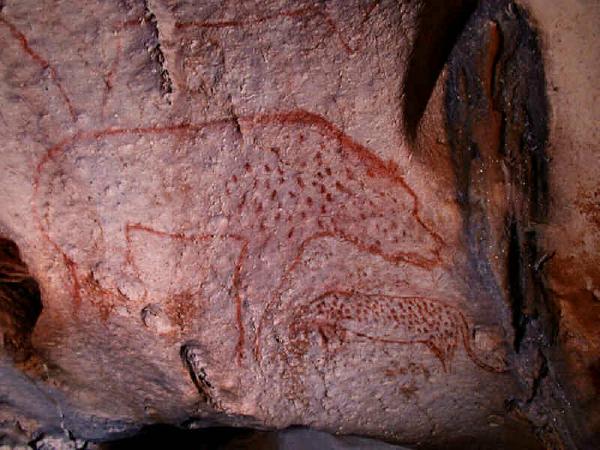
By far the best source of information on the appearance of cave bears in the flesh is to be found in red pigment cave paintings in the Grotte Chauvet in the Ardèche region of southern France. These are the only depictions in Palaeolithic art that can be attributed unambiguously to the cave bear.
The new date coincides with a period of significant climate change, known as the Last Glacial Maximum, when a marked cooling in temperature resulted in the reduction or loss of vegetation forming the main component of the cave bears' diet.
In a study published in Boreas, researchers suggest it was this deterioration in food supply that led to the extinction of the cave bear, one of a group of 'megafauna' – including woolly mammoth, woolly rhinoceros, giant deer and cave lion – to disappear during the last Ice Age.
They found no convincing evidence of human involvement in the disappearance of these bears. The team used both new data and existing records of radiocarbon dating on cave bear remains to construct their chronology for cave bear extinction.
"Our work shows that the cave bear, among the megafauna that became extinct during the Last Glacial period in Europe, was one of the earliest to disappear," said Dr Martina Pacher of the Department of Palaeontology at the University of Vienna. "Other, later extinctions happened at different times within the last 15,000 years."
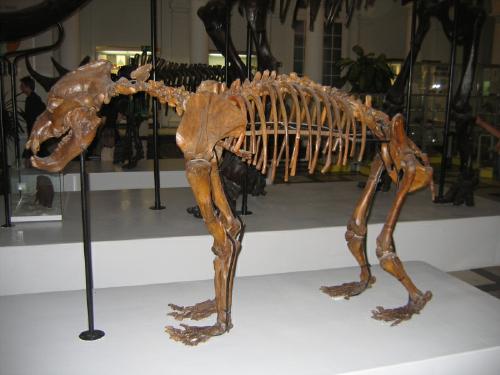
Cave bear (Ursus spelaeus) skeleton. This was a an omnivore, feeding on herbs, berries, and also honey, and occasionally small animals. It lived during the Pleistocene Epoch and is believed to have become extinct around 10,000 years ago, something now in dispute.
Dr Pacher carried out the research alongside Professor Anthony J. Stuart of the Natural History Museum, London, and the University of Durham.
Many scientists previously claimed that cave bears survived until at least 15,000 years ago, but Dr Pacher and Professor Stuart claim that the methodology of these earlier studies included many errors in dating as well as confusion between cave bear and brown bear remains.
The pair also concluded, from evidence on skull anatomy, bone collagen and teeth, that these extinct mammals were predominantly vegetarian, eating a specialised diet of high-quality plants. Compared with other megafaunal species that would also become extinct, the cave bear had a relatively restricted geographical range, being confined to Europe, which may offer an explanation as to why it died out so much earlier than the rest.
"Its highly specialised mode of life, especially a diet of high-quality plants, and its restricted distribution left it vulnerable to extinction as the climate cooled and its food source diminished," said Dr Pacher.
The brown bear, with which Ursus spelaeus shares a common ancestor, was spread throughout Europe and much of northern Asia and has survived to the present day.
"A fundamental question to be answered by future research is: why did the brown bear survive to the present day, while the cave bear did not?" said Professor Stuart. Answers to this question may involve different dietary preferences, hibernation strategies, geographical ranges, habitat preferences and perhaps predation by humans.
Cave bears were heavily built animals, with males growing up to around 1000kg. The maximum recorded weight of both Kodiak bears and polar bears – the largest bears living today – is 800kg, with averages of around 500kg.
Scientists have recovered a large quantity of cave bear remains from many cave sites, where they are believed to have died during winter hibernation. Caves provide an ideal environment for the preservation of these remains.

Despite over 200 years of scientific study – beginning in 1794 when a young anatomist, J. Rosenmüller, first described bones from the Zoolithenhöhle in Bavaria as belonging to a new extinct species, which he called cave bear – the timing and cause of its extinction remain controversial.
By far the best source of information on the appearance of cave bears in the flesh is to be found in red pigment cave paintings in the Grotte Chauvet in the Ardèche region of southern France. These are the only depictions in Palaeolithic art that can be attributed unambiguously to the cave bear.

The new date coincides with a period of significant climate change, known as the Last Glacial Maximum, when a marked cooling in temperature resulted in the reduction or loss of vegetation forming the main component of the cave bears' diet.
In a study published in Boreas, researchers suggest it was this deterioration in food supply that led to the extinction of the cave bear, one of a group of 'megafauna' – including woolly mammoth, woolly rhinoceros, giant deer and cave lion – to disappear during the last Ice Age.
They found no convincing evidence of human involvement in the disappearance of these bears. The team used both new data and existing records of radiocarbon dating on cave bear remains to construct their chronology for cave bear extinction.
"Our work shows that the cave bear, among the megafauna that became extinct during the Last Glacial period in Europe, was one of the earliest to disappear," said Dr Martina Pacher of the Department of Palaeontology at the University of Vienna. "Other, later extinctions happened at different times within the last 15,000 years."

Cave bear (Ursus spelaeus) skeleton. This was a an omnivore, feeding on herbs, berries, and also honey, and occasionally small animals. It lived during the Pleistocene Epoch and is believed to have become extinct around 10,000 years ago, something now in dispute.
Dr Pacher carried out the research alongside Professor Anthony J. Stuart of the Natural History Museum, London, and the University of Durham.
Many scientists previously claimed that cave bears survived until at least 15,000 years ago, but Dr Pacher and Professor Stuart claim that the methodology of these earlier studies included many errors in dating as well as confusion between cave bear and brown bear remains.
The pair also concluded, from evidence on skull anatomy, bone collagen and teeth, that these extinct mammals were predominantly vegetarian, eating a specialised diet of high-quality plants. Compared with other megafaunal species that would also become extinct, the cave bear had a relatively restricted geographical range, being confined to Europe, which may offer an explanation as to why it died out so much earlier than the rest.
"Its highly specialised mode of life, especially a diet of high-quality plants, and its restricted distribution left it vulnerable to extinction as the climate cooled and its food source diminished," said Dr Pacher.
The brown bear, with which Ursus spelaeus shares a common ancestor, was spread throughout Europe and much of northern Asia and has survived to the present day.
"A fundamental question to be answered by future research is: why did the brown bear survive to the present day, while the cave bear did not?" said Professor Stuart. Answers to this question may involve different dietary preferences, hibernation strategies, geographical ranges, habitat preferences and perhaps predation by humans.
Cave bears were heavily built animals, with males growing up to around 1000kg. The maximum recorded weight of both Kodiak bears and polar bears – the largest bears living today – is 800kg, with averages of around 500kg.
Scientists have recovered a large quantity of cave bear remains from many cave sites, where they are believed to have died during winter hibernation. Caves provide an ideal environment for the preservation of these remains.




Some cave bear bones have been interpreted to show signs of numerous different ailments, including fusion of the spine, bone tumours, cavities, tooth resorption, necrosis (particularly in younger specimens), nematodes, osteomyelitis, periostitis, rickets and kidney stones.
But how frequent were those maladies -- for instance relative to maladies suffered by modern brown or "black" bears in Eurasia or North America? Were the fossil evidence to suggest that the incidence of certain diseases were higher in cave bears, this would become a tenable hypothesis about why cave bears went extinct.
I raise this point because North America brown/grizzly and black bears seem to have an extraordinary resistance to bacteria -- although those suffer from numerous parasites and sometimes from cancer, as well as dental caries (especially where soil selenium is low).
Although I have seen many serious wounds on bears inflicted during intraspecific battles, I have never seen any sign of serious infection from these or other sources. Indeed, even wounds that would cripple a human often heal within a week or two.
What might account for this? One direction for research would be the healing powers of saliva, as documented so far at least for humans.
http://www.scientificblogging.com/news_releases/histatin_why_licking_you...
One interesting point in this regard is that when dogs lick wounds, the moisture from saliva sometimes promotes bacteriological growth, resulting in "lick granulomas" and wound necrosis. I have seen no indication of that in wild bears, but have never had a chance to look for it in wolves.
Stephen Stringham, Director
Bear Communication & Coexistence Research Program