A mixture of diamond nanoparticles and mineral oil easily outperforms other types of fluid created for heat-transfer applications, according to new research by Rice University.

Rice scientists mixed very low concentrations of diamond particles (about 6 nanometers in diameter) with mineral oil to test the nanofluid's thermal conductivity and how temperature would affect its viscosity. They found it to be much better than nanofluids that contain higher amounts of oxide, nitride or carbide ceramics, metals, semiconductors, carbon nanotubes and other composite materials.

The Rice results appeared this month in the American Chemical Society journal Applied Materials and Interfaces.

Researchers at the University of Adelaide have discovered that a commonly used anesthetic technique to reduce the blood pressure of patients undergoing surgery could increase the risk of starving the brain of oxygen.

Reducing blood pressure is important in a wide range of surgeries – such as sinus, shoulder, back and brain operations – and is especially useful for improving visibility for surgeons, by helping to remove excess blood from the site being operated on.

There are many different techniques used to lower patients' blood pressure for surgery – one of them is known as hypotensive anesthesia, which slows the arterial blood pressure by up to 40%.

One of the first technical papers to reference ‘Graunching’ was ‘Railway Noise: Curve Squeal, Roughness Growth, Friction and Wear’ (Report: RRUK/ A, 2003, D.J. Thompson, A.D. Monk-Steel, C.J.C. Jones. P.D Allen, S.S. Hsu, and S.D. Iwnicki)

“Other related forms of curving noise include ‘graunching’ at switches and crossings (possibly due to flange rubbing), [and] ‘juddering’ thought to be caused by unstable dynamic behaviour of the vehicle…”

Stephanie Seneff (a computer scientist at MIT),  and Anthony Samsel (a retired consultant), have recently been attempting to link the use of the herbicide glyphosate to a long list of modern maladies. Their latest such attempt to is Celiac disease.  

The overall argument for the glyphosate/Celiac link has already been quite thoroughly debunked by a Celiac expert, but there is one other good reason to dismiss the "link" which I would like to describe.  

Greenhouse gas emissions from food production may threaten the UN climate target of limiting global warming to 2 degrees Celsius, according to a paper from Chalmers University of Technology, Sweden. What is the data? No data needed.

"Obviously, we cannot go inside of the Earth to see what is happening there. However, the process of mantle convection should comply with fundamental physics laws, such as conservation of mass, momentum and energy. What we have done is to simulate the process of mantle convection by solving the equations which controls the process of mantle convection," says Li.

CAMBRIDGE, MA -- Using a new gene-editing system based on bacterial proteins, MIT researchers have cured mice of a rare liver disorder caused by a single genetic mutation.

The findings, described in the March 30 issue of Nature Biotechnology, offer the first evidence that this gene-editing technique, known as CRISPR, can reverse disease symptoms in living animals. CRISPR, which offers an easy way to snip out mutated DNA and replace it with the correct sequence, holds potential for treating many genetic disorders, according to the research team.

The American Physical Society is reviewing its Climate Change Statement.

The APS Panel on Public Affairs (POPA) formed a Subcommittee, consisting of Steven Koonin, Phillip Coyle, Scott Kemp, Tim Meyer, Robert Rosner and Susan Seestrom, to consider revisions to its 2007 statement and that group convened a workshop with 6 climate experts, including 3 who are skeptics, though really they are more "lukewarm-ists" than the 'denier' label attributed to everyone who isn't a Think Progress-style Doomsday prophet.
About 66%f school heads think that school boards have value in rooting schools in the community, but about 45% still think they are unnecessary. 60% think that it is wrong that boards decide on HR matters.

A survey funded by the Swiss National Science Foundation (SNSF) and conducted by the University of Zurich and the University of Applied Sciences and Arts Northwestern Switzerland surveyed 270 school heads in all of the cantons in French and German-speaking Switzerland. Their findings reveal that school boards remain extremely important. 86% of the respondents report that their school communities have such boards. Moreover, 80% of school boards retain decision-making powers.

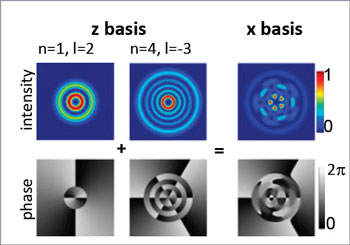
In a recent PNAS paper, scientists have described how they managed to achieve a quantum entanglement with a minimum of 103 dimensions with only two particles.

103 dimensions rather than 3? Is that a typo?

Elementary particles such as photons can produce superpositions - where they exist in many possible quantum states simultaneously. In addition, when two particles are entangled a connection is generated so measuring the state of one (whether they are in one place or another, or spinning one way or another, for example) affects the state of the other particle instantly, no matter how far away from each other they are.