
READ MORE
Up-to-date With The Big Bang...
Six-muon Events Probe Proton Collision Dynamics
The Probability Density Function: A Known Unknown
Quantum Leap Or Quantum Mirage? What Happens When...
Chemicals To Put Out Fires Are 'Riskier' For Firefighters...

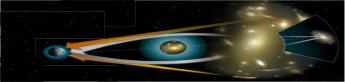
[For the first part of this two-part post, see here]>
I was reached this evening by the news of the passing of a dear friend, Enrico Stomeo. Enrico was an architect by profession, but for me he was rather defined by his activity as an amateur astronomer - in fact, if I had to define what a serious amateur astronomer is, I would more or less consciously be describing>
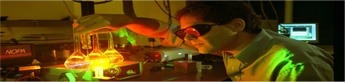
Aircraft engines are more efficient at higher temperatures, but this requires thermal treatment of engine components at very specific high temperatures in excess of 1300 °C. If the heat treatment temperature deviates too much from the optimal temperature, the treatment may be inadequate.
Thermocouples are calibrated>
A gravity model of the Earth constructed with data from GRACE. Credit: University of Texas Center for Space Research and NASAIt is all about gravity these days. First came GRACE (Gravity Recovery and Climate Experiment) and then we'll have GOCE (Gravity field and steady-state Ocean Circulation Explorer). I'll reveal>
Rosetta mission: A giant leap for humans and robots. Huart, ESABy Natalie Starkey, The Open University>
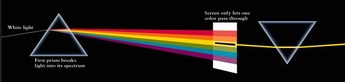
Optics normally treats the behaviour of packages of light waves (photons). However, when passing through appropriately shaped fields, particles may behave similar as photons. A beam of electrons that is not too dense will under such conditions behave similar to light beams that pass comparable lenses. In a dense beam>

