Since man first discovered that he could control fire and combust fuels for heat and cooking, he has had to deal with the byproducts of the combustion of organic fuels. But with more people the byproducts are much greater.
For the first two million years of our existence, man’s fuel usage was limited to the combustion of wood in simple campfires. Recently, research has said that continual exposure of early man to campfires used as heat sources in enclosed areas contributed to increased incidences of nasal cancer.
Today, man’s need for energy has led to the formation of megacities – large urban and suburban centers whose populations exceed 10 million inhabitants. In 1950, New York City was the world’s only megacity. By 2007, there were 14.
New research by Brunel University, the Universities of Exeter and Reading and the Centre for Ecology&Hydrology says there is a stronger link between water pollution and rising male fertility problems. The study outlines how a group of testosterone-blocking chemicals is finding its way into UK rivers, affecting wildlife and potentially humans. The research was supported by the Natural Environment Research Council and is published in the journal Environmental Health Perspectives.
Imagining aliens helps us think about evolution
If we ever do make contact with an extraterrestrial intelligence, what will it look like? Hollywood has had no shortage of examples for films and television shows that feature aliens, but they are almost always bipedal primates who speak English with a funny accent. This depiction is more the result of wardrobe budget constraints and the flexibility of actors than it is the imagination of writers.
If you're a reader of geography or a student of eastern philosophy, you may have seen the name K'un Lun. It is the name of a mountain range in western China and borders the northern edge of Tibet (1) and is also a name for 'paradise' in Taoism. Whoever can climb to the top of K'un Lun gains access to the heavens, the ancients said.
There's a city there now and if you visit K'un Lun City and drink the yellow water in the lakes of its parks known as cinnabar (tan), they also say you will become immortal.(2)
That last part is scientifically undocumented. Drinking yellow water is generally a bad idea.
In
part 2 we closed with the idea that Bohr seemed to be using general relativity against Einstein to save quantum mechanics! A wonderful story. But is it true?
Einstein seems to have thought that they were arguing about something else. We know this from a letter that Paul Ehrenfest wrote to Bohr in July 1931, after a visit with Einstein in Berlin. Ehrenfest and Einstein seem to have had a long and thorough chat about the debate with Bohr at the previous fall’s Solvay meeting. Ehrenfest reports to Bohr a most surprising comment from Einstein:
Climate prediction is difficult stuff. As you know, it's impossible to predict the weather 10 days from now much less six months and aside from "it will get a lot worse" no one can say with any degree of certainty what Earth's climate could look like in the future given changing kinds of pollution conditions and nature itself.
Introducing presumed consent or opt-out system may increase organ donation rates, suggests a new systematic review published in the BMJ (British Medical Journal).
There is currently insufficient supply of donor organs to meet the demand for organ transplantations in the UK but the number of patients registered for a transplant continues to increase. In March 2008, 7,655 patients were on the active transplant list and 506 died in the years 2007-2008 while waiting for their transplant.
At present the UK has an informed consent legislative system where individuals opt-in if they are willing for their organs to be used after death. However, only a quarter of the UK population are on the NHS donor register.
With record low temperatures, winter blizzards and warming that isn't really global, people aren't taking climate change very seriously these days, but that doesn't mean pollution gets a free pass if we want to continue to enjoy nature as we know it. Temperature change in the Arctic can still happen regardless of what is happening in cold spots of the world and it may be happening at a greater rate there than other places in the Northern Hemisphere.
As a result, glacier and ice-sheet melting, sea-ice retreat, coastal erosion and sea level rise could continue even if it doesn't feel warmer in Chicago.
5.
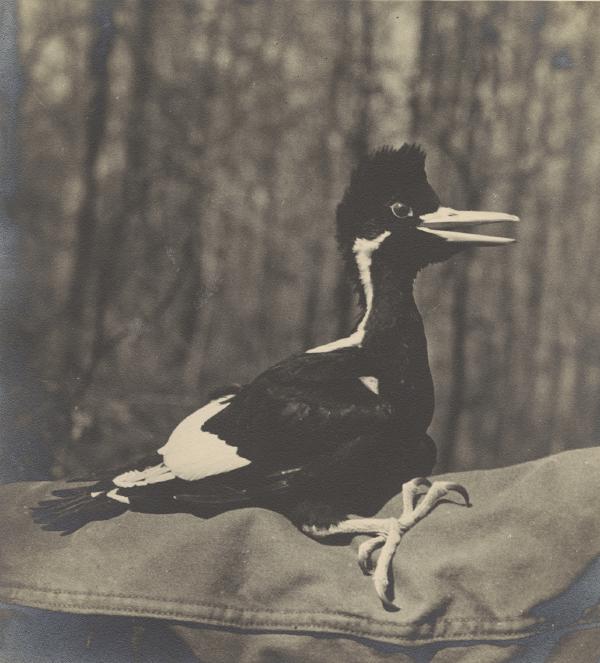
That's how many mated pairs will need to have survived the extensive habitat loss that occurred during the early 1900's for the ivory-billed woodpecker to still be around today.
Do they exist? No one knows, though in the last few years people have claimed to see them. But people have claimed to see Bigfoot too.
Take heart, parents. If your teenager is brandishing a virtual shotgun in their new video game, you're not raising the next Columbine kid. If they're enjoying themselves, it's because of the healthy pleasure of mastering a challenge rather than from a disturbing craving for carnage.