





In an important step towards a greener global future, Australia and China signed a formal international agreement for clean coal research today in Beijing.

The agreement, between CSIRO and China’s Thermal Power Research Institute (TPRI), will see TPRI install, commission and operate a post combustion capture pilot plant at the Huaneng Beijing Co-Generation Power Plant as part of CSIRO’s research program.

Post combustion capture (PCC) is a process that uses a liquid to capture carbon dioxide (CO2) from power station flue gases and is a key technology that can potentially reduce carbon dioxide emissions from existing and future coal-fired power stations by more than 85 per cent.

A brain network linked to introspective tasks -- such as forming the self-image or understanding the motivations of others -- is less intricate and well-connected in children, say researchers. They also showed that the network establishes firmer connections between various brain regions as an individual matures.

The scientists are working to establish a picture of how these connections and other brain networks normally develop and interact.

American history is referenced in news features, profiles and analysis pieces, giving meaning to current events, discoveries and individuals. A University of Missouri researcher recently completed a study on the use of historical references by journalists in the 19th century, a time when the United States had little or no published history records. The study revealed that 19th century American journalism was significantly influential in shaping the nation’s early history.

Betty Winfield, Curators’ professor of Journalism at MU, based the study on 2,000 magazine and newspaper headlines from various publications throughout the 19th century. Organizing titles into particular groups and tracking patterns, Winfield found an increase in historical references from the beginning of the century to 1900, when historians first began recording the nation’s past. Winfield said journalists created a particular national story by referencing certain people and events, which emerged as collective memory.

Researchers at Swansea University are developing a new, eco-friendly technology that could generate as much electricity as 50 wind farms.

Dr Dave Worsley, a Reader in the Materials Research Centre at the University’s School of Engineering, is investigating ways of painting solar cells onto the flexible steel surfaces commonly used for cladding buildings.

“We have been collaborating with the steel industry for decades,” explains Dr Worsely, “but have tended to focus our attention on improving the long-term durability and corrosion-resistance of the steel.

The U.S. legal system has long assumed that all testimony is not equally credible, that some witnesses are more reliable than others. In tough cases with child witnesses, it assumes adult witnesses to be more reliable. But what if the legal system had it wrong?

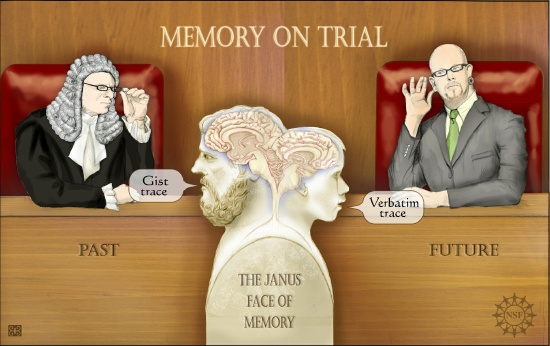
Researchers Valerie Reyna, human development professor, and Chuck Brainerd, human development and law school professor-- both from Cornell University -- argue that like the two-headed Roman god Janus, memory is of two minds -- that is, memories are captured and recorded separately and differently in two distinct parts of the mind.


Scientists found that humans exhibit two types of memory.

In a new international study of 16 countries published in Science, economists studied the extent to which some people will sacrifice personal gain to benefit the wider public, while ‘freeloaders’ try to take advantage of their generosity.

Marked national differences arose when freeloaders were punished for putting their own interests ahead of the common good. And whether they accepted their punishment or retaliated in kind depended on what kind of society they lived in, the researchers found.

In countries like the USA, Switzerland and the UK, freeloaders accepted their punishment and became much more co-operative. But in countries based on more authoritarian and parochial social institutions such as Oman, Saudi Arabia, Greece and Russia, the freeloaders took revenge — retaliating against those who had punished them.

Stopping and cooling most of the atoms of the periodic table is now possible using a pair of techniques developed by physicist Mark Raizen at The University of Texas at Austin.

Raizen stopped atoms by passing a supersonic beam through an “atomic coilgun” and cooled them using “single-photon cooling.”

The techniques are a major step forward in atomic physics and have a variety of scientific and technological applications. They could be used to determine the mass of the neutrino, which is the primary candidate for dark matter.

A team of bioinformaticians at the Université de Montréal (UdeM) report in Nature the discovery of a structural alphabet that can be used to infer the 3D structure of ribonucleic acid (RNA) from sequence data, providing new tools to understand the role of this important class of cellular regulators.

The folding of a single-stranded RNA molecule is determined by the interactions between its constituent nucleotides. The classical approach to RNA modelling suffers from an important limitation: it only takes into account the canonical Watson-Crick interactions A:U and G:C, that is those where the nucleotides are facing each other.

The non-canonical Hoogsteen and sugar interactions, those where the nucleotides are side by side or on top of each other, are not taken into account by conventional modelling algorithms. The result can be incomplete or erroneous models which can mislead researchers.

In a recent edition of Advanced Materials Magazine, Michael Bockstaller and Krzysztof Matyjaszewski demonstrate that controlling the structure of nanoparticles can “shrink” their visible size by a factor of thousands without affecting a particle’s actual physical dimension.

It's invisibility in the optical range, something that cannot be done with current metamaterials

“What we are doing is creating a novel technique to control the architecture of nanoparticles that will remedy many of the problems associated with the application of nanomaterials that are so essential to business sectors such as the aerospace and cosmetics industry,” said Bockstaller, an assistant professor of materials science and engineering at Carnegie Mellon University.

It's what you always feared. Your brain actually does react differently to donuts, according to fMRI-based research led by Marsel Mesulam, M.D., a neurologist at Northwestern Memorial Hospital.

Krispy Kremes, in perhaps their first starring role in neurological research, helped lead to the discovery.

In the study, subjects were tested twice -- once after gorging on up to eight Krispy Kreme donuts until they couldn't eat anymore, and on another day after fasting for eight hours. In both sessions, people were shown pictures of donuts and screwdrivers, while researchers examined their brains in fMRI's.


Krispy Kremes - All Your Diets Are Belong To Us.


