




Picking cultural winners in the name of public interest is a time-honored tool of government and the social engineers giving them input, but the reasons for bans are often suspect. Banning cigarettes in bars and restaurants rather than creating an evidence-based ventilation requirement was going to cut smoking, it was said, but that hasn't happened no matter what sociological Laffer curve was invoked.

Pundits wanted to create a ghetto-ized underclass but now smokers happily step outside at bars and restaurants, and they meet new people and create their own sub-culture. Less freedom and a more authoritarian government has not caused people to smoke less behind their own closed doors or quit altogether, finds a paper in Nicotine&Tobacco Research.
Gastric bypass and similar stomach-shrinking surgeries are a popular option for obese patients looking to lose weight and they have even been linked to a decreased risk in many types of cancers - except colon cancer. A 2013 long-term study of 77,000 obese patients found that colon cancer rates were higher but a new study in mice could explain the association - and raise safety concerns for a new generation of weight-loss drugs. 
I never know what I'm going to find on the editorial pages of the New York Times. Sometimes I agree with them, and sometimes I don't. But, they usually, at the very least, make sense. 

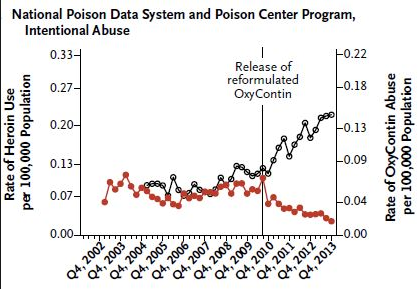
That streak ended on March 2nd, when the Times printed an editorial titled "Painkillers Abuses and Ignorance." The paper really dropped the ball on this one. After reading it, I was left wondering whose ignorance was being referred to, because in 433 words, they did nothing short of a superlative job of mixing together misleading statements, bad conclusions, and naive suggestions.

According to new research, adults in Ontario with intellectual and developmental disabilities (IDD) are significantly less likely to be screened for colorectal cancer than the general population.

Hélène Ouellette-Kuntz, a Queen's researcher and lead author on the first study of its kind, found that Ontarians with IDD, such as autism and Down syndrome, were almost twice as likely to not be up-to-date with colorectal tests when compared to Ontarians without IDD.

Cancer data compiled by the World Health Organisation's (WHO) GLOBOCAN project has huge global influence and is used by Governments and international NGOs to determine health and funding priorities in sub-Saharan Africa.

However, no independent evaluation of the data has ever been undertaken. Now global health experts believe the current data on cancer prevalence, incidence and mortality in sub-Saharan Africa, which determines how billions of pounds of international development money is spent, are weak and could mean vital funds are being deflected from other priorities. These include diarrheal and waterborne diseases, malnutrition, sanitation and the need to strengthen health systems.

Undefined matter under the envelope of "dark matter" makes up over 80% of the universe - but it has never been directly detected.

But the search is on to narrow it down and a new paper has computationally set limits to the properties of one of the particles which might be identified as dark matter: axions. Due to the high temperature inside stars, photons can turn into axions that escape to the exterior, carrying energy with them.

The simulation indicates that the emission of axions can significantly diminish the time for the central combustion of helium, the so called HB (Horizontal Branch) phase: the energy taken by axions is compensated with the energy provided by nuclear combustion, which leads to a much faster consumption of helium. 

Sometimes losing money is more exciting than taking it. A recent study found that turning down a bribe brought greater physiological arousal than the thought of more money did.

This means that the violation or enforcement of a given ethical standard is not what triggers emotional activity, but rather the actual decision to act against the monetary self-interest, according to scholars at Universitat Jaume I, who also note a major tendency to act ethically and shows the effectiveness of the threat of a possible punishment when curbing corrupt attitudes.

Doctors are writing lots of prescriptions for drugs to calm the behavior of people with Alzheimer's disease and other types of dementia, but non-drug approaches work better and carry far fewer risks, according to a new paper.  

In contrast to current protocol non-drug approaches should be the first choice for treating dementia patients' common symptoms such as irritability, agitation, depression, anxiety, sleep problems, aggression, apathy and delusions, write a team in British Medical Journal after reviewing two decades' worth of research on antipsychotics, antidepressants and non-drug approaches that help caregivers address behavioral issues in dementia patients. 

Researchers have identified distinct immune changes in patients diagnosed with chronic fatigue syndrome, known medically as myalgic encephalomyelitis (ME/CFS) or systemic exertion intolerance disease.

This is
the first robust physical evidence that ME/CFS is a biological illness as opposed to a psychological disorder, and the first evidence that the disease has distinct stages and could help improve diagnosis and identify treatment options for the disabling disorder, in which symptoms range from extreme fatigue and difficulty concentrating to headaches and muscle pain.

How will we know if the economy has really gotten better, rather than using bogus claims about employment or how well Wall Street executives are doing? When senior citizens stop killing themselves.

Suicide rates for adults between 40 and 64 years of age in the U.S. rose about 40% since 1999, with a sharp rise after in 2007 that continued during the economic downturn of 2008 and on, which led to disproportionate effects on house values, household finances, and retirement savings for that age group. In a study published in the American Journal of Preventive Medicine, researchers found that external economic factors were present in 37.5% of all completed suicides in 2010, rising from 32.9% in 2005.


