



By:
Charles Q. Choi, Inside Science

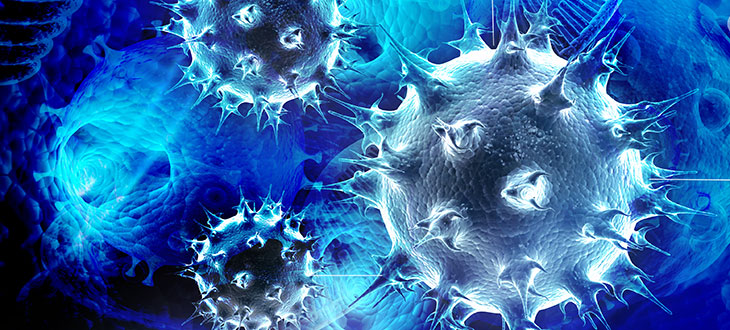
(Inside Science) -- Viruses that invaded the DNA of humanity's ancestors millions of years ago may now play critical roles in the earliest stages of human development, researchers say.

The discovery sheds light on the key part that viruses may have played in human evolution, scientists added.

Life is unpredictable, and we move forward the best we can despite not knowing every detail.

It's no different in the natural world. The Earth is warming in some places and in some places it isn't, the weather is more variable today except it was always worse in the past when you talk to old people, some years there are more fish and deer than others. 

Beware people who have magic bullets when it comes to conservation; it's all based on estimates and no small amount of speculation surrounding a kernel of things we know to be true. We can only get real policies when we are flexible - sometimes that means making a decision even when unanswered questions remain. 

Hundreds of hours of video are uploaded to YouTube every minute, and hundreds of millions of hours are viewed daily, including many that cover areas of science. Despite this, if you want to use YouTube for science communication, reaching an audience is not always guaranteed.

We’ve analyzed nearly 400 science communication videos to understand what the successful YouTube science communicators do – those with numerous subscribers – that less successful communicators do not.

So, here are seven things we found that can help you to communicate science on YouTube.

Might living a structured life with regularly established meal times and early bedtimes lead to a better life and perhaps even prevent the onset of mental illness?

That's what's suggested in a study led by Kai-Florian Storch, PhD, of the Douglas Mental Health University Institute and McGill University, titled "A highly tunable dopaminergic oscillator generates ultradian rhythms of behavioral arousal," and published in eLife.

If you live in a city, some of your movement around town is social in nature.

But how much, exactly?

Around 20 percent, according to a new paper that used anonymized phone data to reconstruct both people's locations and their social networks.

By linking this information together, the researchers were able to build a picture indicating which networks were primarily social, as opposed to work-oriented, and then deduce how much city movement was due to social activity.

Simply removing cattle may be all that is required to restore many degraded riverside areas in the American West, although this can vary and is dependent on local conditions. These are the findings of Jonathan Batchelor and William Ripple of Oregon State University in the US, lead authors of a study published in Springer's journal Environmental Management. Their team analyzed photographs to gauge how the removal of grazing cattle more than two decades ago from Hart Mountain National Antelope Refuge in eastern Oregon has helped to rehabilitate the natural environment.

If you liked it, then you should have put a ring on it, said cultural pundit Beyoncé Knowles about women and fingers - but that does not mean women should accept.

First, they should look at the fingers on men. Men with short index fingers and long ring fingers are on average nicer towards women, which researchers at McGill University say stems from the hormones these men have been exposed to in their mother's womb.

That  link between a biological event in fetal life and adult behavior might also explain why these men tend to have more children, the authors write in Personality and Individual Differences.

Drinking coffee may  lower risk of developing multiple sclerosis (MS), according to a new paper out today

For the study, researchers looked at a Swedish study of 1,629 people with MS and 2,807 healthy people, and a U.S. study of 1,159 people with MS and 1,172 healthy people. The studies characterized coffee consumption among persons with MS one and five years before MS symptoms began (as well as 10 years before MS symptoms began in the Swedish study) and compared it to coffee consumption of people who did not have MS at similar time periods.

The study also accounted for other factors such as age, sex, smoking, body mass index, and sun exposure habits.
The latest outbreak of Ebola virus disease has caused the deaths of more than 9,400 people worldwide and created an international outcry so loud even the National Institutes of Health decided to start funding work on it again
Parents of kids with severe autism are willing to try anything - unfortunately, a lot of people who claim to be experts in psychology and communication disorders don't understand science and may continue to try things long after they have been debunked. 

Hope and desperation among parents, along with cluelessness among people trying to help,  make the autism community especially vulnerable to interventions and "therapies" that have been thoroughly discredited. Yet they persist.


