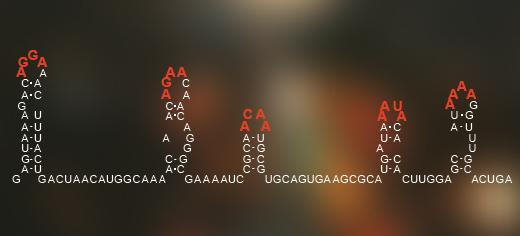

Researchers have cracked a code that governs infections by the common cold and polio viruses.

The code was known, it was 'hidden in plain sight' in the sequence of the ribonucleic acid (RNA) that makes up this type of viral genome but its meaning had not been unlocked. Now, researchers have found that jamming the code can disrupt virus assembly. Stopping a virus assembling can stop it functioning and therefore prevent disease. 

Single-stranded RNA viruses are the simplest type of virus and were probably one of the earliest to evolve. However, they are still among the most potent and damaging of infectious pathogens.

A new genus and species of flowering plants from the custard apple family, Annonaceae, has been discovered in the jungles of Gabon by French and Gabonese botanists. The extraordinary genus was named Sirdavidia, after David Attenborough to honor his influence on the life and careers of the scientists who discovered it.

But what is so special about this new discovery? The new genus was in fact erected to accommodate an unusual new species, found in Monts de Cristal National Park, Gabon during an expedition focusing on the study of Magnoliidae floral diversity in rain forests, to which the Annonaceae family belongs.

By inserting a specific strain of bacteria into the microenvironment of aggressive ovarian cancer, researchers transformed the behavior of tumor cells from suppression to immunostimulation - they attack themselves.

Tumors protect themselves from attack by the immune system by generating an immunosuppressive microenvironment.  By introducing an attenuated and safe form of the bacteria Listeria monocytogenes (Lm), created by Aduro Biotech Inc., they found that the attenuated bacteria is taken up by the immunosuppressive cells and transforms them from cells that protect the tumor into cells that attack the tumor 

The world's urban areas have experienced significant increases in heat waves over the past 40 years, according to new research published today.

These prolonged periods of extreme hot days have significantly increased in over 200 urban areas across the globe between 1973 and 2012, and have been most prominent in the most recent years on record.

The results, which have been published today, 30 January, in IOP Publishing's journal Environmental Research Letters, show that over the same time period, more than half of the studied areas showed a significant increase in the number of individual extreme hot days, whilst almost two-thirds showed significant increases in the number of individual extreme hot nights.

No one likes to think of hospital patients like a factory assembly line but with more and more people competing for the same number of doctors, a lot of the patients entering the doors don't need "House" or to be tested for everything due to defensive medicine lawsuit defense policies.

Waiting times in hospital emergency departments could be cut with the introduction of Lean Management and Six Sigma techniques according to new research. Lean Management involves never ending efforts to eliminate or reduce 'waste' while Six Sigma is a disciplined, data-driven method for eliminating defects in any process. These methods were developed in manufacturing contexts. The two methods can be combined and referred to as Lean Six Sigma (LSS).

A study conducted by researchers at the UAB, the Catalan Institute of Health (ICS) and the FPCEE Blanquerna (Ramon Llull University), and which included the methodological support of the Institute for Primary Healthcare Research (IDIAP Jordi Gol), has analysed the use of information and communication technologies (ICTs) by secondary school students, by using a sample of 5,538 students from the Vallès Occidental region of Catalonia. The study, based on surveys taken in the 2010/2011 academic year, finds links between school failure and an elevated use of computers at home. It also correlates an intensive use if ICTS with the consumption of toxic substances.

Cell cultures used in biology and medical research may not act as a faithful mimic of real tissue, according to research published in Genome Biology.

The study finds that laboratory-grown cells experience altered cell states within three days as they adapt to their new environment. Studies of human disease, including cancer, rely on the use of cell cultures that have often been grown for decades. The findings could therefore affect the interpretation of past studies and provide important clues for improving cell cultures in the future.

Archaeologists from the University of York and Queens College, City University New York (CUNY) have discovered the first use of pottery in north-eastern North America was largely due to the cooking, storage and social feasting of fish by hunter-gatherers.

Studying how pottery production in north-eastern North America developed 3000 years ago, researchers found that the increasing use of pottery was not simply an adaptive response to increased reliance on specific kinds of wild foodstuffs, as previously thought.

One in three people say they would risk living a shorter life instead of taking a daily pill to prevent cardiovascular disease, according to new research in Circulation: Cardiovascular Quality and Outcomes, an American Heart Association journal.

Researchers at the University of California San Francisco (UCSF) and the University of North Carolina at Chapel Hill surveyed 1,000 people (average age 50) via the Internet hypothetically asking how much time they were willing to forfeit at the end of their lives to avoid taking daily medication. They were also asked the amount of money they would pay and the hypothetical risk of death they were willing to accept to avoid taking medications to prevent cardiovascular disease.

The survey showed:

By Dan Jerker B. Svantesson, Co-Director Centre for Commercial Law at Bond University.

Cloud computing, by its very nature, transcends location, geography and territorial boundaries. Data accessed in one country might be stored half way across the world, or even in servers in multiple countries.

International law, on the other hand, sees the world through the lens of various jurisdictions, which are inherently linked to location, geography and territorial boundaries.

So when cloud computing and international law interact, sometimes the results can be highly problematic.


