





If you hit the ground with a hammer, it creates a micro-earthquake, but it is obviously too small to be detected. The ancient Chinese used to use a drum in the ground to listen for enemy sappers mining underneath their fortifications.

The process of hydraulic fracturing, or fracking, extracts gas and oil from shale rock by injecting a high-pressure water mixture directed at the rock to release the oil and gas trapped inside. Like any geological event, that results in micro-earthquakes much smaller than humans can feel. 

Controlled-release fertilizers are a widely used method of delivering nutrients to nursery container crops. Controlled release is just like it sounds, the fertilizers contain encapsulated solid mineral nutrients that dissolve slowly in water which are released over an extended period of time.

Controlled-release fertilizers (CRFs)
are quite popular, but growers and researchers want ways to decrease fertilizer and irrigation expenses and reduce the impact of nutrient leaching into the environment, so a new study compares CRF placement strategies.

Folk wisdom has long held that people are more likely to catch a cold in cool-weather or damp conditions but some recent claims have disputed that and found the virus transmits just as often regardless of temperature.  This has been latched onto by people who advocate less energy usage in order to minimize fossil fuel usage.

But the rhinovirus, the most frequent cause of the common cold, can reproduce itself more efficiently in the cooler temperatures found inside the nose than at core body temperature, according to a new study. That means cold is bad. 

Bowhead whales can live to be over 200 years and show little evidence of the age-related disease that are apparent in humans in our senior years.

There may soon by answers why, thanks to a complete bowhead whale genome and identify key differences compared to other mammals. Alterations in bowhead genes related to cell division, DNA repair, cancer, and aging may have helped increase its longevity and cancer resistance. 

How might you make a new Earth? Our Terran "test kitchen" has given us a detailed recipe, it just wasn't clear how transposable it was in other areas, the same way a recipe in Los Angeles might not work as well in Denver. Now, astronomers have found evidence that the recipe for Earth also applies to terrestrial exoplanets orbiting distant stars.

"Our solar system is not as unique as we might have thought," says lead author Courtney Dressing of the Harvard-Smithsonian Center for Astrophysics (CfA). "It looks like rocky exoplanets use the same basic ingredients."
Controlled-release fertilizers are a widely-used method of delivering nutrients to nursery container crops, because they contain encapsulated solid mineral nutrients that dissolve slowly in water, which are then released into substrates over an extended period of time.

Although the use of controlled-release fertilizers is a popular and widely-accepted practice, growers and researchers are always looking for ways to get the same results with decreased fertilizer and irrigation expenses - and less nutrient leaching into the environment. A new study contains recommendations for controlled-release fertilizer placement methods that can address these issues.
Cold and damp is bad, no matter what you may have heard recently about it making no difference. The common cold virus reproduces itself more efficiently in the cooler temperatures found inside the nose than at core body temperature, confirming the popular-yet-recently-contested notion that people are more likely to catch a cold in cool, damp conditions. 

Scientifically it is known that the rhinovirus, the  most frequent cause of the common cold, replicates more readily in the slightly cooler environment of the nasal cavity than in the warmer lungs but, the focus of prior studies has been on how body temperature influenced the virus as opposed to the immune system, said study senior author and Yale professor of immunobiology Akiko Iwasaki. 
The obesity paradox - where obese people remain quite healthy - defies convenient epidemiological and nutritional thinking. But age catches up to us all.

Everyone gets less healthy over time - age is the biggest risk factor for cancer, heart disease and just about everything else - but a new study in the Journal of the American College of Cardiology tracked the health of more than 2,521 men and women for 20 years, aged between the ages of 39 and 62, and found that more than 51 percent of the healthy obese participants became unhealthy obese over the 20-year study period, while only 11 percent lost weight and became healthy non-obese.
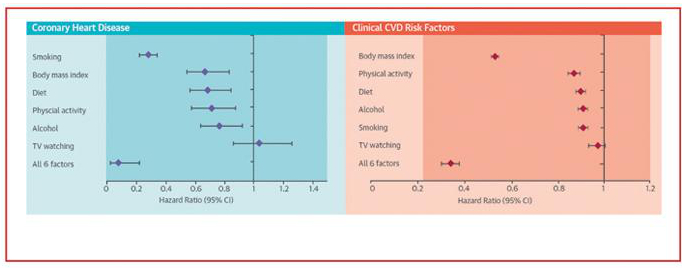
A  study that  followed participants in a study of nurses established in 1989, which surveyed more than 116,000 participants about their diets and other health habits every two years, resulted in 69,247 women being followed for two decades and concluded that three-quarters of heart attacks in young women could be prevented if women closely followed six healthy lifestyle practices.

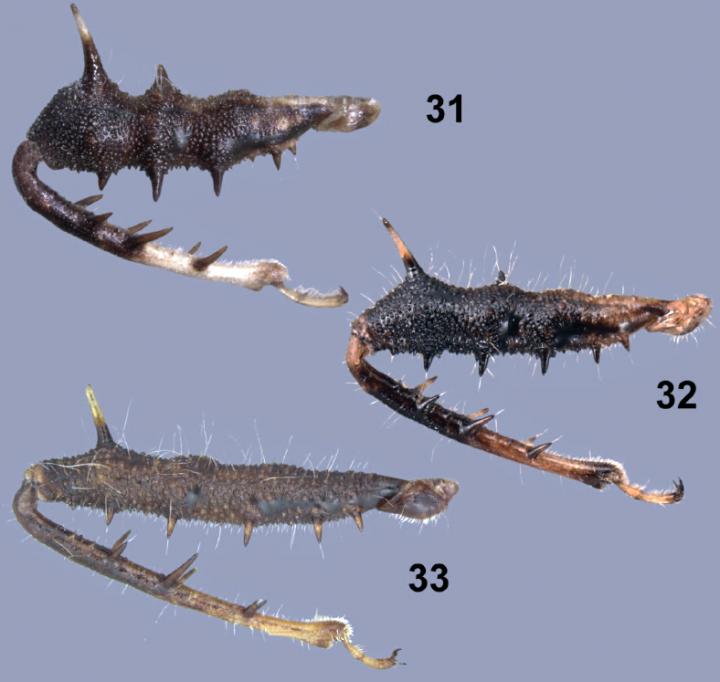
In 2006,  Dr. J. E. McPherson, professor emeritus at Southern Illinois University, was working with colleagues on a key to the nymphs of three midwestern species of assassin bug in the genus Sinea (i.e., S. complexa, S. diadema, and S. spinipes).

To test their key for accuracy, they asked several others to check it by comparing it with insects in their collections or laboratories.

All of them found the key to be satisfactory, except for one - Dr. Scott Bundy from New Mexico State University, who found discrepancies in specimens that had been collected in New Mexico and identified as S. complexa.


