







It is often believed that masculine men and more feminine women were prized in ancient societies and that modern culture is beyond gender simplifications, but a
team of psychologists, anthropologists and biologists that surveyed 12 populations around the world, from the primitive to the highly developed, find that isn't so.

How did life originate? And can scientists create life? These questions have always occupied philosophers and scientists interested in the origin of life, and they impact technology of the future also.

If we can create artificial living systems, we may not only understand the origin of life - we can also revolutionize the future of technology.

Protocells are the simplest, most primitive living systems, you can think of. The oldest ancestor of life on Earth was a protocell, and when we see, what it eventually managed to evolve into, we understand why science is so fascinated with protocells. If science can create an artificial protocell, we get a very basic ingredient for creating more advanced artificial life.

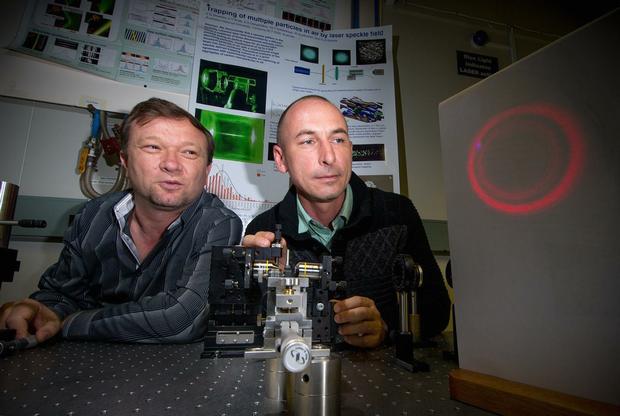
A long-distance optical tractor beam can move tiny particles - one fifth of a millimeter in diameter - a distance of up to 20 centimeters, which is almost 100 times further than previous experiments.

The hollow laser beam is bright around the edges and dark in its center and it can be used to attract or repel objects.

Get ready to control the weather or capture an X-Wing fighter in space - if it's really close, that is.

Dr. Vladlen Shvedov (L) and Dr. Cyril Hnatovsky adjust the hollow laser beam in their lab at the Australian National University. Credit: Stuart Hay, ANU

Is fairness built into the brain? According to a new Norwegian brain paper, people appreciate fairness - but fairness is not that everybody gets the same income, which is sure to concern those who believe all money should be distributed equally.

Economists from the Norwegian School of Economics and brain researchers from the University of Bergen decided to try and assess the relationship between fairness, equality, work and money: how brains react to how income is distributed.

The team looked at the striatum - the "reward center" of the brain. By measuring reaction to questions related to fairness, equality, work and money, they believe they can find answers about how we perceive distribution of income.

Anti-inflammatory medicines such as aspirin, estrogen, and Fluimucil can improve the efficacy of existing schizophrenia treatments, according to results announced at the European College of Neuropsychopharmacology conference in Berlin.

Doctors have long believed that helping the immune system may benefit the treatment of schizophrenia, but until now there has been no conclusive evidence that this would be effective. Now a group of researchers at the University of Utrecht in the Netherlands has carried out a comprehensive meta-analysis of all robust studies on the effects of adding anti-inflammatories to antipsychotic medication. They conclude that anti-inflammatory medicines, such as aspirin, can add to the effective treatment of schizophrenia. 

Psychology and psychiatry have a big problem - they are trapped in the past. While most areas of medicine have moved beyond symptom-based diagnosis, the mental health community is instead adding new symptom-based diagnoses, and as a result the National Institute of Mental Health has declared that the newest Diagnostic and Statistical Manual of Mental Disorders should be considered little more than a glossary of terms.

To fix that, psychiatry needs to progress from symptom-based (e.g. antidepressant, antipsychotic etc.) to pharmacologically based (e.g. focusing on pharmacological target (serotonin, dopamine etc.) and the relevant mode of action. Not only is it more scientific, it will stop patient's wondering why they are getting an antipsychotic for simple anxiety.

Long-term daily use of Viagra can provide protection for the heart at different stages of heart disease, with few side effects, according to a new meta-analysis published in BMC Medicine

Scientists from the Sapienza University of Rome carried out a meta-analysis of randomized controlled trials by searching for articles published between January 2004 and May 2014 to deduce the effectiveness of  Phosphodiesterase-5 inhibitor
(PDE5i) in providing cardiac protection, and to find out whether it was well-tolerated and safe. They identified 24 suitable trials for analysis from four research databases: MEDLINE, EMBASE, Cochrane Library and SCOPUS. The trials involved 1622 patients from mixed populations who were treated with PDE5i or a placebo. 

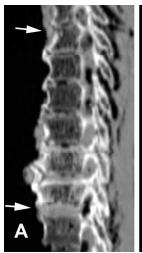
A systemic disease that causes inflammation in the spinal joints and was thought to have affected members of the ancient Egyptian royal families may have been another condition, according to a new study published in Arthritis&Rheumatology.

The authors refutes claims of Ankylosing spondylitis in royals like King Amenhotep III (1390–1352 BC), finding instead a degenerative spinal condition called diffuse idiopathic skeletal hyperostosis (DISH) in royal Egyptian mummies from the 18th to early 20th Dynasties.

I just returned from the Asian Science Park Association conference in Shiraz, Iran.[1] One Science Park official asked me, “Companies in our park cannot get any cooperation from the big petrochemical firms. What can we do?”

Without question American CO2 emissions have plummeted, even after being driven into more coal usage due to political concerns about nuclear energy. Cleaner natural gas made the difference but environmental critics say the energy emissions burden simply shifted to developing nations - poor people can't have air conditioning. 

Yet a new study in Nature Climate Change shows that environmentalists don't need to be criticizing the world's poor.  Improving household electricity access in India over the last 30 years contributed only marginally to the nation's total carbon emissions growth.

