








In the developed world, people are having fewer children and living longer and that has led to a population that is older than in the past.

On average, life expectancy in developed countries has risen at a pace of three months per year, and fertility has fallen below replacement rate in the majority of Europe and some other developed countries. Most academic discussion of this trend has so far focused on potential problems - when social security was young there were over 20 workers per retiree and now there are 3 - and that is without the entire Baby Boom being retired and incurring healthcare costs.

Ovarian cancer is the most deadly gynecological kind, it claims the lives of more than 50% of women who are diagnosed

Ovarian cancer is often diagnosed late and develops a resistance to chemotherapy but new insight into why may lead to better diagnosis and treatment.

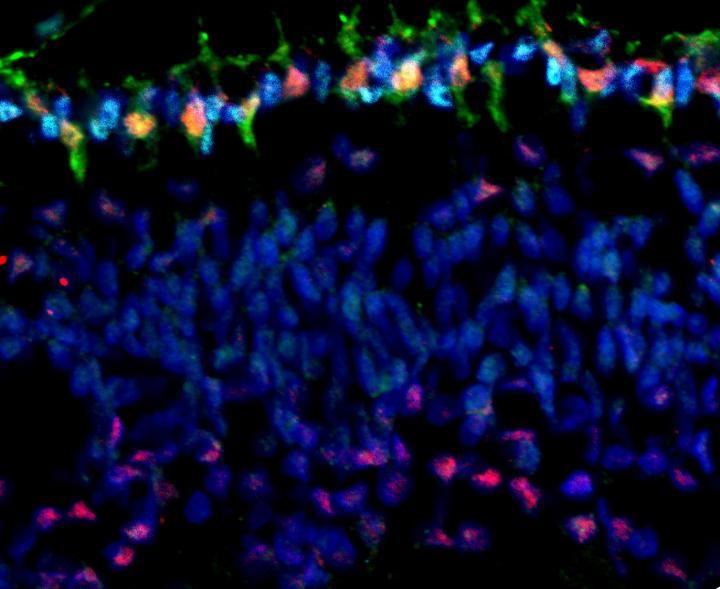
Retinoblastoma is a childhood retinal tumor usually affecting children ages one to two and the most common malignant tumor of the eye in children. Left untreated, retinoblastoma can be fatal or result in blindness.

Retinoblastomas have been found to develop in response to the mutation of a single gene, the RB1 gene, demonstrating that some cells are only a step away from developing into a life-threatening malignancy.


'To be, or not to be' male or female? Maxine Peake plays Hamlet. Credit: Jonathan Keenan/Royal Exchange Theatre

By Mareile Pfannebecker, University of Manchester

The ghost, in this autumn’s Royal Exchange Theatre production of Hamlet, is in the light bulbs. Hung over the stage, they flicker and hum as they mark Old Hamlet’s movements. They also set the scene for the production: this is an indoors, domestic Hamlet, with Fortinbras and the wars cut out to focus on family politics.

The public supports most traffic safety laws. They routinely defy cell phone laws, believing that they should be pulled over for driving recklessly, not for having a cell phone, and they defy speed limits - but nothing like when the onerous national 55 MPH speed limit was forced on society - yet for the most part, road safety laws are obeyed. People stop at stop signs.

Yet a new survey shows how to strengthen road laws; quantify the traffic-related injury risks associated with a given law.

Astronomers have discovered clear skies and steamy water vapor on a planet known as HAT-P-11b - outside our solar system. HAT-P-11b is about the size of Neptune, making it the smallest exoplanet ever on which water vapor has been detected. 

HAT-P-11b is a so-called exo-Neptune, a Neptune-sized planet that orbits another star. It is located 120 light-years away in the constellation of Cygnus (The Swan). Unlike Neptune, this planet orbits closer to its star, making one lap roughly every five days. It is a warm world thought to have a rocky core, a mantle of fluid and ice, and a thick gaseous atmosphere. Not much else was known about the composition of the planet, or other exo-Neptunes like it, until now.

A 1997 Food and Drug Administration (FDA) rule allowed food manufacturers to use ingredients "generally regarded as safe," or GRAS, like vinegar and lots of other things, without needing approval all over again.

Food advocates say the current GRAS process allows substances into the food supply that might pose a health risk. How can safe products be risky?

In the future, new organs will be created from a patient's own stem cells and they will require no waiting lists, no immunosuppressive drugs, and no stickers on drivers licenses making people available for organ donations.

Currently, organ transplantation is "opt in" - you have a choice. A new paper by psychologists examines whether it might be better to have organ donation be opt-out.


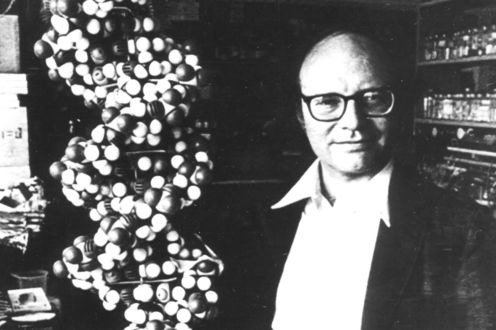
Knowing your DNA will is not a panacea. Credit: PA/Harvard University

By Walter Gilbert, Harvard University

Walter Gilbert won the Nobel Prize in 1980 in Chemistry for his contribution to sequence DNA, or “determination of base sequences in a nucleic acid”. Mohit Kumar Jolly, researcher at Rice University and contributor to The Conversation, interviewed him at the 2014 Lindau Nobel Laureates Meeting.

How people perceive and taste alcohol depends on genetic factors, and that influences whether they "like" and consume alcoholic beverages, according to a nutritionist
and colleagues at Penn State's College of Agricultural Sciences.

