
ITHACA, N.Y. – Like mobsters following strict orders, newly engineered molecules called "ubiquibodies" can mark specific proteins inside a cell for destruction – a molecular kiss of death that is paving the way for new drug therapies and powerful research tools.

Led by professor Matthew DeLisa, chemical engineers at Cornell University have developed a new type of antibody, called a "ubiquibody," which is an antibody fragment they have inserted into the natural process known as the ubiquitin-proteasome pathway (UPP). Their work appears in the March 16 issue of the Journal of Biological Chemistry and is highlighted in an analysis piece in the publication SciBX.

This news release is available in French.

Montreal, March 5, 2014 — There are clear benefits to raising a bilingual child. But could there be some things learning a second language doesn't produce, such as a more open-minded youngster?

New research from Concordia University shows that, like monolingual children, bilingual children prefer to interact with those who speak their mother tongue with a native accent rather than with peers with a foreign accent.

Imagine driving on a dark road. In the distance you see a single light. As the light approaches it splits into two headlights. That's a car, not a motorcycle, your brain tells you.

A new study found that neural circuits in the brain rapidly multitask between detecting and discriminating sensory input, such as headlights in the distance. That's different from how electronic circuits work, where one circuit performs a very specific task. The brain, the study found, is wired in way that allows a single pathway to perform multiple tasks.

Inspired by this embryonic induction mechanism, Ingber and Basma Hashmi, a Ph.D. candidate at SEAS who is the lead author of the current paper, set out to develop a way to engineer artificial teeth by creating a tissue-friendly material that accomplishes the same goal. Specifically, they wanted a porous sponge-like gel that could be impregnated with mesenchymal cells, then, when implanted into the body, induced to shrink in 3D to physically compact the cells inside it.

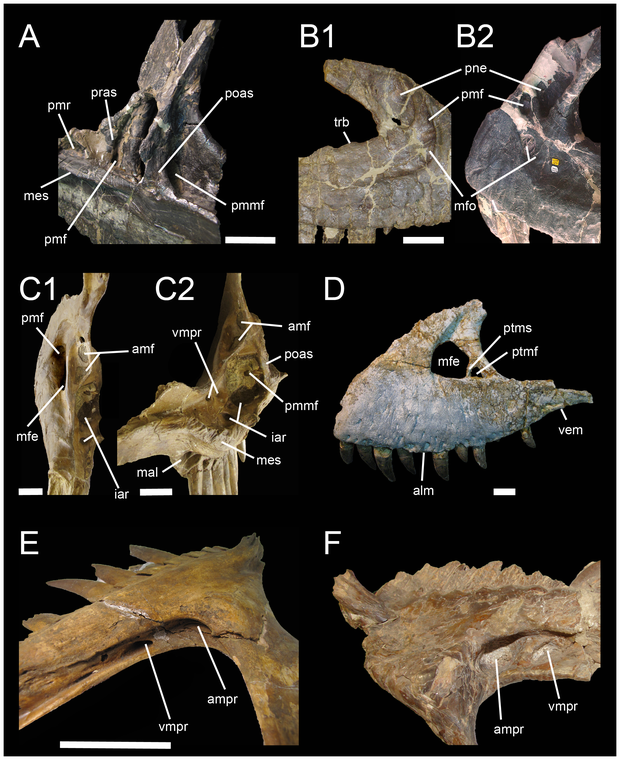
A new dinosaur species found in Portugal is one of the largest carnivorous dinosaurs from the Jurassic period - and may be the largest land predator discovered in Europe - 30 feet long and weighing up to 5 tons.

Scientists discovered bones belonging to this dinosaur north of Lisbon. They were originally believed to be Torvosaurus tanneri, a dinosaur species from North America. Closer comparison of the shin bone, upper jawbone, teeth, and partial tail vertebrae suggest to the authors that it may warrant a new species name, Torvosaurus gurneyi.

Research in The New England Journal of Medicine and Human and Molecular Genetics journals finds that mutation in the STAG3 gene is the major cause of human fertility disorders, as it provokes a loss of function of the protein it encodes. 

STAG3 encodes a meiosis-specific subunit of the cohesin ring, the biological process through which, from a diploid somatic cell, a haploid cell or gamete is produced.

Cohesins are protein complexes that bind two straps of DNA and are implicated in its repair, replication and recombination, as well as in its chromosomal stability, transcription regulation, stem-cell pluripotency, and cell differentiation.


Genetic study in a family

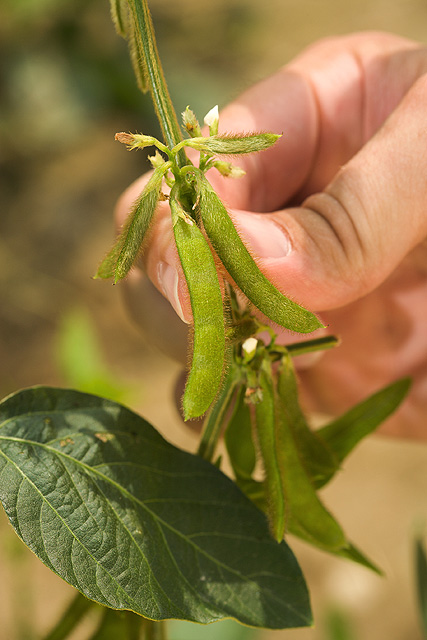
Soybeans are a tremendously successful crop and a new study that traced the genetic changes in varieties over the last 80 years of soybean breeding found that increases in yield gains and an increased rate of gains over the years are largely due to the continual release of greater-yielding cultivars.  

Some are concerned that converging on optimal crops for each region might be a bad thing but plentiful food tells a different story.

University of Arizona researchers snapped images of a planet outside our solar system with an Earth-based telescope using essentially the same type of imaging sensor found in digital cameras instead of an infrared detector. Although the technology still has a very long way to go, the accomplishment takes astronomers a small step closer to what will be needed to image earth-like planets around other stars

NASA has successfully concluded a remotely controlled test of new technologies that would empower future space robots to transfer hazardous oxidizer – a type of propellant – into the tanks of satellites in space today.

Concurrently on the ground, NASA is incorporating results from this test and the Robotic Refueling Mission on the International Space Station to prepare for an upcoming ground-based test of a full-sized robotic servicer system that will perform tasks on a mock satellite client.

Collectively, these efforts are part of an ongoing and aggressive technology development campaign to equip robots and humans with the tools and capabilities needed for spacecraft maintenance and repair, the assembly of large space telescopes, and extended human exploration.

Evolutionary biologists have long considered bird song to be an exclusively male trait, resulting from sexual selection. A new paper says that's not the whole story.

The results of their analysis, now published in Nature Communications, showed that the common ancestor of modern songbirds had female song.

It doesn't turn Darwin's theory of sexual selection on its head, but it does mean there is more to the story than what Darwin proposed. Sexual selection has played a major role in the evolution of elaborate bird song but other selection pressures or processes have also probably played a role, especially at the initial stages of its evolution, the authors note.

