


URBANA, Ill. – Just as with people, feline obesity is most often linked to excessive food intake or not enough physical activity. Attempts to cut back on calories alone often result in failed weight loss or weight regain in both people and their pets.

So how do you encourage your cat to get more exercise?

Researchers from the University of Illinois interested in finding a method to maintain healthy body weight in cats, looked at a previously suggested claim that increased meal frequency could help to increase overall physical activity.

The idea is to feed cats the appropriate amount of food needed to maintain a healthy body weight, but to offer it in more frequent, smaller meals throughout the day.

A new study by a Wits University scientist has overturned a long-standing hypothesis about plant speciation (the formation of new and distinct species in the course of evolution), suggesting that agricultural crops could be more vulnerable to climate change than was previously thought.

Unlike humans and most other animals, plants can tolerate multiple copies of their genes – in fact some plants, called polyploids, can have more than 50 duplicates of their genomes in every cell. Scientists used to think that these extra genomes helped polyploids survive in new and extreme environments, like the tropics or the Arctic, promoting the establishment of new species.

One of the major causes of hearing loss in mammals is damage to the sound-sensing hair cells in the inner ear. For years, scientists have thought that these cells are not replaced once they're lost, but new research appearing online February 20 in the journal Stem Cell Reports reveals that supporting cells in the ear can turn into hair cells in newborn mice. If the findings can be applied to older animals, they may lead to ways to help stimulate cell replacement in adults and to the design of new treatment strategies for people suffering from deafness due to hair cell loss.

When we are wounded, our bodies naturally begin a process of repair of the damaged tissue. This process is mediated by biological molecules called growth factors, which are proteins that occur naturally in our cells and guide processes ranging from embryonic development to healing. Given their regenerative role in the body, growth factors have been investigated for use in drugs but with limited success. Publishing in Science, an EPFL group has used bioengineering to significantly improve the efficacy of clinical growth factors in the context of soft tissue and bone repair, while maintaining low and safe doses.

Socially stigmatized groups have poorer health than non-stigmatized groups, but a team of researchers believes that more emphasis on two-way and multidisciplinary interventions will have a greater and more successful impact on relieving many health issues.

"We took an interdisciplinary approach to understanding how to reduce health disparities due to the effects of social stigma, including stigmas based on race, sexual orientation and chronic illness," said Jonathan Cook, assistant professor of psychology, Penn State.

Stigma results when a negative stereotype becomes attached to a particular characteristic in societal consciousness. People with this specific characteristic come to be seen as lower in status than others and therefore separate.

If you as a farmer have a choice between growing food that can feed lots of people or diverse food that can feed only a few, the answer will be obvious.

As science has discovered that certain varietals will have better yields, it is no surprise that people want to adopt them. Food security, and meeting other basic needs, allows people to pursue wealth, both the economic and cultural kind.

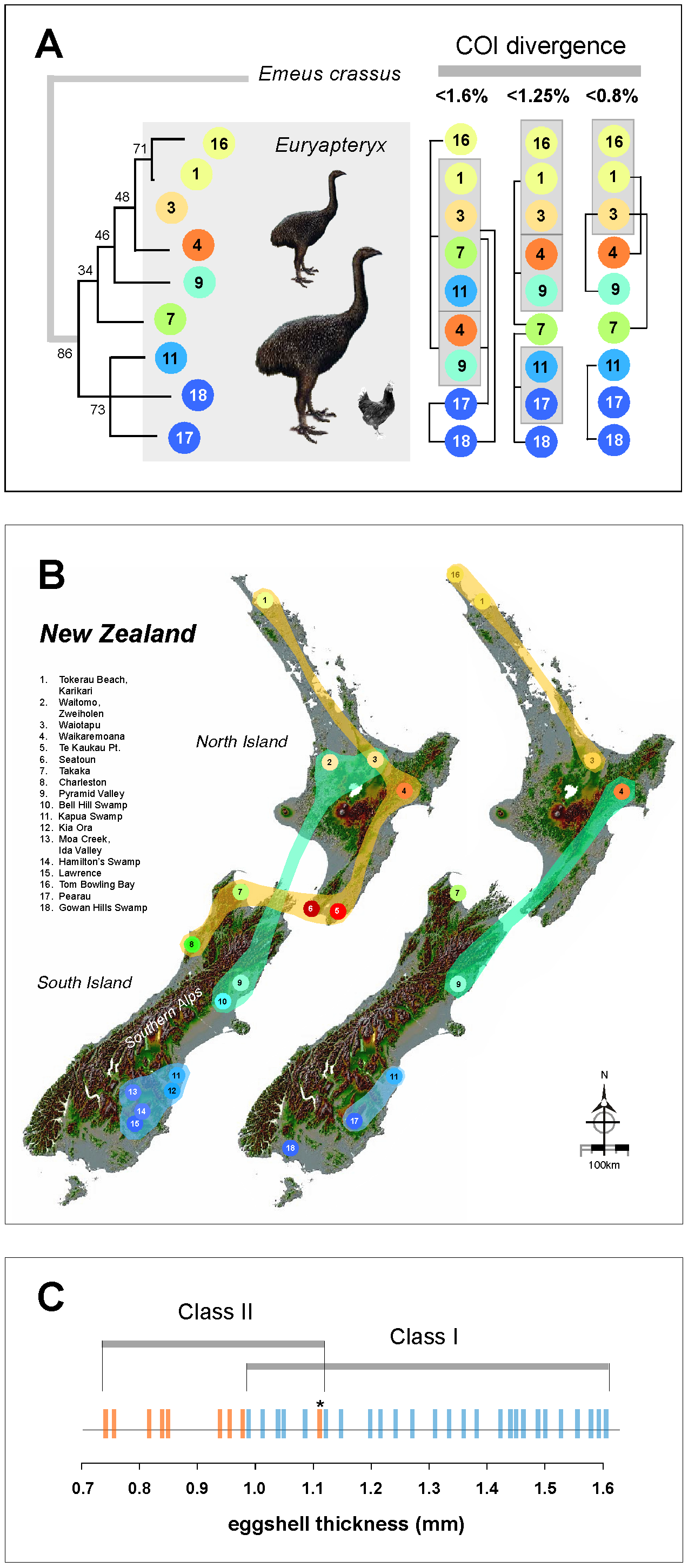
Just how many species existed of the extinct New Zealand moa? The status for extinct moa (Aves: Dinornithiformes) from the genus Euryapteryx isn't as clear cut as it might seem. 

Dr. Leon Huynen, lead author of a new paper said the challenges of understanding extinct fauna can be formidable and particularly so when it comes to this ancient bird. "Despite more than 100 years of research being devoted to the issue, determining species status is challenging, especially where there is an absence of substantial morphological, physiological, and behavioral data.

When it comes to demographics and society, no one likes surveys and statistics that make them look less positive. Yet surveys and statistics are all we have to go by in order to know if people are treating each other the way they expect to be treated in turn.

In society, there is a belief that women will be more cooperative than men. In academia, that is not the case, according to a paper in Current Biology. Instead, women in academia are less likely to cooperate than men.

The findings are based on an analysis of the publication records of professors working at 50 North American universities.And the lack of cooperation is most evident in an area where women overwhelmingly dominate - psychology.

On a per capita electricity production basis, environmentalists are winning the war on energy

Electricity for all, which was once considered the goal of technological progress, is now treated like a giant step on the road to an ecological Apocalypse. As a result, we've increased regulation and decreased generation and the price per kilowatt-hour has gone up and supply per capita has gone down. We can thank a confluence of bad ideas, chiefly subsidies for inefficient and expensive green alternatives, penalties for coal and natural gas, and a war on nuclear science.

Nature is always looking for new ways to stay ahead. To-date, resistance to pesticides has been recorded in more than 500 insects, 218 weeds, and 190 fungi that attack plants.

The recorded cases of resistance in insects, mites and other arthropods, which include resistance to multiple pesticides per species, more than doubled between 1990 and 2013, from 5,141 to 11,254.

How will a new glossary help? The authors of updated definitions in the Journal of Economic Entomology say a common vocabulary is needed because the current jumble of terms fosters confusion among scientists in academia, industry and government.

