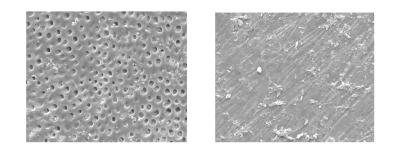





While sipping on sports drinks all day may provide an energy boost, this popular practice is also exposing people to levels of acid that can cause tooth erosion and hypersensitivity, NYU dental researchers have found.

In a recent study, the researchers found that prolonged consumption of sports drinks may be linked to a condition known as erosive tooth wear, in which acids eat away the tooth's smooth hard enamel coating and trickle into the bonelike material underneath, causing the tooth to soften and weaken. The condition affects one in 15 Americans and can result in severe tooth damage and even tooth loss if left untreated. 

A team of researchers from the Massachusetts General Hospital Center for Engineering in Medicine (MGH-CEM) has found the first evidence of cell-to-cell communication by amino acids, the building blocks of proteins, rather than by known protein signaling agents such as growth factors or cytokines. Their report will appear in an upcoming issue of the FASEB Journal and has been released online. 

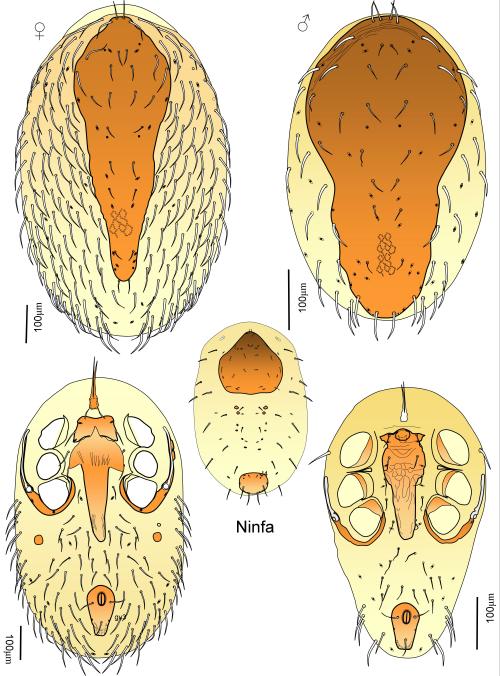
An international team of scientists has discovered a new acarine species (Ophionyssus schreibericolus) that lives off black green lizards from the Iberian Peninsula. This involves the first recording of the Ophionyssus genus that feeds off and lives on animals endemic to the peninsula. The researchers now think that these parasites could be found in other reptiles in the region.

The new acarine species is an ectoparasite that belongs to the Macronyssidae (Mesostigmata) family.

Spanking, flagellation and cockbinding; researchers at the University of Northern Illinois have been very naughty in their attempt to quantify physiological responses to sadomasochistic activities.

 In their Archives of Sexual Behavior publication, the stress hormone cortisol along with the dominance associated testosterone hormone was measured in 58 sadomasochistic practicing couples before and after kinky sex fun time. 

Their results, along with a review of S&M literature suggests couples that practice S&M experience reduced levels of stress and feel an increase in relationship closeness.
The other day I posted on my FaceBook profile that I better hurry up to finish my presentation on epigenetic inheritance. One of my friends commented: “I have no idea what that means, but good luck to you!” Ironically, that is, in part, the point of my presentation: understanding what it all means. Let me explain.
Getting your teenager to drink a chocolate milkshake isn't hard in most families but it is a difficult treatment approach for families who have a daughter with anorexia nervosa.   Known as Behavioral Family Therapy or the Maudsley Approach, it calls on parents to supervise the eating habits of their anorexic child, feeding them high-calorie meals like milkshakes and macaroni and cheese until they regain a healthy weight.
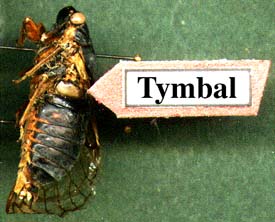
Welcome to what has become Inadvertent Cicada Week in this column.  Obviously, I'm fascinated by them.  This started around the summer of 2003, when I was completely addicted to a certain farm-simulator game for the Nintendo SP. 

During virtual summer on my virtual farm the game's music was overpowered by a jarring REEEREEEREEEREEEEEEE sound, intended to represent Japan’s singing cicadas.  When I finally managed to turn my Gameboy off to get some good ol’ grad student day-sleep in the relative stillness of central Pennsylvania, I found that the REEEREEEEEEEE noise had followed me.

     In the summer of 1981, a colleague at the NASA Ames Research Center in Mountainview, California, gave me a small black stone wrapped in aluminum foil that changed the course of my life.

Some of the brightest colors in nature are created by tiny nanostructures with a structure similar to beer foam or a sponge, according to Yale University researchers.    Most colors in nature—from the color of our skin to the green of trees—are produced by pigments. But the bright blue feathers found in many birds, such as Bluebirds and Blue Jays, are instead produced by nanostructures. Under an electron microscope, these structures look like sponges with air bubbles.
 
If you’ve ever been sleep-deprived, you know how it correlates to baseball and the feeling that your brain is batting below the Mendoza Line and you just aren't seeing the ball very well.      Or you just feel muddled.

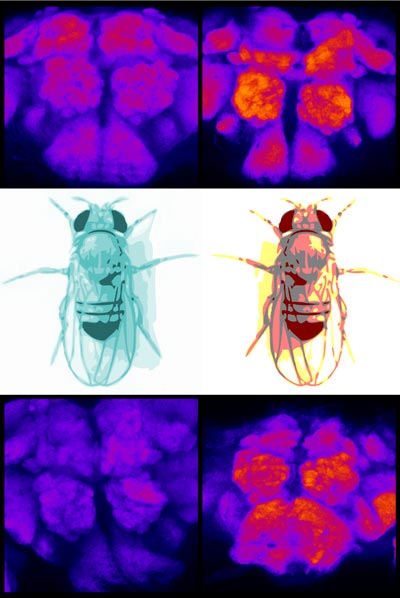
A study published in Science has molecular and structural evidence  saying proteins that build up in the brains of sleep-deprived fruit flies drop to lower levels in the brains of the well-rested - basically spring training, or a good cleaning, for your brain. The proteins are located in the synapses, those specialized parts of neurons that allow brain cells to communicate with other neurons.

