






Fewer caribou calves are being born and more of them are dying in West Greenland as a result of a warming climate, according to Eric Post, a Penn State associate professor of biology. Post, who believes that caribou may serve as an indicator species for climate changes including global warming, based his conclusions on data showing that the timing of peak food availability no longer corresponds to the timing of caribou births.

Caribou -- which are closely related to wild reindeer -- are dependent on plants for all their energy and nutrients. Throughout the long Arctic winter, when there is no plant growth, they dig through snow to find lichens; however, in spring they rapidly switch to grazing on the new growth of willows, sedges, and flowering tundra herbs. As the birth season approaches, they are cued by increasing day length to migrate into areas where this newly-emergent food is plentiful.

Evolution is like the mafia, according to Omar Tonsi Eldakar and David Sloan Wilson at Binghamton University. Altruists(the exploited) ‘pay’ the the punishers of the selfish(exploiters) by allowing themselves to be exploited, while the selfish punishers return the favor with their second-order altruism. It's like a protection racket - without getting a canoli.

Rather than comparing it to La Familia, Eldakar and Wilson consider this behavioral strategy the "Selfish Punisher," which exploits altruists and punishes other selfish individuals, including other selfish punishers.

This strategy might seem hypocritical in moral terms but it is highly successful in Darwinian terms, according to their theoretical model published in PNAS and a computer simulation model published in the Journal of Theoretical Biology. Selfish punishers can invade the population when rare but then limit each other, preventing the altruists from being completely eliminated.

In Phylogenetic Fallacies: Early Branching Must Mean Primitive I focused on the misconception that an "early branching" lineage was necessarily "primitive" (i.e., very similar to a distant ancestor). This time, I want to discuss something slightly more subtle, but nonetheless important, with regard to interpreting phylogenies. Specifically, I want to note a problem with the very concept of one lineage "branching off from" another lineage. There can be a tendency to consider evolutionary trees as reflecting a main line with a series of "side branches". This is especially true when the tree is "unbalanced" (lineages are depicted with uneven amounts of diversity) and "ladderized" (the more diverse branches are placed on the same side of each node). The following is a general unbalanced, right-ladderized tree.

There has been greatly increasing attention given to the potential of ‘biochar’, or charcoal made from biological tissues (e.g., wood) to serve as a long term sink of carbon in the soil. This is because charcoal is carbon-rich and breaks down extremely slowly, persisting in soil for thousands of years.

This has led to the suggestion being seriously considered by policy makers worldwide that biochar could be produced in large quantities and stored in soils. This would in turn increase ecosystem carbon sequestration, and thereby counteract human induced increases in carbon-based greenhouse gases and help combat global warming.

In a series of mate choice experiments with Phintella vittata (the Chinese jumping spider), a group researchers has found that female spiders would rather mate with males that reflect ultraviolet B (UVB) rays than those that do not. This is the first evidence of an animal using UVB rays to communicate with other members of its species.

It has long been recognized that solar UVB has direct deleterious effects on a wide range of living organisms; for example, it can cause skin cancer and damage the retinal tissues of the eyes of mammals,” said Daiqin Li of National University of Singapore, who is also an Adjunct Professor in Hubei University, China.

As marine pollution continues to rise, various interesting solutions have been proposed to remove toxic contaminants.

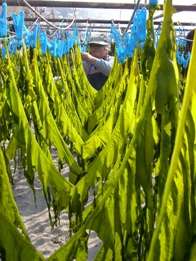
Various species of seaweed are able to extract toxic compounds from seawater, says Shinichi Nagata of the Environmental Biochemistry Group, at Kobe University, Japan, and colleagues at Shimane University and Nankai University, China.

They point to the brown seaweed, Undaria pinnatifida, known as wakame in Japan, and note that it has been the focus of research in this area for almost a decade.

Biomedical research in developing countries is the kind of ethical condundrum we all think about.

On one hand, infectious diseases may cause up to half of all deaths in undeveloped nations(1), so no one needs advanced treatments more. On the other hand, these are human clinical trials of experimental drugs and socio-economic status does not make you a lab monkey in any sort of culture we want to call civilized.

So what is the solution? Americans are primarily distrustful of government, the bigger the worse, so a global body dictating clinical trials would be treated with a lot of skepticism but the perfect solution can't be moving ethical targets determined by various nations, funding sources or institutions as is done now.

Scientists probing volcanic rocks from deep under the frozen surface of the Arctic Ocean have discovered a special geochemical signature until now found only in the southern hemisphere. The rocks were dredged from the remote Gakkel Ridge, which lies under 3,000 to 5,000 meters of water; it is Earth’s most northerly undersea spreading ridge.

The Gakkel extends some 1,800 kilometers beneath the Arctic ice between Greenland and Siberia. Heavy ice cover prevented scientists from getting at it until the 2001 Arctic Mid-Ocean Ridge Expedition, in which U.S and German ice breakers cooperated.

This produced data showing that the ridge is divided into robust eastern and western volcanic zones, separated by an anomalously deep segment. That abrupt boundary contains exposed unmelted rock from earth’s mantle, the layer that underlies the planet’s hardened outer shell, or lithosphere.

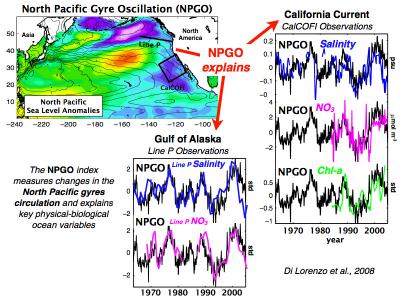
Scientists at the Georgia Institute of Technology have discovered a new climate pattern called the North Pacific Gyre Oscillation.

This new pattern explains changes in the water that are important in helping commercial fishermen understand fluctuations in the fish stock. They also believe that as the temperature of the Earth warms, large fluctuations in these factors could help climatologists predict how the oceans will respond in a warmer world.

“We’ve been able to explain, for the first time, the changes in salinity, nutrients and chlorophyll that we see in the Northeast Pacific,” said Emanuele Di Lorenzo, assistant professor in Georgia Tech’s School of Earth and Atmospheric Sciences.

The electromagnetic fields produced by incubators alter newborns’ heart rates, says a small study published in the Fetal and Neonatal Edition of Archives of Disease in Childhood.

The research team assessed the variability in the heart rate of 43 newborn babies, none of whom was critically ill or premature.


