







A new study in the April issue of Psychological Science sought to examine whether individuals are motivated to increase their level of anger when they expect to complete a confrontational task, where anger might enhance performance.

Psychologists Maya Tamir and Christopher Mitchell of Boston College, and James Gross of Stanford University told the study participants that they will either play a computer game that is confrontational (“Soldier of Fortune” – a first person shooter game where killing enemies is your primary goal) or one that is not confrontational (“Diner Dash”—a game in which players guide a waitress serving customers). They were then asked to rate the extent to which they would like to engage in different activities before playing the game.

March 19,2008 marked the brightest ever cosmic explosion observed from Earth ( see Georg von Hippel's article here and the news article here). The outburst denoted as GRB 080319B was probably the death of a massive star leading to the creation of a black hole.

For the first time the birth of a black hole has been filmed. Cameras of the "Pi of the Sky" project recorded this remarkable event with a 4 minutes sequence of 10-second images. In under 20 seconds the object became so bright that it was visible with the naked eye. Then it began fading and in 4 minutes was 100 times fainter. At that time the observation was taken over by larger telescopes.


GRB 080319B brightnes measured by "Pi of the Sky" collaboration

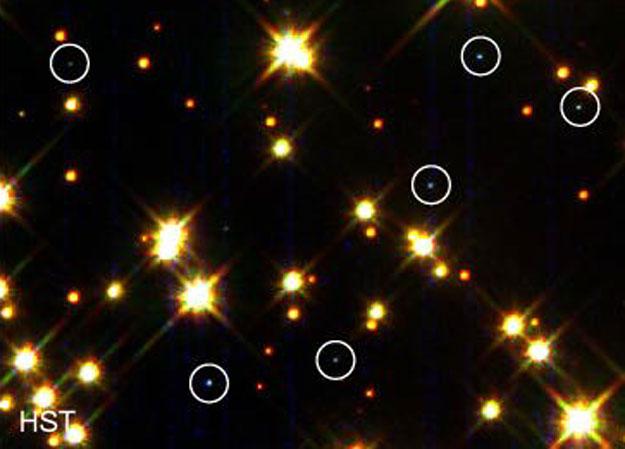
White dwarfs are good timekeepers, and as such, hold clues about the age of the cosmos.

“Once a white dwarf forms, all it does is sit and cool, so we can measure the temperature of a white dwarf, and, using some theoretical understandings, figure out how long it took the star to cool to that temperature, and hence determine how old it is,” says Judi Provencal, assistant professor of physics and astronomy at the University of Delaware, director of the Delaware Asteroseismic Research Center (DARC), and resident astronomer at Mt. Cuba Astronomical Observatory in Greenville, Del.. “The coolest white dwarf we know of is about 2,500 degrees,” she notes. “This corresponds to an age for the galaxy of about 10 billion years.”

Gram-negative bacteria, like E. coli and salmonella, destroy pathogenic bacteria by disabling the mechanism that produces their protective coating. Scientists have discovered two key proteins that guide one of the two groups of bacteria to make their hardy outer shells -- their defense against the world.

The team discovered the proteins through an extended process of elimination. The scientists looked at microbes in the guts of carpenter ants. The bacteria, which have lived there for millions of years -- passed on over many generations -- have lost many of the traits necessary for survival in the outer world. As a result, their collection of genes, known as a genome, is far smaller and simpler than the genome of E. coli.

New research suggests political freedom and geographic factors contribute significantly to causes of terrorism, challenging the common view that terrorism is rooted in poverty.

"There is no significant relationship between a country's wealth and level of terrorism once other factors like the country's level of political freedom are taken into account," says Alberto Abadie, public policy professor at Harvard University's Kennedy School of Government.

Abadie's review of the World Market Research Centre's Global Terrorism Index found no clear correlation between terrorism and poverty. Abadie's research was funded by the National Science Foundation (NSF).

Results from a recent survey conducted by a University of Missouri professor reveal that the U.S. public prefers to act locally and nationally on environmental issues and that may be why appeals to global warming are not more successful.

“The survey’s core result is that people care about their communities and express the desire to see government action taken toward local and national issues,” said David Konisky, a policy research scholar with the Institute of Public Policy. “People are hesitant to support efforts concerning global issues even though they believe that environmental quality is poorer at the global level than at the local and national level. This is surprising given the media attention that global warming has recently received and reflects the division of opinion about the severity of climate change.”

Can physical symptoms in depression be a consequence of low energy production rates? A report in the March issue of Psychotherapy and Psychosomatics introduces a new hypothesis regarding the mechanisms of physical symptoms in depression: it states that energy production rates toward the lower end of the spectrum may predispose the individuals to develop depression and its physical symptoms.

The Authors hypothesized that decreased ATP production rates in mitochondria underlie depressive disorder with very high levels of somatization. They assessed muscle mitochondria in depressed patients as well as somatic symptomatology with 3 self reported scales (Somatic Anxiety, Muscular and Psychasthenia) from the Karolinska Scales of Personality.

At the end of the study, on each of the 3 Karolinska Scales of Personality, virtually every patient with very high levels of somatic symptomatology demonstrated muscle ATP production rates below the control range in the scales.

NASA's Cassini spacecraft tasted and sampled a surprising organic brew erupting in geyser-like fashion from Saturn's moon Enceladus during a close flyby on March 12. Scientists are amazed that this tiny moon is so active, "hot" and brimming with water vapor and organic chemicals.

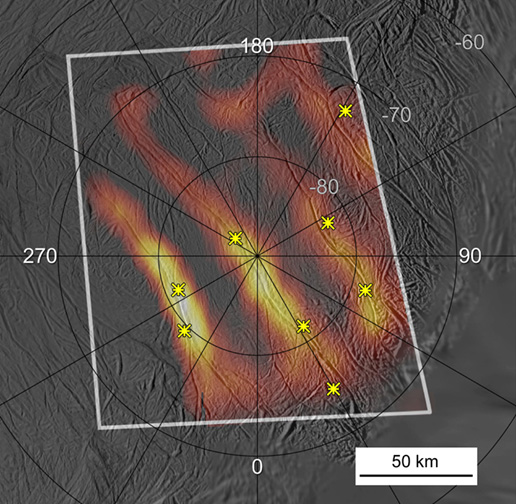
New heat maps of the surface show higher temperatures than previously known in the south polar region, with hot tracks running the length of giant fissures. Additionally, scientists say the organics "taste and smell" like some of those found in a comet. The jets themselves harmlessly peppered Cassini, exerting measurable torque on the spacecraft, and providing an indirect measure of the plume density.

Tiny prehistoric bones found on an Australian farm have been directly linked to a strange and secretive little animal that lives today in the southern rainforests of South America.

The mystery? They are separated by an ocean and millions of years.

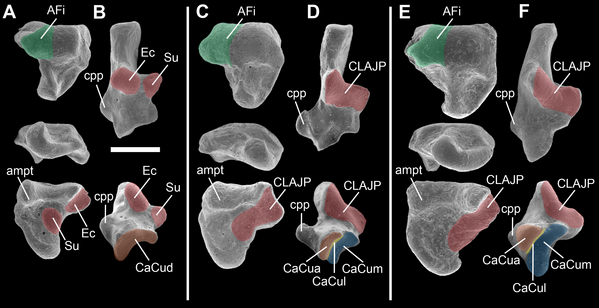
The fossilised ankle and ear bones are those of Australia's earliest known marsupial, Djarthia, a primitive mouse-like creature that lived 55 million years ago. It is a kind of Australian Eve, possibly the mother of all the continent's unusual pouched mammals, such as kangaroos, koalas, possums and wombats.

But a new study has confirmed that Djarthia is also a primitive relative of the small marsupial known as the Monito del Monte – or "little mountain monkey" – from the dense humid forests of Chile and Argentina.

Researchers from Spain and Croatia led an investigation into the peculiar lifestyle of numerous spider species, which live, feed, breed and ‘walk’ in an upside-down hanging position. According to their results, such ‘unconventional’ enterprise drives a shape in spiders that confers high energy efficiency, as in oscillatory pendulums.

The great majority of land animals evolved to use the ground as the main support for their motion. Accordingly, they evolved legs capable of supporting the weight of their whole bodies, enabling them to move around with their heads above their feet.

However, many spider species found it more convenient to literally turn their world upside down. They spend most of their lives hanging suspended by their legs, and ‘walk’ by swinging under the influence of gravity.


