
Men who ate fruits and vegetables with higher levels of pesticide residues--such as strawberries, spinach, and peppers--had lower sperm count and a lower percentage of normal sperm than those who ate produce with lower residue levels, according to a new study by researchers at Harvard T.H. Chan School of Public Health. It is the first study to look at the connection between exposure to pesticide residues from fruits and vegetables and semen quality.

The study will appear online March 30, 2015 in the journal Human Reproduction.

Humans have been inspired by the designs of nature since the beginning of our existence so it only makes sense that to develop an extremely sensitive temperature sensor, engineers took a close look at temperature-sensitive plants. Then they developed a hybrid material that contains, in addition to synthetic components, the plant cells themselves.

The result is an electronic module that changes its conductivity as a function of temperature. "No other sensor can respond to such small temperature fluctuations with such large changes in conductivity. Our sensor reacts with a responsivity at least 100 times higher compared to the best existing sensors," says Raffaele Di Giacomo, a post-doctoral researcher at ETH Zurich.

Body odor is a reality of daily life. The smell is caused by bacteria on the skin breaking down naturally secreted molecules contained within sweat. Researchers from Unilever and the University of York have studied the underarm microbiome and identified a unique set of enzymes in the bacterium Staphylococcus hominis that is effective at breaking down sweat molecules into compounds known as thioalcohols, an important component of the characteristic body odor smell.

People who have lost some of their peripheral vision, such as those with retinitis pigmentosa, glaucoma, or brain injury that causes half visual field loss, often face mobility challenges and increased likelihood of falls and collisions. As therapeutic vision restoration treatments are still in their infancy, rehabilitation approaches using assistive technologies are often times viable alternatives for addressing mobility challenges related to vision loss.

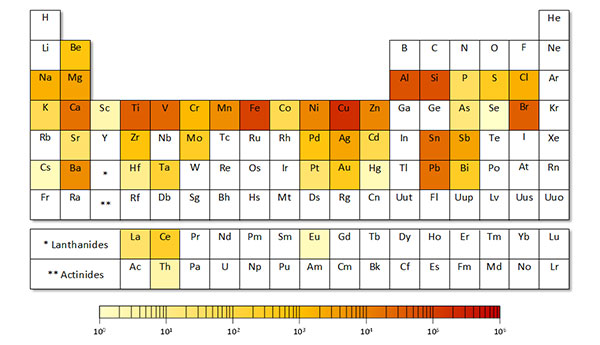
In a new paper, a team of Yale researchers assesses the "criticality" of all 62 metals on the Periodic Table of Elements, providing key insights into which materials might become more difficult to find in the coming decades, which ones will exact the highest environmental costs -- and which ones simply cannot be replaced as components of vital technologies.

During the past decade, sporadic shortages of metals needed to create a wide range of high-tech products have inspired attempts to quantify the criticality of these materials, defined by the relative importance of the elements' uses and their global availability.

Just as crocus and daffodil blossoms signal the start of a warmer season on land, a similar "greening" event--a massive bloom of microscopic plants, or phytoplankton--unfolds each spring in the North Atlantic Ocean from Bermuda to the Arctic.

Epidemiologists believe they have identified a unique pattern of immune molecules in the cerebrospinal fluid of people with myalgic encephalomyelitis/chronic fatigue syndrome (ME/CFS) that provides insights into the basis for cognitive dysfunction--frequently described by patients as "brain fog"--as well as new hope for improvements in diagnosis and treatment.

Even during a good year, soybean farmers nationwide are, in essence, taking a loss. That's because changes in weather patterns have been eating into their profits and taking quite a bite: $11 billion over the past 20 years.

This massive loss has been hidden, in effect, by the impressive annual growth seen in soybean yields thanks to other factors. But that growth could have been 30 percent higher if weather variations resulting from climate change had not occurred, according to a study by University of Wisconsin-Madison agronomists published last month in Nature Plants.

Researchers have discovered that the inherent 'handedness' of molecular structures directs the behavior of individual cells and confers them the ability to sense the difference between left and right.

Our bodies are made up of hundreds of different types of cells, each of which performs a unique and highly specialized task. Traditionally, the ability of cells to specialize in a given function was attributed to its genetic code. However, it is becoming increasingly clear that cells do not simply live by a set of inherited or pre-determined instructions. Instead, 'cellular decisions' are made dynamically, much like humans make decisions based on the information provided to us by our senses.

Though the public imagery of science is lab coats and test tubes, less well-known is the role of software development in science.

It is often the case that tools don't really exist to do some of the things that need to be done, but after the hard work of creating, testing and validating the code, it only gets mentioned in a line about the roles of the authors that few people actually read.(1)


