




Scientists have gained new insight into fragile X syndrome, the most common cause of inherited intellectual disability, by studying the case of a person without the disorder, but with two of its classic symptoms.

Fragile X syndrome results from an inherited genetic error in a gene called FMR1. The error prevents the manufacture of a protein called FMRP. Loss of FMRP is known to affect how cells in the brain receive signals, dialing up the amount of information allowed in. The gene is on the X chromosome, so the syndrome affects males more often and more severely than females, who may be able to compensate for the genetic error if their second copy of FMR1 is normal.

Every summer, there are reports linking a bacterium called Vibrio vulnificus to people getting sick or dying. The bacteria are found in warm saltwater and problems occur after eating raw tainted shellfish or when an open wound comes in contact with seawater.

People with a weakened immune system, chronic liver disease or iron overload disease are most at risk for severe illness. Vibrio vulnificus infections in high-risk individuals are fatal 50 percent of the time.

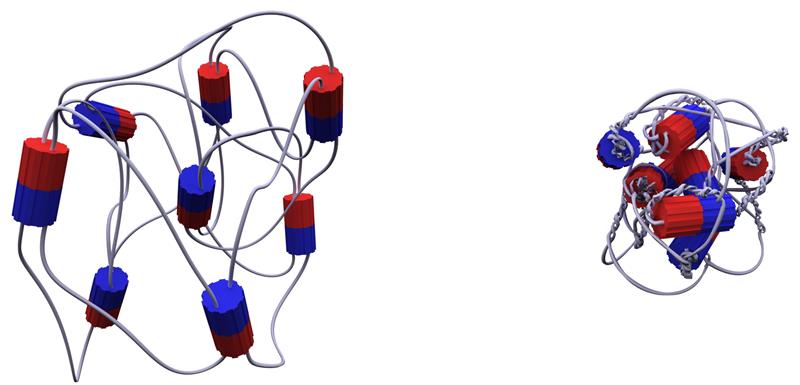
Living systems have the ability to produce collective molecular motions that have an effect at the macroscale, such as a muscle that contracts via the concerted action of protein motors. In order to reproduce this phenomenon, a team at CNRS's Institut Charles Sadron led by Nicolas Giuseppone, professor at the Université de Strasbourg, has made a polymer gel that is able to contract through the action of artificial molecular motors. When activated by light, these nanoscale motors twist the polymer chains in the gel, which as a result contracts by several centimeters.

Another advantage is that the new material is able to store the light energy absorbed.

The amount of time children spend using screens, such as televisions and computers, on a daily basis exceeds recommended guidelines but those guidelines were drawn up at a time when tablets, cell phones and other mobile devices were not as present in everyday life. Unless you are Amish or a doomsday prepper, it is unlikely that the future will mean current screen time guidelines.

And how valid are they anyway? Yes, prolonged use of screens by children is associated with adverse physical and mental health outcomes, such as increased risk of depression and anxiety in adolescent girls, but that is epidemiological curve fitting based on surveys, not real data.

New findings from research in the Seychelles provide further evidence that the benefits of fish consumption on prenatal development may offset the risks associated with mercury exposure. In fact, the new study, which appears today in the American Journal of Clinical Nutrition, suggests that the nutrients found in fish have properties that protect the brain from the potential toxic effects of the chemical.

DNA molecules provide the "source code" for life in humans, plants, animals and some microbes. But now researchers report an initial study showing that the strands can also act as a glue to hold together 3-D-printed materials that could someday be used to grow tissues and organs in the lab. This first-of-its-kind demonstration of the inexpensive process is described in the brand-new journal ACS Biomaterials Science & Engineering.

A variety of wheat that is resistant to a destructive fungal disease has been found to have specialized and protective cell walls, according to research published in BMC Plant Biology. These insights could help to produce stronger, disease-resistant varieties of durum wheat for improved pasta production.

Researchers have determined that languages with a wide range of tone pitches are more prevalent in regions with high humidity levels while languages with simpler tone pitches are mainly found in drier regions.

They explain this by noting that the vocal folds require a humid environment to produce the right tone. That means climate and weather our voices too.

