The existence of functional, non-protein-coding DNA is all too frequently portrayed as a great surprise uncovered by genome sequencing projects, both in large media outlets and in scientific publications that should have better quality control in place.
Eric Lander, writing
a Human Genome Project 10th anniversary retrospective in
Nature, explains the real surprise about non-coding DNA that was revealed by big omics projects.
It won't make it readable, but University of Arizona researchers have cracked at least one of the puzzles surrounding the Voynich manuscript, a book filled with drawings and writings nobody can make any sense of.
Using radiocarbon dating, a team led by Greg Hodgins in department of physics says the manuscript's parchment pages date back to the early 15th century, making the book a century older than previously thought.
It's nonsensical structure has kept the Voynich manuscript fascinating for the 50 people who care; rows of text scrawled on visibly aged parchment, flowing around intricately drawn illustrations depicting plants, astronomical charts and human figures bathing in, some claim, the fountain of youth.
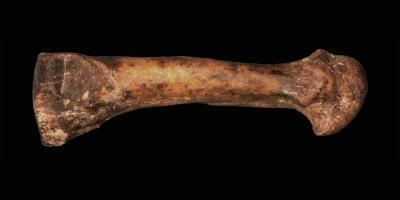
Arches in human feet have been instrumental in our ability to walk upright and researchers at the University of Missouri and Arizona State University say they have found proof that arches existed in a predecessor to the human species, Australopithecus afarensis, that lived more than 3 million years ago.
Last year I attended a singularity conference and Ray Kurzweil's avatar predicted it was 25 years away. Well, it's been 25 years away for a long time. It's a nice, safe number, close enough that no one gives up and stops buying books (global warming will happen in 100 years, for example) and not so close anyone looks silly (Al Gore saying in 2006 that we were doomed in 10 years, for example) it if doesn't happen.
In 1993, for example, Vernor Vinge said "Within thirty years, we will have the technological means to create superhuman intelligence. Shortly after, the human era will be ended."
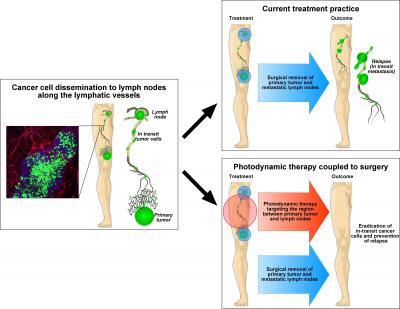
Metastasis is when tumor cells move from the primary tumor to distant tissues - it is metastasis of the primary tumor that kills most cancer patients. One of the least studied routes of metastasis is the lymphatic system, though many tumors produce factors that promote the formation of new lymphatic vessels (lymphangiogenesis). The newly formed lymphatic vessels enable tumor cells to travel from the primary tumor to the regional lymph nodes from whence they can spread throughout the body.
Current treatment practice is to surgically remove the primary tumor as well as the metastatic lymph nodes, but tumor cells in metastatic transit inside the lymphatic vessels have not been given much attention.
A milestone in the international Avogadro project coordinated by the Physikalisch-Technische Bundesanstalt (PTB) has been reached - with the aid of a single crystal of highly enriched
28Si, the Avogadro constant has now been measured more precisely than ever before, with a relative overall uncertainty of 3 · 10
-8.
Within the scope of the redefinition of the kilogram, the value
NA = 6.02214078(18) · 10
23 mol
-1 allows a more exact realization of this unit.
Einstein’s relativity theory and quantum physics, in theory as well as experiment, are extremely concerned with light. This comes directly from the fact that light does not exist as an independent entity – it is plain interaction.
I explained already how relativity makes light’s non-existence obvious. Today, I will tell you why that odd seeming fact only confirms what is known from entirely unrelated quantum mechanics: non-quantum relativity and non-relativistic quantum physics both agree on that light itself does not exist for entirely different reasons!
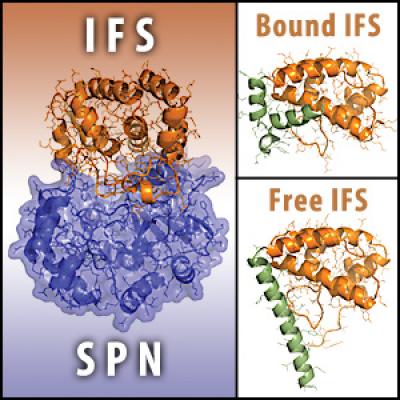
Bacteria attack with toxins designed to hijack or kill host cells but they have ways of protecting themselves from their own toxins. Researchers have described one of these protective mechanisms, potentially paving the way for new classes of antibiotics that cause the bacteria's toxins to turn on themselves.
Scientists determined the structures of a toxin and its antitoxin in Streptococcus pyogenes, common bacteria that cause infections ranging from strep throat to life-threatening conditions like rheumatic fever. In Strep, the antitoxin is bound to the toxin in a way that keeps the toxin inactive.
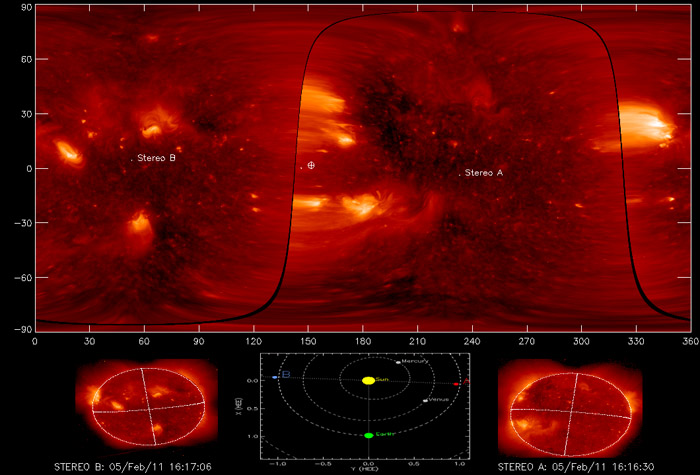
Two STEREO spacecraft are now 180 degrees apart from each other and providing scientists with a 360-degree view of the Sun. NASA's STEREO (Solar Terrestrial Relations Observatory) spacecraft were launched on October 25, 2006, and have been gathering images of solar activity, especially solar storms, since the mission began.
Faked fossils hold up science; there’s no two ways about it. Palaeontologists need a thick skin to realize that sometimes, those hours spent examining and interpreting a fossil may have been entirely wasted.
Sometimes, although the fossil may have been tampered with, the work may not have been wholly in vain, and there may be still viable science that can be done. And sometimes, like in this week's hoaxed fossil, there can be a whole new family of dinosaurs to describe.