A new low-bandwidth, high-frame-rate videoconferencing technology that creates the appearance of three-dimensionality and a strong sense of co-presence without the use of expensive motion-tracking devices or multicamera arrays could eventually become available for cell phones, laptop computers and personal digital assistants, according to a researcher at the University of Virginia.
The technology was presented Friday in London at the International Workshop on Image Analysis for Multimedia Interactive Services.
As many as 1 in 3 adults (up to 72 million people) in the United States has high blood pressure. Hypertension can lead to coronary heart disease, heart failure, stroke, kidney failure, and other health problems, and is attributed to 7 million deaths worldwide each year.
Blood pressure has a genetic component and hypertension runs in families. Attempts to identify genes associated with blood pressure have met with limited success but now an international research team says they have identified a number of unsuspected genetic variants associated with systolic blood pressure (SBP), diastolic blood pressure (DBP), and hypertension (high blood pressure), suggesting potential avenues of investigation for the prevention or treatment of hypertension.
Scientists in Germany and India are reporting development of a new cobalt imprinted polymer that reduces the amount of radioactive waste produced during routine operation of nuclear reactors. Their study, which details a first-of-its-kind discovery, has been published in Industrial&Engineering Chemistry Research.
Scientists in California are reporting use of a first-of-its-kind approach to craft genetically engineered microbes with the much-sought ability to transform switchgrass, corn cobs, and other organic materials into methyl halides — the raw material for making gasoline and a host of other commercially important products.
The new bioprocess could help pave the way for producing biofuels from agricultural waste, easing concerns about stress on the global food supply from using corn and other food crops. Their study is scheduled for the May 20 issue of the Journal of the American Chemical Society.
Throughout the post-industrial era, science and technology have been central to understanding both global security threats and possible solutions. Within the US and across the globe, major scientific organizations have developed Committees and working groups to integrate science with security policy, however, those efforts have focused almost exclusively on physical/life sciences and been applied predominantly to WMD-related threats.
Helicobacter pylori (H. pylori) infection is considered one of the most important risk factors for stomach (or gastric) cancer with as much as 65% of all cases linked back to the bacteria, although exactly how this occurs is not fully clear.
This blog entry is about one of the most interesting discoveries of the 90's in Neuroscience -- Mirror Neurons -- and a recent research paper that adds to their intrigue.
Mirror neurons are found in the premotor cortex, and what has made them so interesting is that they fire both when the individual performs a goal-directed action and when they watch someone else perform the same action. It is as if the mirror neurons encode an understanding about the intentions of someone else. For example, when my husband reaches for his coffee cup I understand that he intends to take a drink before he even raises the cup to his lips. Neuroscientists think it is the mirror neurons that encode the "understanding" when we watch what others are doing.
New research that uses an innovative approach to study, for the first time, the relative contributions of food and exercise habits to the development of the obesity epidemic has concluded that the rise in obesity in the United States since the 1970s was virtually all due to increased energy intake.
How much of the obesity epidemic has been caused by excess calorie intake and how much by reductions in physical activity has been long debated and while experts agree that making it easier for people to eat less and exercise more are both important for combating it, they debate where the public health focus should be.
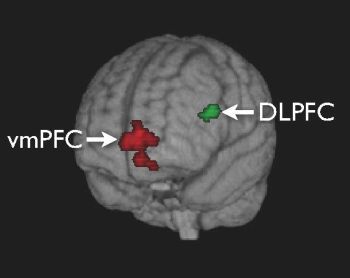
When you're on a diet, deciding to skip your favorite calorie-laden foods and eat something healthier takes a whole lot of self-control--an ability that seems to come easier to some of us than others. Now, scientists from the California Institute of Technology (Caltech) have uncovered differences in the brains of people who are able to exercise self-control versus those who find it almost impossible.
The key? While everyone uses the same single area of the brain to make these sorts of value-laden decisions, a second brain region modulates the activity of the first region in people with good self-control, allowing them to weigh more abstract factors--healthiness, for example--in addition to basic desires such as taste to make a better overall choice.
"The method we have developed means we can simultaneously detect various kinds of antibiotic residues (macrolides, tetracyclines, quinolones and sulfonamides) in honey", Antonia Garrido, lead author of the study and the researcher in charge of the UAL's Contaminants Analytical Chemistry Research Group, told Servicio de Información y Noticias Científicas (SINC).
In order to develop this method, the results of which have been published recently in the Journal of Agricultural and Food Chemistry, the researchers employed ultra performance liquid chromatography, a technique that makes it possible to separate the components of a sample, together with mass spectrometry, which permits the simultaneous identification of up to 17 antibiotics.