









To build a hospital, nuclear power station or a large dam you need to know the possible earthquake risks of the terrain. Now, researchers from the Universities of Granada and Jaen, alongside scientists from the University of California (Santa Barbara, USA), have developed, based on relief data from the southern edge of the Sierra Nevada, a geomorphological index that analyses land form in relation to active tectonics, applicable to any mountain chain on the planet.

Active tectonics comprise the most up-to-date deformation processes that affect the Earth's crust, resulting in earthquakes or recent deformations in the planet’s faults and folds. This phenomena is analysed in geology research carried out before commencing engineering works.

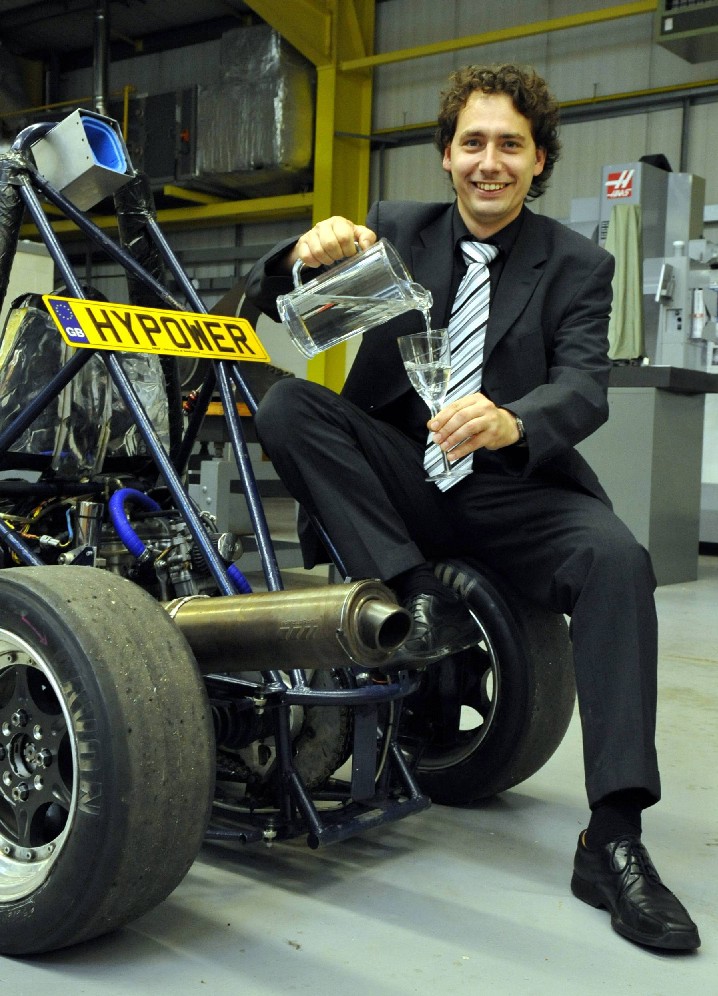
A team of scientists from the University of Sunderland have developed a hydrogen-powered car that they believe is a significant step forward in creating a mass-produced 'green' machine.

The team, led by Dirk Kok from the Institute of Automotive and Manufacturing Advanced Practice (AMAP), in partnership with the Centre for Process Innovation at Wilton and Lambda One Autogas at Gateshead, have successfully adapted a Nissan Almera to run on hydrogen so that it only emits water from its exhaust.

The HyPower Nissan Almera will be unveiled at the Partners4Automotive 2008 conference September 17th at the University of Sunderland’s Sir Tom Cowie Campus. This international event will look at alternative fuel technologies for vehicles and transport systems, giving local business the chance to see cutting edge developments from around the world.

Invisibility once belonged squarely in the realm of science fiction but in the last few years advancements in metamaterials have made it an exciting possibility, though not yet in the range of normal human vision or on a cost-effective basis.

Scientists in the Departments of Applied Physics and Electromagnetism at the University of Granada have taken a different tack, using the Transmission Line Method(TLM).

In 1885, Oliver Heaviside created the first transmission line model to understand the behavior of wires in the telegraph. That's right, pre-telephone Morse Code stuff. Future tech like invisibility can learn a thing or two from James Clerk Maxwell even today, it seems.

Rheumatoid arthritis is often a more painful experience for women than it is for men, though the visible symptoms are the same, and doctors should take more account of these subjective differences when assessing the need for medication, according to findings presented at a congress on gender medicine arranged by Karolinska Institutet.

For reasons yet unknown, rheumatoid arthritis is roughly three times more common amongst women than men. Moreover, several studies also suggest that rheumatoid arthritis eventually impairs the life quality of female suffers more than it does that of male sufferers. Here, too, the underlying reasons are unclear, but scientists have speculated that the medicines used affect women and men differently.

Yes, you read that right - the very people you look to for comfort, for learning, for a shoulder to cry on, could lead you down the path of annihilation. You don't have to be a lemming zombie to take up terrorism after all!

A New Kind of Networking

Liverpool University's Center (or Centre, if you live across the pond) for Investigative Psychology led a project that constructed psychological "profiles" to describe how Jihadists were led into their violence, according to a BBC article.

In hospitals and clinics, magnetic resonance imaging is quite common today. Clinicians like it because it shows much better images of soft tissues than computed tomography (CT) and uses no ionizing radiation. What it does use is a powerful magnetic field.

Magnetic resonance tomography has been around for just over 30 years so it is much younger than something like X-ray technology(>110 years) but ordinary MRI technology uses magnetic flux densities of 1.5 and 3 tesla.

A new MRI device delivered to Physikalisch-Technische Bundesanstalt (PTB) and the Experimental and Clinical Research Center (ECRC) of the Max Delbrück Center (MDC) for Molecular Medicine in Berlin-Buch uses a whopping 7 tesla and, they say, it will provide the clearest images ever taken of our insides.

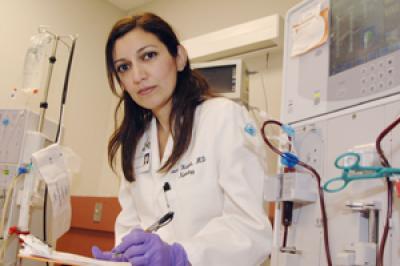
Dialysis patients diagnosed with depression are nearly twice as likely to be hospitalized or die within a year than those who are not depressed, a UT Southwestern Medical Center researcher has found.

In the study, available online and in the Sept. 15 issue of Kidney International, researchers monitored 98 dialysis patients for up to 14 months. More than a quarter of dialysis patients received a psychiatric diagnosis of some form of depression based on a Diagnostic and Statistical Manual of Mental Disorders 4th edition (DSM IV).

This is the first reported link between adverse clinical outcomes in dialysis patients and depression made through a formal psychiatric interview based on the DSM-IV standards. More than 80 percent of the depressed patients died or were hospitalized, compared with 43 percent of non-depressed patients. Cardiovascular events, which previously have been linked to depression, led to 20 percent of the hospitalizations.

Dr. Susan Hedayati

Chronic obstructive pulmonary disease (COPD)is the fourth-leading cause of death in the U.S. and affects more than 16 million Americans.

Broccoli is everywhere and enjoyed by almost no one - but your mom was right; broccoli is good for you. Now it turns out that broccoli can also help those with COPD, and that's reason enough to give broccoli some new respect.

According to recent research from Johns Hopkins Medical School, a decrease in lung concentrations of NRF2-dependent antioxidants, key components of the lung's defense system against inflammatory injury, is linked to the severity of chronic obstructive pulmonary disease (COPD) in smokers. Broccoli is known to contain a compound that prevents the degradation of NFRP.

A new type of drug could alleviate pain in a similar way to cannabis(marijuana) without affecting the brain, according to a new study published in the journal Pain on Monday 15 September.

The research demonstrates for the first time that cannabinoid receptors called CB2, which can be activated by cannabis use, are present in human sensory nerves in the peripheral nervous system, but are not present in a normal human brain.

Drugs which activate the CB2 receptors are able to block pain by stopping pain signals being transmitted in human sensory nerves, according to the study, led by researchers from Imperial College London.

Adults like to watch Chris Angel or David Blaine because we know the stunts are controlled, but there is always the chance they might off themselves. We get some fun out of figuring out the impossible and it's more challenging than figuring out how to cheat at Wii Fit.

Impossible tricks have a different effect on kids: a new experiment announced today at the BA Festival of Science in Liverpool says learning magical feats can boost children’s confidence and social skills.

The study, conducted by Rebecca Godfrey, Dr Sarah Woods, and Professor Richard Wiseman from the University of Hertfordshire, involved assessing the effect of teaching secondary school children some seemingly impossible illusions, including how to magically restore a rope that has been cut in half, and read another person’s mind.

