





Lilacs, though native to East Asia and Southeast Europe, were brought to North America by the first settlers and were sold in American nurseries as early as 1800. The oldest living lilacs in North America may be those at the Governor Wentworth estate in Portsmouth, N.H., believed to have been planted around 1750. In 1767, Thomas Jefferson recorded his method of planting lilacs in his garden book, and in 1785, George Washington noted that he had transplanted lilacs in his garden. Today, over two million lilacs are sold annually in the U.S., accounting for over $13 million in wholesale sales.

Lilacs are a part of U.S. history and in honor of that the U.S. Department of Agriculture (USDA) recently developed and introduced three new cultivars of lilacs. Honoring the patriotic role lilacs have played in U.S. history, the new shrubs have been dubbed 'Betsy Ross', 'Old Glory', and 'Declaration.'

The Wellcome Trust Sanger Institute has sequenced the equivalent of 300 human genomes in just over six months, reaching a staggering 1,000,000,000,000 letters of genetic code that will be read by researchers worldwide and aiding in the quest to understand the role of genes in health and disease.

The amount of data is remarkable: every two minutes, the Institute produces as much sequence as was deposited in the first five years of the international DNA sequence databases, which started in 1982.

The Institute has major roles in projects such as The 1000 Genomes Project, The International Cancer Genome Consortium and the second round of the Wellcome Trust Case Control Consortium, all of which will depend on DNA sequence to uncover genetics variants that are important for human disease. Next-generation sequencing is also enabling the Institute's own research portfolio.

Recipe to recover more quickly from exercise: Finish workout, eat pasta, and wash down with five or six cups of strong coffee.

Glycogen, the muscle's primary fuel source during exercise, is replenished more rapidly when athletes ingest both carbohydrate and caffeine following exhaustive exercise, new research from the online edition of the Journal of Applied Physiology shows. Athletes who ingested caffeine with carbohydrate had 66% more glycogen in their muscles four hours after finishing intense, glycogen-depleting exercise, compared to when they consumed carbohydrate alone, according to the study, published by The American Physiological Society.

In a follow-up to research showing that psilocybin, a substance contained in "sacred mushrooms," produces substantial spiritual effects, a Johns Hopkins team reports that those effects appear to last more than a year. Writing in the Journal of Psychopharmacology, the Johns Hopkins researchers note that most of the 36 volunteer subjects given psilocybin, under controlled conditions in a Hopkins study published in 2006, continued to say 14 months later that the experience increased their sense of well-being or life satisfaction.

Psilocybin, a plant alkaloid, exerts its influence on some of the same brain receptors that respond to the neurotransmitter serotonin. Mushrooms containing psilocybin have been used in some cultures for hundreds of years or more for religious, divinatory and healing purposes.

The guidelines caution against giving hallucinogens to people at risk for psychosis or certain other serious mental disorders. Detailed guidance is also provided for preparing participants and providing psychological support during and after the hallucinogen experience. These "best practices" contribute both to safety and to the standardization called for in human research.

Adult cells of mice created from genetically reprogrammed cells can be triggered via drug to enter an embryonic-stem-cell-like state, without the need for further genetic alteration, a discovery which promises to bring new efficiencies to embryonic stem cell research, according to a report in Nature Biotechnology.

In the current work, Marius Wernig and Christopher Lengner, post-doctoral researchers in Whitehead Member Rudolf Jaenisch's lab, made mice created in part from the embryonic-stem-cell-like cells known as IPS cells. The IPS cells were created by reprogramming adult skin cells using lentiviruses to randomly insert four genes (Oct4, Sox2, c-Myc and Klf4) into the cells' DNA. The IPS cells also were modified to switch on these four genes when a drug trigger, doxycycline, is added to the cells.

A small protein may have a big role in helping you make more bone and less fat, says Dr. Xingming Shi, bone biologist at the Medical College of Georgia Institute of Molecular Medicine and Genetics. "The pathways are parallel, and the idea is if you can somehow disrupt the fat production pathway, you will get more bone"

He's found the short-acting protein GILZ appears to make this desirable shift and wants to better understand how it does it with the long-term goal of targeted therapies for osteoporosis, obesity and maybe more.

Weight gain and bone loss are established side effects of glucocorticoids, whose wide-ranging uses include treatment for arthritis, asthma, infections and organ transplants. Ironically, glucocorticoids also induce a short burst of GILZ. GILZ, in turn, inhibits the transcription factor PPARã2, called the master regulator of adipogenesis, or fat production, as well as CCAAT/enhancer-binding proteins that turn on this fat-producing gene. One way GILZ does this is by binding to the regulatory region of PPARã2, Dr. Shi has shown.

For the first time, researchers have demonstrated that the administration of minute amounts of inhaled or intravenous hydrogen sulfide, or H2S – the molecule that gives rotten eggs their sulfurous stench – significantly improves survival from extreme blood loss in rats.

Cell biologist Mark B. Roth, Ph.D., and colleagues in the Basic Sciences Division of Fred Hutchinson Cancer Research Center, in collaboration with surgeon Robert K. Winn, Ph.D., and colleagues at UW Medicine's Harborview Medical Center, report their findings online ahead of print in The Journal of Trauma Injury, Infection, and Critical Care.

Epigenetic mechanisms are at the heart of developmental biology, orchestrating the formation of many different tissues and organs from a fertilised egg. Almost all cells in an individual have exactly the same genetic material, yet behave very differently depending on which organs they comprise. Epigenetic regulation enables the fine-tuning of our genes and their expression in different places at different times, leading to the amazing complexity we see in humans despite the relatively small number of unique genes.

We all get two copies of every gene, one from our mother and one from our father. In many cases both copies are used or 'expressed’, however it is becoming clear that for some genes either the mother’s or the father’s version is used preferentially, a phenomenon known as genomic imprinting.

Specific chemical modifications to the DNA, such as methylation, appear to give the chromosomes a ‘memory’ as to their parental origin. These ‘epigenetic’ imprints, from the Greek meaning ‘on top of’, modify the structure of the DNA but not its sequence. In addition to parental modifications, it is thought that epigenetic changes may also arise in response to environmental factors, enabling an organism's genes to adapt and respond differently, even though the gene sequence does not change.

"Don't tug on that, you never know what it might be attached to ...," said Buckaroo Banzai while doing brain surgery in an early scene from one of the greatest science fiction movies of all time.

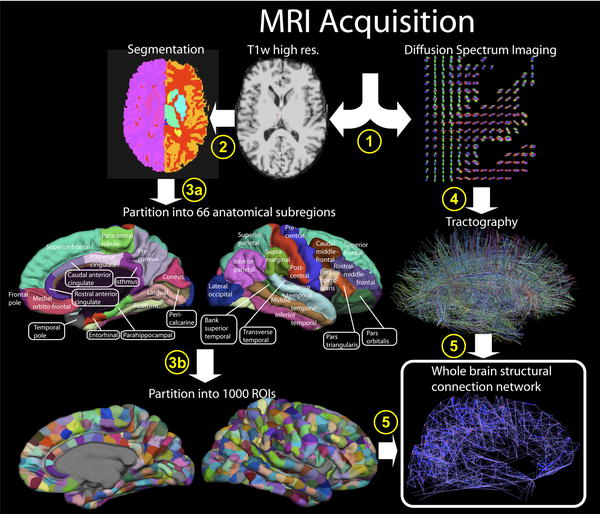
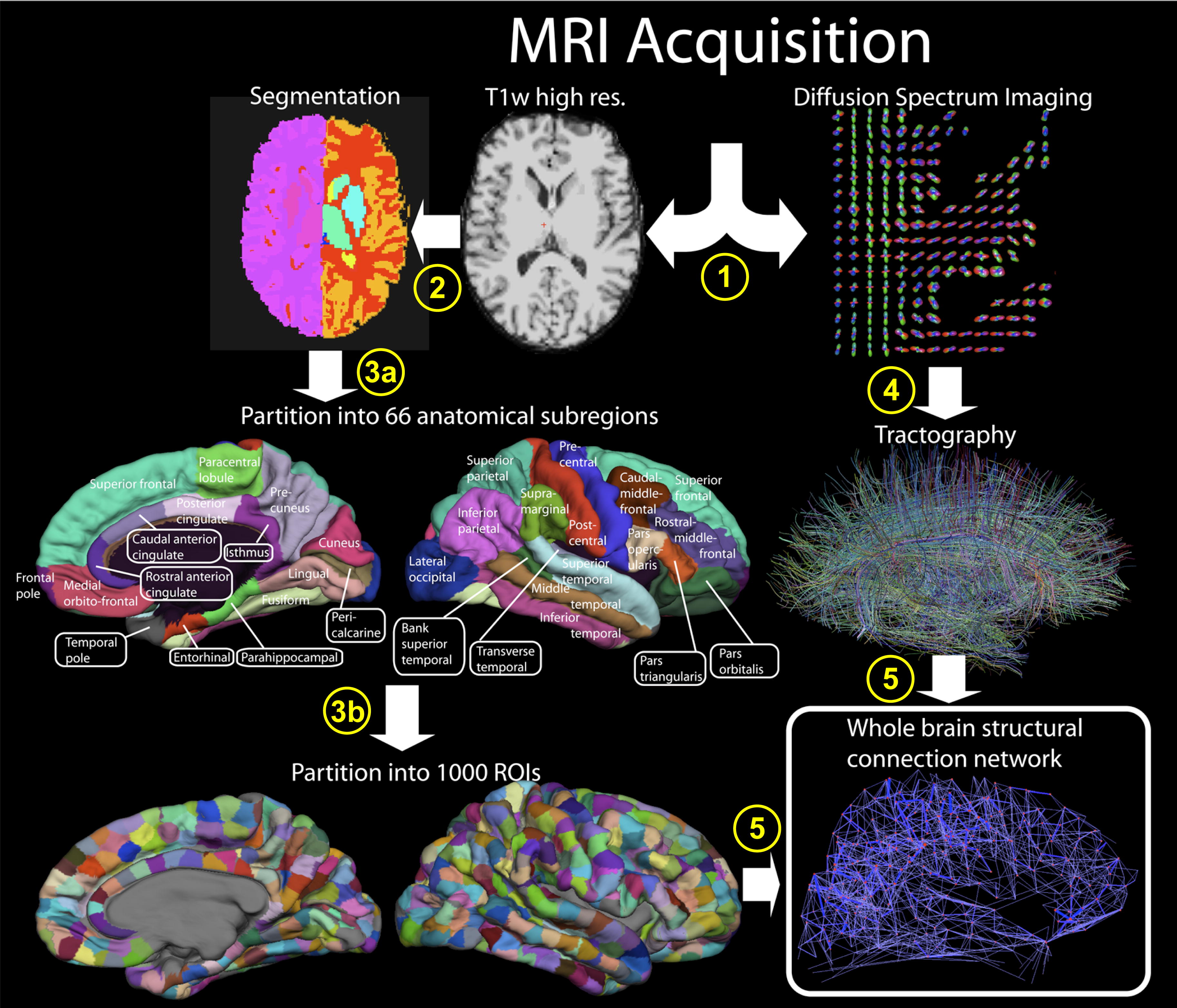
He couldn't have been more correct. A complete high-resolution map of the human cerebral cortex, the outer layer of the brain responsible for higher level thinking, has been created and it identified a single network core (or hub) that may be key to the workings of both hemispheres of the brain - detailing millions of neural fibers.

The work by the researchers from Indiana University, University of Lausanne, Switzerland, Ecole Polytechnique Fédérale de Lausanne, Switzerland, and Harvard Medical School marks a major step in understanding the most complicated and mysterious organ in the human body. It not only provides a comprehensive map of brain connections (the brain "connectome"), but also describes a novel application of a non-invasive technique that can be used by other scientists to continue mapping the trillions of neural connections in the brain at even greater resolution, which is becoming a new field of science termed "connectomics."

Few places on Earth are as untouched as the "Crown of the Continent" — a 10-million-acre expanse of mountains, valleys and prairies in Montana and Canada. The area has sustained all the same species — including grizzlies, lynx, moose and bull trout — for at least 200 years.

Now, in one of the most significant conservation sales in history , The Nature Conservancy and The Trust for Public Land have preserved 320,000 acres of forestlands in western Montana that provide valuable habitat for species in the Crown of the Continent.


