







Here we go again, this time it is Stuart Kauffman’s turn to write silly things about science and religion. Kauffman is a serious and brilliant scientist, best known for his work on complexity theory and its application to evolutionary biology. But he has now joined an increasingly long and embarrassing list of scientists who write really silly things about religion and how it relates to science.

Kauffman’s latest book is entitled Reinventing the Sacred: A New View of Science, Reason, and Religion. It is a view that is bound to fail on a variety of levels, but I think it is instructive to see why. Let’s start with the good news: Kauffman, unlike, say, authors like Paul Davies (author of questionably ambiguous stuff like Cosmic Jackpot: Why Our Universe Is Just Right for Life) or -- worse -- Frank Tipler (author of the downright nonsensical The Physics of Christianity) -- is pretty clear that there is no way to recover any classical version of god, not even the deist one. For Kauffman, for instance, morality emerged out of the biological and cultural evolution of humanity. Still, Kauffman seeks to “find common ground between science and religion so that we might collectively reinvent the sacred.”

We all know that light effects the growth and development of plants but a new paper by Nathalie Hoang et al., published in PLoS Biology examines the effects light has on humans and animals.

In plants, cryptochromes are photoreceptor proteins which absorb and process blue light for functions such as growth, seedling development, and leaf and stem expansion. Cryptochromes are present in humans and animals as well and have been proven to regulate the mechanisms of the circadian clock. But how they work in humans and animals is still somewhat of a mystery.

When plants are exposed to blue light, they experience a reduction in flavin pigments. This reduction activates the cryptochromes and thus allows for growth and seedling development. Hoang et al. sought to study the effect of blue light on fly, animal, and human cryptochromes by exposing them to blue light and measuring the change in the number of oxidized flavins. After a prolonged exposure to blue light, the authors found that the number of flavins did in fact decrease, as they do in plants.

Children studying subjects like math, physics and chemistry have a harder time gettings A's than students of similar ability studying subjects like media studies and psychology, according to a new report that really doesn't surprise anyone.

Durham University researchers analyzed and compared data from nearly one million schoolchildren sitting GCSE and A-level exams and reviewed 28 different studies of cross subject comparison conducted in the UK since 1970.

They found significant differences in the relative difficulty of exams in different subjects with the sciences among the hardest. On average, subjects like Physics, Chemistry and Biology at A-level are a whole grade harder than Drama, Sociology or Media Studies, and three-quarters of a grade harder than English, RE or Business Studies.

"I want to say one word to you. Just one word," spoke Mr. Maguire to young Benjamin in the 1967 film The Graduate. That word was 'plastics' and it became a cultural litany meaning lots of different things but it's never been more true in its original form. Plastics are still the future.

With market analysts predicting an increase from £1.5 billion to £15.5 billion in the value of the organic light emitting display industry by 2014, it is no surprise that scientists and governments alike are keen to advance research into new 'plastics' - in this case the electronic kind.

For a long time, plastic was thought of as an insulating material that could not conduct electricity, but ground-breaking research in the 1970s proved that some plastics could do so. Now, more than thirty years later some of the potential applications of these breakthrough materials – electronic billboards, flexible laptops, high-definition television screens only one centimetre thick – are coming to light.

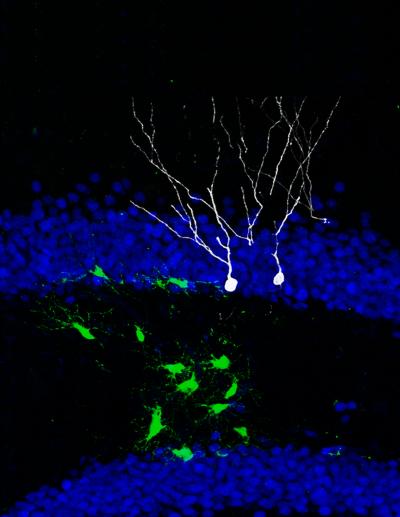
Researchers at the Salk Institute for Biological Studies have gone beyond manipulating adult stem cells cultured in the lab and achieved the same feat with adult neural stem cells - still in place in the brain. They successfully coaxed mouse brain stem cells bound to join the neuronal network to differentiate into support cells instead.

The discovery not only attests to the versatility of neural stem cells but also opens up new directions for the treatment of neurological diseases, such as multiple sclerosis, stroke and epilepsy that not only affect neuronal cells but also disrupt the functioning of glial support cells.

Throughout life, adult neural stem cells generate new brain cells in two small areas of mammalian brains: the olfactory bulb, which processes odors, and the dentate gyrus, the central part of the hippocampus, which is involved in the formation of memories and learning.

A laser-activated antimicrobial offers hope for new treatments of bacterial infections, even those that are resistant to current drugs. Research published today in the open access journal BMC Microbiology describes the use of a dye, indocyanine green, which produces bacteria-killing chemicals when lit by a specific kind of laser light.

Michael Wilson led a team from UCL (University College London) who carried out experiments showing that activated indocyanine green is capable of killing a wide range of bacteria including Staphylococcus aureus, Streptococcus pyogenes and Pseudomonas aeruginosa. The dye is safe for humans. The strength of this new approach lies in the variety of ways in which the chemicals produced by the activated dye harm bacteria.

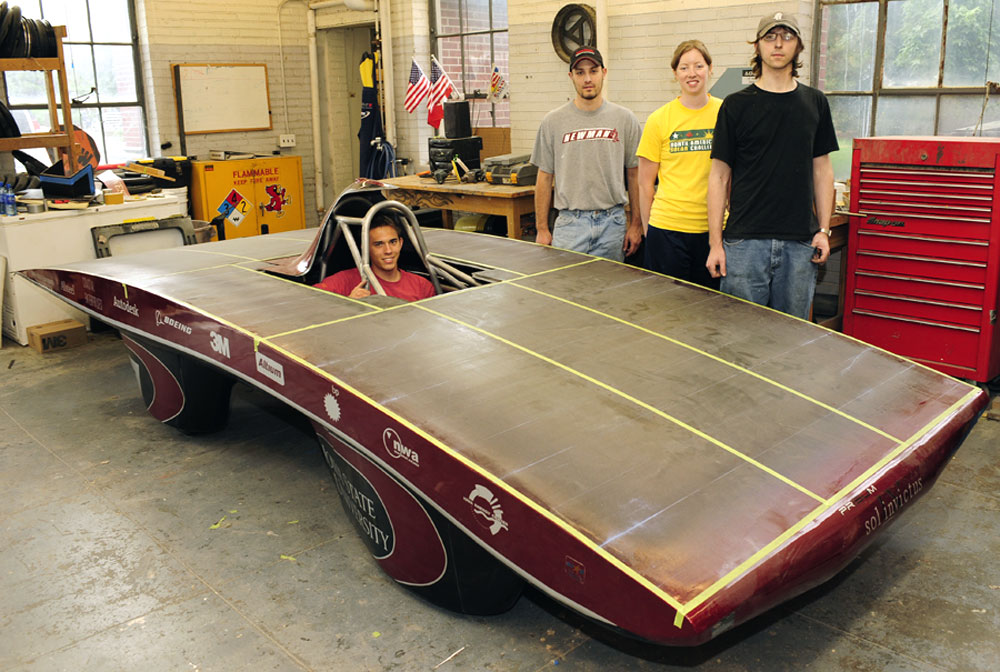
Sol Invictus, Iowa State University's student-designed and student-built solar race car, is getting ready to compete in the North American Solar Challenge July 13-22.

The challenge will take 24 student-designed and student-built solar race cars from Plano, Texas, to Calgary, Alberta, Canada. They’ll make the 2,400-mile run July 13-22, with a checkpoint in Omaha, Neb., July 15-16 and a stage stop in Sioux Falls, S.D., July 16-18. The route between those cities takes the solar cars into western Iowa for a few hours.

Team PrISUm did very well in 2005, the last time the challenge was contested. The Iowa State car made it from Austin, Texas, to Calgary in 71.5 hours. That was good for a third place finish in the challenge’s stock class and 11th overall against cars in the more powerful open class.

The "La Mente Bilingüe" research team headed by Itziar Laka leads at the University of the Basque Country aims to find out how the brain acquires and manages languages and to discover in what way languages being similar or different is influential in this process.

In order to understand how we become fluent in a language and to better comprehend bilingualism, the La Mente Bilingüe ("the bilingual brain") research team at the Faculty of Arts of the University of the Basque Country UPV/EHU analysed the acquisition process for languages.

Despite much research on acquisition of languages amongst monolingual persons, scientists still have to ask themselves basic questions about bilingual acquisition: How do babies realize that they are in a bilingual environment? What are the clues for them in discovering this? How is discrimination between languages produced in infants?

KARLSRUHE, Germany, June 30 /PRNewswire/ -- RapidSolution Software AG presents new Windows software MP3videoraptor 3.0 that allows users to instantly download and save virtually any song in MP3 format - free of charge. Even the automatic creation of an entire music library is a piece of cake.

What makes this principle revolutionary are two functions: an intelligent control and the recording of music from numerous individual Web 2.0 radios - the legal and free way to get your favorite music.

If you're in one of those municipalities that would rather ban foods than learn science, you probably aren't allowed to have food with trans fats in a restaurant.

That's because, they say, trans fat lowers “good” HDL cholesterol and raises the “bad” LDL variety - but that's not true for the kind normally present in meat and dairy products and those are not a big health concern, reports the July 2008 issue of the Harvard Health Letter.

Hydrogenation, the process used to convert oil into solid trans fat by adding hydrogen, occurs in nature also. Bacteria in animals’ stomachs hydrogenate the fatty oils from animal feed, for example.


