







Researchers say they have found evidence that supports the idea that the emergence of agriculture in prehistory took much longer than originally thought.

Until recently researchers say the story of the origin of agriculture was one of a relatively sudden appearance of plant cultivation in the Near East around 10,000 years ago, spreading quickly into Europe and dovetailing conveniently with ideas about how quickly language and population genes spread from the Near East to Europe. Initially, genetics appeared to support this idea but now there are questions about the evidence underpinning that model

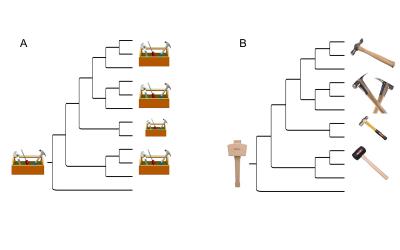
A team led by Dr Robin Allaby from the University of Warwick's plant research arm, Warwick HRI, have developed a new mathematical model that shows how plant agriculture actually began much earlier than first thought, well before the Younger Dryas (the last "big freeze" with glacial conditions in the higher latitudes of the Northern Hemisphere). It also shows that useful gene types could have actually taken thousands of years to become stable.

Manipulating embryo-derived stem cells before transplanting them may hold the key to optimizing stem cell technologies for repairing spinal cord injuries in humans, according to research published in the Journal of Biology. They say it may lead to cell based therapies for victims of paralysis to recover the use of their bodies without the risk of transplant induced pain syndromes.

Dr. Stephen Davies, Associate Professor of Neurosurgery at the University of Colorado Denver School of Medicine, reported that, in collaboration with researchers at the University of Rochester, his research team has transplanted two types of the major support cells of the brain and spinal cord, cells called astrocytes. These two types of astrocytes, which are both made from the same embryo-derived stem cell-like precursor cell, have remarkably different effects on the spinal repair process.

This summer, the National Aeronautics and Space Administration is celebrating its 50th anniversary. Take this quiz to find find out how NASA knowledgeable you really are.

You consider yourself a staunch supporter of space travel. As a child, you spent many a day lying under your mother's dining room table, pushing imaginary overhead buttons in your very own spaceship. When Apollo 13 opened in movie theaters, you spent all 140 excruciating minutes questioning its historic accuracy while your date slumped over snoozing. You even know that Starfleet Headquarters is located in San Francisco.

But how much do you really know about NASA, the US agency that's been pushing to explore that final frontier for the last fifty years?

People who believe eating genetically modified organisms will turn them literally into what they eat are in for a new nightmare - genetically engineered animals.

Highly ironic case of misinformed alarmist sprouting antlers, snout reported to FDA

The Food and Drug Administration issued a draft guidance on the regulation of genetically engineered animals today. (For those not well versed in the parlance of regulation, this is a document that describes FDA's current thinking on an issue. The agency alerts the relevant stakeholders that they can comment on the guidance, and then a final guidance is developed. This is not regulation, it's guidance - as the name implies, the document guides stakeholders in what actions they should take.)

How you react physically to stimuli can have a great deal of impact on how you perceive the world and therefore how you vote, according to a recent study by researchers at the University of Nebraska-Lincoln (UNL).

For example, people who react more strongly to bumps in the night, spiders on a human body or the sight of a shell-shocked victim are more likely to support public policies that emphasize protecting society over preserving individual privacy. The research results appear in the Sept. 19 issue of Science magazine.

The study tested 46 people who identified themselves as having strong political opinions. Researchers showed subjects threatening visual images--pictures of a spider on a person's eyeball, a dazed person with a bloody face and an open wound with maggots in it--and monitored their skin for electrical conductivity, which indicates emotion, arousal and attention. In another physiological measure, the scientists surprised subjects with a sudden, jarring noise and measured how hard they blinked in response to being startled.

Two research teams are announcing this month that they have successfully converted sugar-potentially derived from agricultural waste and non-food plants-into gasoline, diesel, jet fuel and a range of other valuable chemicals.

Chemical engineer Randy Cortright and his colleagues at Virent Energy Systems of Madison, Wisc., and researchers led by NSF-supported chemical engineer James Dumesic of the University of Wisconsin at Madison are now announcing that sugars and carbohydrates can be processed like petroleum into the full suite of products that drive the fuel, pharmaceutical and chemical industries.

MIT researchers have shown that cells from different people don't all react the same way when exposed to the same DNA-damaging agent, a finding that could help clinicians predict how patients will respond to chemotherapy.

The research team from MIT's Center for Environmental Health Sciences (CEHS) and the Departments of Biological Engineering and Biology, identified a group of 48 genes that can predict how susceptible an individual is to the toxic compound, known as MNNG. The work appears in Genes and Development.

MNNG, a DNA-damaging compound similar to toxic chemicals found in tobacco smoke and in common chemotherapy agents, usually kills cells by inducing irreparable DNA damage. However, the researchers found a wide range of susceptibility among cells taken from healthy people.

Vital components of modern medicine such as major surgery, organ transplantation, and cancer chemotherapy will be threatened if antibiotic resistance is not tackled urgently, warn experts on bmj.com today.

A global response is needed to address rising rates of bacterial resistance caused by the use and abuse of antibiotics or "we will return to the pre-antibiotic era", write Professor Otto Cars and colleagues in an editorial.

All antibiotic use "uses up" some of the effectiveness of that antibiotic, diminishing the ability to use it in the future, write the authors, and antibiotics can no longer be considered as a renewable source.

In the inaugural Big Ten Battleground Poll taken as the nation's financial crisis worsened this week, John McCain and Barack Obama were in a statistical dead heat in seven of the eight Midwest states included in the survey.

The individual surveys of 600 randomly selected registered voters in each of the states were conducted by phone from Sept. 14-17 and were co-directed by University of Wisconsin-Madison political scientists Charles Franklin and Ken Goldstein and colleagues from participating universities. The polls each have a margin of error of 4 percentage points. The states included in the poll were Ohio, Michigan, Pennsylvania, Indiana, Wisconsin, Iowa, Illinois and Minnesota.

Pregnancy is a biologically unusual situation where one organism lives and develops inside another that is genetically different.

Ordinarily, the immune system identifies and destroys the dissimilar tissue as if it were a parasite but in some early mammals changes 'turned down' the immune system, allowing the developing embryo to grow and thrive unchallenged by the maternal immune response.

Yale researchers npw say that the origin and evolution of the placenta and uterus in mammals is associated with evolutionary changes in a single regulatory protein.

