Binge drinking (5+ alcoholic beverages at one time) is associated with risky sexual behaviors. A new study is one of the few to examine this association by gender in an urban clinic for sexually transmitted diseases (STDs). Results show that binge drinking among women attending the clinic was linked to unsafe sexual practices – such as multiple partners and anal sex – and high rates of gonorrhea.

"The link between binge drinking and risky sexual behavior is complex," said Heidi E. Hutton, assistant professor of psychiatry and behavioral sciences at Johns Hopkins University School of Medicine as well as corresponding author for the study. "We wanted to examine one component of that relationship, whether binge drinking increased the risk of engaging in sexual behaviors and having STDs. We found gender differences in binge drinking among patients at an STD clinic, and also that binge drinking increased STD risk for women."

Bumblebees learn to avoid camouflaged predators by sacrificing foraging speed for predator detection, according to scientists from Queen Mary, University of London.

One of the bumblebee's main predators is the crab spider. Crab spiders hunt pollinating insects like bees and butterflies by lying in wait on flowers, and are particularly difficult for their prey to spot because they can change their colour to blend in with their surroundings.

Dr Tom Ings and Professor Lars Chittka from Queen Mary's School of Biological and Chemical Sciences wanted to discover whether bumblebees could learn to avoid these crab spiders. Their study, funded by the NERC and published in the journal Current Biology, shows how a run in with a spider affected the bees' foraging patterns.

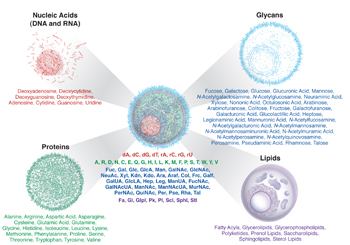
Why is it that the origins of many serious diseases remain a mystery? In considering that question, a scientist at the University of California, San Diego School of Medicine has come up with a unified molecular view of the indivisible unit of life, the cell, which may provide an answer.

Reviewing findings from multiple disciplines, Jamey Marth, Ph.D., UC San Diego Professor of Cellular and Molecular Medicine and Investigator with the Howard Hughes Medical Institute, realized that only 68 molecular building blocks are used to construct these four fundamental components of cells: the nucleic acids (DNA and RNA), proteins, glycans and lipids. His work, which illustrates the primary composition of all cells, is published in the September issue of Nature Cell Biology.

Like the periodic table of elements, first published in 1869 by Russian chemist Dmitri Mendeleev, is to chemistry, Marth’s visual metaphor offers a new framework for biologists.

Sarah Palin, the Republican nominee for vice president, is different from many female leaders around the world in at least one respect – her political career does not follow that of a male relative, according to an expert on women in global politics.

Many female leaders around the world had a family connection to a politically powerful male, said Pamela Paxton, associate professor of sociology and political science at Ohio State University.

“In many countries with traditional cultures, women are easily seen as ‘stand-ins’ for their father or husband,” said Paxton, who is co-author of the book "Women, Politics, and Power: A Global Perspective" (Pine Forge Press, 2007) with Melanie Hughes from the University of Pittsburgh. Often, women leaders achieve power when their male relative dies, is martyred, or otherwise is forced to leave office.

As if things weren’t tough enough for premature babies who have tubes down their throats and noses to survive, once the tubes are removed, they are often unable to take nourishment orally — that is, suck.

But 20 tube-fed preterm infants with respiratory distress syndrome treated with the NTrainer, a therapeutic device patented by the University of Kansas, rapidly learned to suck far better and transitioned to oral feeding faster than a control group of babies with the syndrome.

Respiratory distress syndrome, also known as hyaline membrane disease, is a common condition of prematurity, particularly in the youngest infants, because babies’ lungs are too immature to survive outside the womb without the help of a ventilator and/or oxygen. Overall, it is the seventh leading cause of death among infants younger than one year, fifth for African-American and third for Hispanic infants.

Researchers from the National Institute of Standards and Technology (NIST) and Seoul National University (SNU) have learned how to tweak a new class of polymer-based semiconductors to better control the location and alignment of the components of the blend.

Their recent results—how to move the top to the bottom—could enable the design of practical, large-scale manufacturing techniques for a wide range of printable, flexible electronic displays and other devices.

Organic semiconductors—novel carbon-based molecules that have similar electrical properties to more conventional semiconducting materials like silicon and germanium—are a hot research topic because practical, high-performance organic semiconductors would open up whole new categories of futuristic electronic devices. Think of tabloid-sized “digital paper” that you could fold up into your pocket or huge sheets of photovoltaic cells that are dirt cheap because they’re manufactured by—basically—ink-jet printing.

The largest study ever conducted of DNA evidence extracted from long-dead woolly mammoths points to a rockier past for the iconic Ice Age giants than many had suspected. The last mammoths left in Siberia 50,000 to 5,000 years ago weren't natives, they report in the September 4th Current Biology. Rather, they were North Americans that had migrated in and replaced the dwindling Siberian populations.

In the new study, the researchers analyzed mitochondrial DNA from 160 mammoth samples from across Holarctica (a region encompassing present day North America, Europe and Asia), representing most of radiocarbon time.

Down Syndrome (DS) belongs to the group of conditions called 'aneuploidies', defined by an abnormal loss or gain of genetic material, i.e. fragments of chromosomes or whole chromosomes. Aneuploidies cause congenital anomalies that are a prime cause of infant death in Europe and the USA, and are currently on the increase with advancing maternal age in European countries. The number of people with DS in Europe exceeds half a million.

The condition is more common than muscular dystrophy and cystic fibrosis, but the development of new therapeutic concepts is hindered by the fact that unlike muscular dystrophy and cystic fibrosis, where a single mutated gene causing the disease is known, the entire human chromosome 21 (containing around 300 genes) still has to be dissected into individual gene-dose contributions to the DS symptoms.

Scientists investigating the mechanisms of Down Syndrome have revealed the earliest developmental changes in embryonic stem cells caused by an extra copy of human chromosome 21 – the aberrant inheritance of which results in the condition. Their study is published in the American Journal of Human Genetics.

Astronomers have taken the closest look ever at the giant black hole in the center of the Milky Way. By combining telescopes in Hawaii, Arizona, and California, they detected structure at a tiny angular scale of 37 micro-arcseconds - the equivalent of a baseball seen on the surface of the moon, 240,000 miles distant. These observations are among the highest resolution ever done in astronomy.

Using a technique called Very Long Baseline Interferometry (VLBI), a team of astronomers led by Doeleman employed an array of telescopes to study radio waves coming from the object known as Sagittarius A* (A-star). In VLBI, signals from multiple telescopes are combined to create the equivalent of a single giant telescope, as large as the separation between the facilities. As a result, VLBI yields exquisitely sharp resolution.

The Sgr A* radio emission, at a wavelength of 1.3 mm, escapes the galactic center more easily than emissions at longer wavelengths, which tend to suffer from interstellar scattering. Such scattering acts like fog around a streetlamp, both dimming the light and blurring details. VLBI is ordinarily limited to wavelengths of 3.5 mm and longer; however, using innovative instrumentation and analysis techniques, the team was able to tease out this remarkable result from 1.3-mm VLBI data.

If you are on vacation in the Mediterranean basin and happen upon a person gnawing on a pine tree, fear not – the person is likely treating one of a myriad of inflammatory symptoms. While Western medicine tends to eschew traditional or “natural” therapies, the alternative movement is winning more and more converts as people seek to reduce health care costs and invest in a more organic lifestyle. The latest example of non-traditional medication comes to us from the lovely western Mediterranean, home to the Pinus pinaster , more commonly known as the maritime pine.