


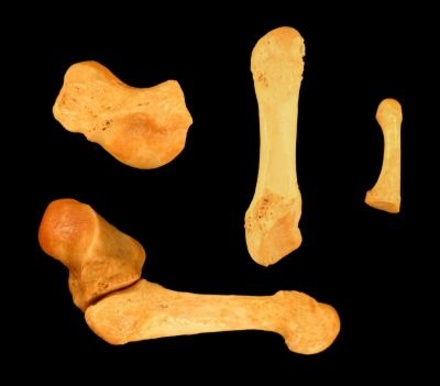




Remnants of the bacterium that causes stomach ulcers, Helicobacter pylori, (H. pylori) have been discovered in gastric tissue from North American mummies.

A study of human remains believed to predate Columbus' discovery of the New World has shown for the first time that H. pylori infection occurred in native populations, according to research published in BMC Microbiology.

As well as stomach ulcers, H. pylori causes gastritis, duodenitis, and cancer. It is a helix-shaped bacteria that is believed to be transmitted by the ingestion of food or water contaminated with faecal matter.

Nine out of ten regular food items aimed specifically at children have a poor nutritional content – because of high levels of sugar, fat or sodium - according to a detailed study of 367 products published in the July issue of the UK-based journal Obesity Reviews.

Just under 70 per cent of the products studied - which specifically excluded confectionery, soft drinks and bakery items - derived a high proportion of calories from sugar. Approximately one in five (23 per cent) had high fat levels and 17 per cent had high sodium levels. Despite this, 62 per cent of the foods with poor nutritional quality (PNQ) made positive claims about their nutritional value on the front of the packet.

"Children's foods can now be found in virtually every section of the supermarket and are available for every eating experience" says Professor Charlene Elliott from the University of Calgary, Canada, and a Trustee of the Canadian Council of Food and Nutrition.

Listen to science instead of Tiger Woods on golf? Sheer madness.

But golfers who heed the advice of instructors to keep their heads perfectly still while putting may be hampering their game, according to a study in the July issue of the Journal of Motor Behavior that examined coordination patterns.

Tim Lee, professor of kinesiology at McMaster University and a golfer himself, says the findings run contrary to conventional wisdom, or at least conventional golf wisdom.
 

The putting stroke is used more frequently than any other during a round of golf, regardless of skill. In 2007, putts represented 41.3 per cent of total strokes taken by members of the PGA tour, and 40 percent for members of the LPGA.

Israelis and Palestinians working together? Indeed, when it comes to combating tuberculosis.

Tuberculosis - or TB - is a deadly infectious bacterial disease that usually attacks the lungs. Acknowledged as a disease of crowds, it is transmitted from human to human living in close contact.

Dating back thousands of years, tuberculosis was well known in antiquity. However, according to Spigelman, it is still the biggest killer even today. One-third of the world's current population has been infected by tuberculosis, resulting, in recent years, in approximately three million deaths per year.

Plant sterols have been touted as an effective way to lower cholesterol and reduce the risk of heart disease. However, a research study in the July JLR has uncovered that these compounds do have their own risks, as they can accumulate in heart valves and lead to stenosis.

Aortic valve stenosis (AS) results from cholesterol accumulation in the valve between the left ventricle and aorta; this impedes the flow of blood and puts extra pressure on the heart. About 2% of individuals over 65 (and over 5% of those over 85) have AS, and as the population ages, it is becoming an increasing problem.

Plant sterols can block the absorption of dietary cholesterol into the body, and as such high vegetable diets and/or plant sterol supplements are often used to alleviate high cholesterol. However, although plant sterols themselves are poorly absorbed, they can enter the body, so Satu Helske and colleagues examined whether plant sterols can also accumulate in aortic valves.

In the quest to find the biological route of drug addiction, research at Cambridge University, UK, is revealing what makes some people more vulnerable than others. Speaking at Europe’s major neuroscience conference in Geneva today, Professor Barry Everitt described what they now believe causes the switch from occasional, ‘recreational’ use to a compulsive habit.

Professor Everitt and researchers in the Cambridge lab have discovered there is a shift in the control of drug seeking behaviour in the brain. Taking drugs – for example, cocaine – generates reinforcing or ‘rewarding’ effects mediated by the ventral striatum of the brain. In some people, however, drug taking escalates to become a strong habit, difficult to relinquish, and which is eventually controlled by the dorsal striatum, a region of the brain associated with habit learning.

If you've said you're going to 'sleep on it' in regards to a difficult decision, you know it became a cliche' for a reason - it often works. Swiss scientists have discovered that sleep can have lasting consequences on brain function by stimulating new brain connections that strengthen the learning processes and directly influence our actions.

Speaking at the Forum of European Neuroscience, Dr. Sophie Schwartz from the University of Geneva explained that any new experience is encoded in memory, but memory traces can later be forgotten or become more stable and permanent. Among the numerous factors that can affect the fate of memory traces, sleep seems to play a critical role.

The topic of gender in science has been a hot one this decade. While women have equal representation in biology and an overwhelming majority in social sciences, they are lacking in the hard sciences and sparse at the professor level.

Germany has implented "Research oriented gender equality standards“, which have been developed by the German Research Foundation (Deutsche Forschungsgemeinschaft, DFG) and have now been adopted by the General Assembly of the DFG in Berlin.

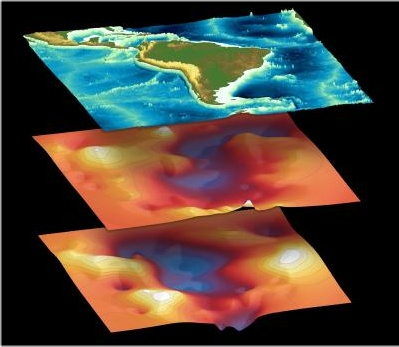
For the first time, researchers have taken a detailed look at what lies beneath all of Iceland's volcanoes – and found a world far more complex than they ever imagined.

They mapped an elaborate maze of magma chambers - work that could one day help scientists better understand how earthquakes and volcanic eruptions occur in Iceland and elsewhere in the world.

Knowing where magma chambers are located is a key first step to understanding the chemical composition of the molten rock that is flowing within them - and of the gases that are released when a volcano erupts, explained Daniel Kelley, doctoral student in earth sciences at Ohio State University.

Sociologist Ching Kwan Lee, a sociologist at the University of California-Los Angeles, writes in the summer issue of the American Sociological Association's Contexts magazine that there is a 'quiet revolution' happening among citizens of China that isn't recognized by the louder human rights activists.

In contrast to traditional activism appealing to universal notions of human rights, this grassroots movement among everyday people in China invokes "the protection of lawful rights," or weiquan. This activism focuses on specific rights prescribed by Chinese law, such as labor, property and rural land rights.

According to Lee, growing unrest over social injustice, as well as wealth and power gaps in Chinese society—due to the country's rapid economic development—has led to three decades of market reform and legal proliferation by the central government in Beijing.


