

A new study by the University of Liverpool's Institute of Ageing and Chronic Disease has identified food stuffs that can help prevent chronic inflammation that contributes to many leading causes of death.

Inflammation occurs naturally in the body but when it goes wrong or goes on too long, it can trigger disease processes. Uncontrolled inflammation plays a role in many major diseases, including cancer, heart disease, diabetes and Alzheimer's disease.

Diets rich in fruits and vegetables, which contain polyphenols, protect against age-related inflammation and chronic diseases.

Cell-to-cell communication

In the wake of the damaging Alberta fires, there has been a lot of attention paid to what role climate change plays in wildfires. Yet 2016 is also a powerful El Niño year, which has created ideal conditions for the extraordinary fires in Alberta.

So what climate phenomena could have led to the persistent warm, dry conditions and the extreme fire events?

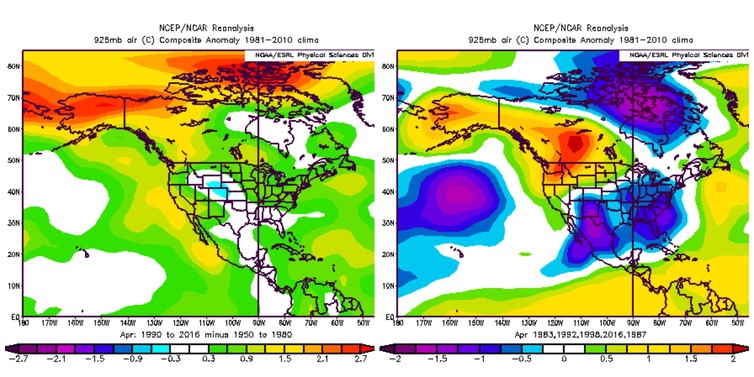
I have analyzed weather trend data and found that higher temperatures and lower precipitation created the conditions for the extensive fires. It is by looking at exactly when those warmer months occur that we can begin to sort out the role of El Niño versus climate change.

A new study has implicated farms as a bigger source of fine-particulate air pollution than all other sources. This is no surprise in Europe, China, Russia and Europe, since food is the most important strategic resource everywhere. 

And it's an easy enough problem to solve. As technology continues to improve, emissions will go down anyway, so fumes from nitrogen-rich fertilizers and animal waste that combine in the air with industrial emissions to form solid particles could double and particulate matter would still go down. 

COLUMBUS, Ohio - Nearly everybody thinks that presidential candidates routinely dodge hard-hitting questions, providing evasive answers to simple questions.

But a new study that analyzed the full transcripts of 14 U.S. presidential debates from 1996 to 2012 provides some surprising insights that might temper that belief -- and help explain why people believe politicians are evasive.

The research found that presidential candidates accused their rivals of evasion quite often -- 54 times in the 14 debates analyzed.

But rivals were actually guilty of some form of evasion no more than 35 percent of the time that they were accused, the study found.

Researchers at Vanderbilt University Medical Center have discovered a potential way to "tune up" the immune system's ability to kill cancer cells.

In a paper published recently, Eric Sebzda, Ph.D., assistant professor of Pathology, Microbiology and Immunology, graduate student and first author Whitney Rabacal and colleagues describe their discovery in mice of a tolerance mechanism that restrains the activity of natural killer (NK) cells, and a potential way to overcome it.

With an advance that one cryptography expert called a "masterpiece," University of Texas at Austin computer scientists have developed a new method for producing truly random numbers, a breakthrough that could be used to encrypt data, make electronic voting more secure, conduct statistically significant polls and more accurately simulate complex systems such as Earth's climate.

The new method creates truly random numbers with less computational effort than other methods, which could facilitate significantly higher levels of security for everything from consumer credit card transactions to military communications.

Every year, about 350 million hectares of land are devastated by fires worldwide, this corresponds to about the size of India. To estimate the resulting damage to human health and economy, precise prognosis of the future development of fires is of crucial importance. Previous studies often considered climate change to be the most important factor. Now, a group of scientists, including researchers of Karlsruhe Institute of Technology (KIT), has found that population development has the same impact at least. The results are presented in the Nature Climate Change journal (dx.doi.org/10.1038/nclimate2999).

An international team of researchers headed by scientists from the Alfred Wegener Institute has gained new insights into the carbon dioxide exchange between ocean and atmosphere, thus making a significant contribution to solving one of the great scientific mysteries of the ice ages. In the past 800,000 years of climate history, the transitions from interglacials and ice ages were always accompanied by a significant reduction in the carbon dioxide content in the atmosphere. It then fell from 280 to 180 ppm (parts per million). Where this large amount of carbon dioxide went to and the processes through which the greenhouse gas reached the atmosphere again has been controversial until now.

When tiny microbes jam up like fans exiting a baseball stadium, they can do some real damage.

University of California, Berkeley, physicists found this out the hard way when the baker's yeast cells (Saccharomyces cerevisiae) they were studying multiplied so prolifically that they burst the tiny chamber in which they were being raised.

When UC Berkeley postdoctoral fellow Morgan Delarue measured the force the growing mass of cells exerted as they pushed against one another, he calculated that it can be nearly five times higher than the pressure in a car tire -- about 150 psi, or 10 times atmospheric pressure.

Slama et al. (2016) recently published a paper on issues relevant to setting regulations for endocrine disrupting substances in the European Union.1   The authors discuss options associated with these issues, briefly described as use of interim criteria, or use of the World Health Organization definition of endocrine disruption by itself or with additional categories of strength of evidence or chemical potency.

