


Your genes may influence how sensitive you are to emotional information, according to a new study which found that carriers of a certain genetic variation perceived positive and negative images more vividly, and had heightened activity in certain brain regions.

California Senator Dianne Feinstein recently declared war on homemade soap in order to placate her corporate donors, so it is no surprise the public holds her in rather poor regard. Yet it is not just her, U.S. Congress approval ratings are at record lows across the board and a new study speculates that this may be partly due to a decline in the use of warm, agreeable language in the House.

The analysis found that the use of prosocial words -- language such as cooperate or contribute -- by lawmakers predicts public approval of Congress six months later.

A study of portable ultrasound in detecting the presence of minor fractures in patients showed that 85% of patients with a fracture confirmed by X-ray had injuries detected through ultrasonography.

You'd still want a radiographer to rule out fractures but emergency clinicians could rule in fractures using ultrasound images, they conclude.

Ultrasound is a high pitched sound wave generated at a frequency of more than 20,000Hz in air, though the frequency changes depending on the density of the objects through which it passes.

We've all been captivated by ocean waves, we accept (everyone except Galileo anyway) that the moon has an impact on tides and waves, but less well known is that the ocean contains rolling internal waves beneath the surface that displace massive amounts of water and push heat and vital nutrients up from the deep ocean.

These internal waves have long been recognized as essential components of the ocean's nutrient cycle, and key to how oceans will store and distribute additional heat brought on by global warming. Yet  thorough understanding of how internal waves start, move and dissipate has been lacking.

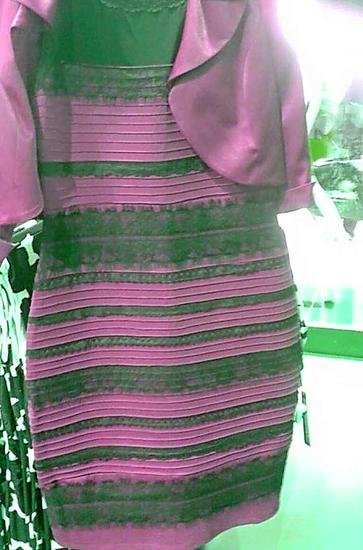
A few months ago, a snapshot of a lace-decorated dress puzzled social networks worldwide. Some people saw a blue and black dress while others saw the same dress as white and gold

The reason behind the confusion, it is now known, is the photograph's overall bluish and yellowish coloring. A team of psychologists set out to experimentally test how it happened.
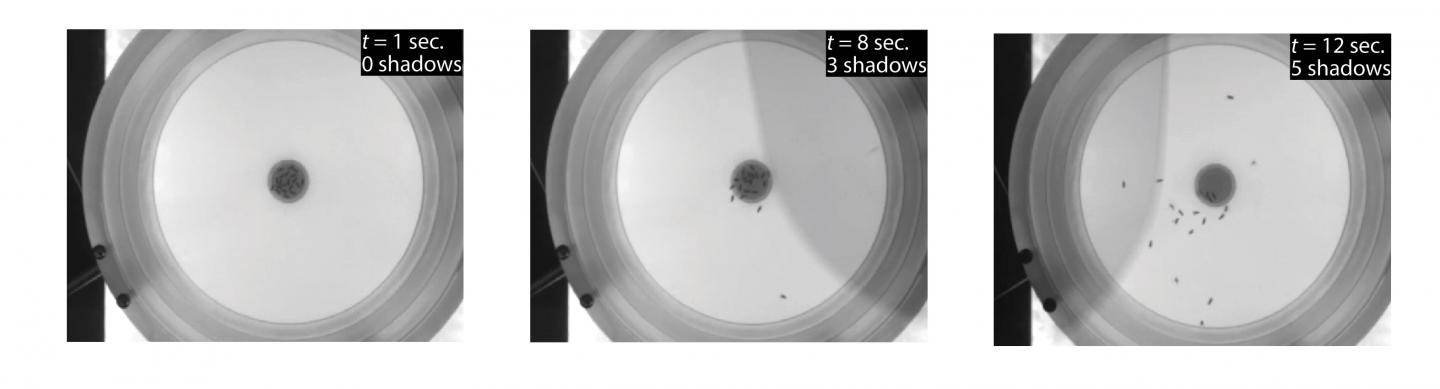
When fruit flies respond to the threat of an overhead shadow, is that fear?

The response to visual threats includes many essential elements of what we humans call fear and David J. Anderson of the Howard Hughes Medical Institute and the California Institute of Technology and colleagues write in a new paper that their work on fear in flies are a step toward dissecting the fundamental neurochemistry, neuropeptides, and neural circuitry underlying fear and other emotion states.
Dogs who suffer with separation anxiety become more optimistic when taking the animal equivalent of Prozac during behavioral treatment, according to a paper in which the authors say they revealed how the animals feel during the clinical treatment of behaviors associated with negative emotions.


The prospect of death, and the impact of mortality, is a lot less daunting when there is belief in the afterlife, say psychologists.

Dr. Arnaud Wisman and Dr. Nathan Heflick, of the University of Kent School of Psychology set out to establish in four separate studies whether people lose hope when thinking about death - known as Terror Management Theory - under a range of different conditions. The research was based on the premise that self-awareness among humans has been shown to create the potential for hope - or the general expectation and feeling that future desired outcomes will occur.

When certified, digital signatures - mechanisms for authenticating the validity or authorship of a certain digital message - have the same legal power as traditional signatures. Introduced by Diffie and Hellman in 1976, they are in all ways digital counterparts to real (analog) signatures. 

Between the ages of 40 and 80, an estimated 30 to 50 percent of muscle mass is lost, resulting in lower strength and less ability to carry out everyday tasks. This process is known as sarcopenia and it is common and clearly linked to frailty and poorer health in older people.

