







A new age for air travel is dawning; at least if you’re one of the lucky few in the market for supersonic luxury travel. Lockheed Martin's advanced Skunk Works unit is designing a small, 12-seat passenger jet that would travel at 1,200 mph (Mach 1.8) but which would produce only a whisper of the annoying crack once emitted by the retired Concorde.

Aimed at business executives and diplomats, the QSST will fly at nearly twice the speed of conventional business jets and have a range of 4,600 miles nonstop -- Los Angeles to New York in just over two hours. The sleek, 130-foot-long QSST (for "quiet supersonic transport") aircraft is being designed for a Nevada consortium called Supersonic Aerospace International, or SAI, at an estimated cost of $2.5 billion. According to the company, it could be ready for boarding by 2013.

Quiet Supersonic Transport

It seems that this is a technology that is long overdue, and it may seem curious that domestic supersonic travel doesn’t already exist. But it’s been the pesky sonic boom that accompanies supersonic flight that has prevented development in this area -- until now.

Scientists know that Salmonella and E. coli O157, a strain of E. coli that can cause serious sickness in humans, can spread to salads and vegetables if they are fertilized with contaminated manure, irrigated with contaminated water, or if they come into contact with contaminated products during cutting, washing, packing and preparation processes. However, until now, scientists did not understand how the pathogens managed to bind to the leaves.

In new research presented today at the 21st International ICFMH Symposium 'Food Micro 2008' conference in Aberdeen, a new study shows how some Salmonella bacteria use the long stringy appendages they normally use to help them 'swim' and move about to attach themselves to salad leaves and other vegetables, causing contamination and a health risk.

A man's height is a marker for risk of prostate cancer development but is more strongly linked to progression of the cancer, say a group of British researchers who conducted their own study and also reviewed 58 other published studies.

In the September issue of Cancer Epidemiology, Biomarkers & Prevention, 12 researchers at four universities in England who studied more than 9,000 men with and without prostate cancer estimated that the risk of developing the disease rises by about six percent for every 10 centimeters (3.9 inches) in height a man is over the shortest group of men in the study.

That means a man who is one foot taller than the shortest person in the study would have a 19 percent increased risk of developing the disease.

Seriously.

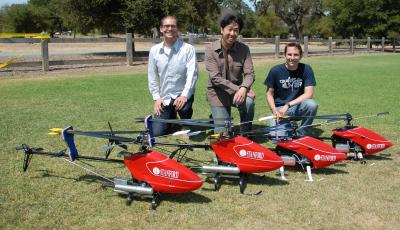
Stanford computer scientists have developed an artificial intelligence system that enables robotic helicopters to teach themselves to fly difficult stunts by watching other helicopters perform the same maneuvers.

The result is an autonomous helicopter than can perform a complete airshow of complex tricks on its own.

The stunts are "by far the most difficult aerobatic maneuvers flown by any computer controlled helicopter," said Andrew Ng, the professor directing the research of graduate students Pieter Abbeel, Adam Coates, Timothy Hunter and Morgan Quigley.

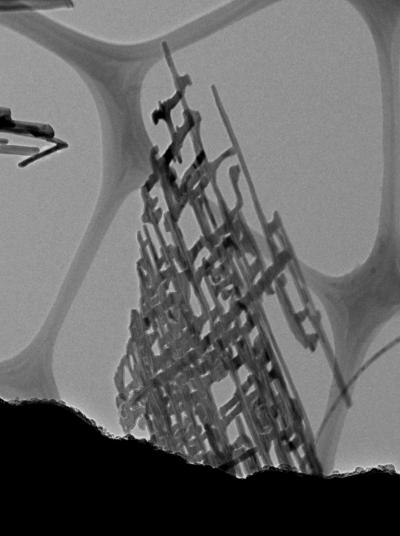
Researchers using two abundant and relatively inexpensive elements, titanium and silicon, have grown wires into a two-dimensional network of branches that resemble flat, rectangular netting, Boston College assistant professor of chemistry Dunwei Wang and his team report in the international edition of the German Chemical Society journal Angewandte Chemie.

By creating nanonets, the team conquered a longstanding engineering challenge in nanotechnology: creating a material that is extremely thin yet maintains its complexity, a structural design large or long enough to efficiently transfer an electrical charge.

The grapevine (Vitis vinifera) is a widely cultivated crop that has been subjected to intensive breeding since the Neolithic period (from ~10,500 to ~6,000 years ago). The domestication of grapevine has undergone a selection for traits important for its cultivation and usage.

The recent publication of the complete grapevine genome has opened the possibility for an in-depth analysis of its content. This sequencing has shown that genes constitute only a very small proportion of complex genomes, with repetitive sequences and (in particular) mobile genetic elements or transposons making up a much larger part. Although transposition is a highly mutagenic event and genomes have developed very efficient mechanisms to control it, transposons have played a major role in the evolution of complex genomes.

Slim Fast, Atkins, Weight Watchers - you've heard of them all. Some people get rich selling books on losing weight, others get rich selling books on how diet plans are bad for you.

A new scientific analysis published in Nutrition Journal says all of the popular programs accomplish their goals (fewer calories) without sacrificing nutrients.

Helen Truby worked with a team of academics from United Kingdom universities who studied the different diet plans. She described how the randomised controlled trial "provides reassuring and important evidence for the effectiveness and nutritional adequacy of the four commercial diets tested."

Researchers from Oregon State University say they have resolved a controversy that cellular biologists have been arguing over for nearly 50 years, with findings that may aid research on everything from birth defects and genetic diseases to the most classic "cell division" issue of them all – cancer.

The exact mechanism that controls how chromosomes in a cell replicate and then divide into two cells, a process fundamental to life, has never been completely pinned down, researchers say. You can find the basics in any high school biology textbook, but the devil is in the details.

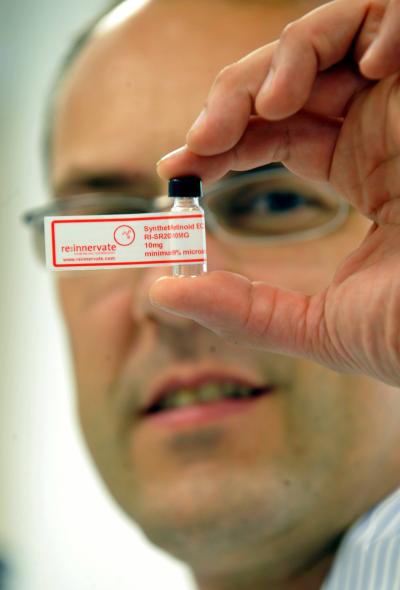
Scientists have designed, developed and tested new molecular tools for stem cell research to direct the formation of certain tissue types for use in drug development programmes.

A collaborative team of scientists from Durham University and the North East England Stem Cell Institute (NESCI) have developed two synthetic molecules which can be used to coax stem cells to 'differentiate' - that is, transform into other forms of tissue.

Their use could also help reduce the number of animals used in laboratory research. The team's results are published in the current issue of Organic and Biomolecular Chemistry.

The origin of the microscopic meteorites that make up cosmic dust has been revealed for the first time in new research out yesterday.

The research, published in the journal Geology, shows that some of the cosmic dust falling to Earth comes from an ancient asteroid belt between Jupiter and Mars. This research improves our knowledge of the solar system, and could provide a new and inexpensive method for understanding space.

Cosmic dust particles, originally from asteroids and comets, are minute pieces of pulverised rock. They measure up to a tenth of a millimetre in size and shroud the solar system in a thin cloud. Studying them is important because their mineral content records the conditions under which asteroids and comets were formed over four and a half billion years ago and provides an insight into the earliest history of our solar system.


