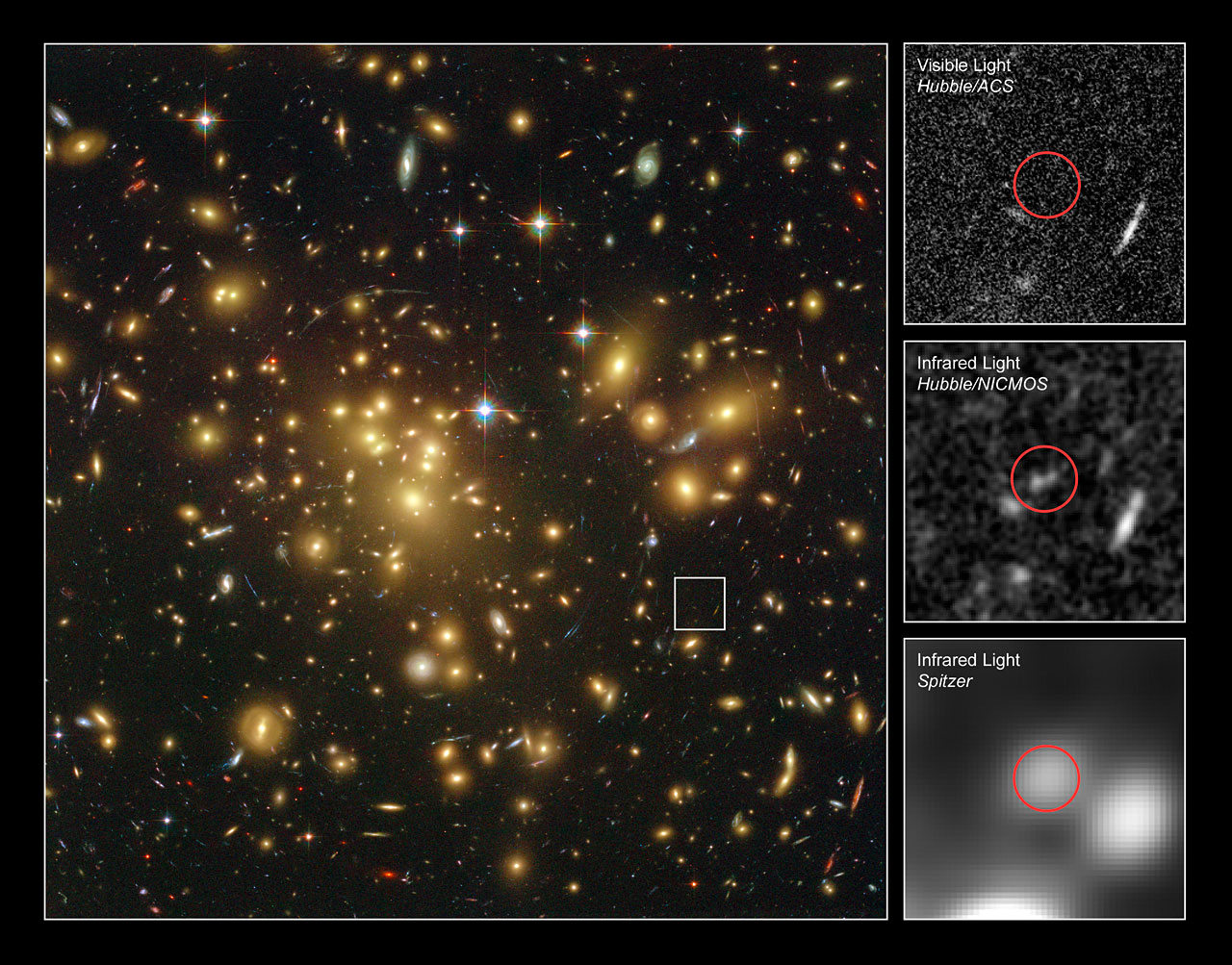






Detailed images from Hubble’s Near Infrared Camera and Multi-Object Spectrometer (NICMOS) reveal an infant galaxy, dubbed A1689-zD1, undergoing a firestorm of star birth as it comes out of the dark ages, a time shortly after the Big Bang, but before the first stars completed the reheating of the cold, dark Universe. Images from NASA’s Spitzer Space Telescope’s Infrared Array Camera provided strong additional evidence that it was a young star-forming galaxy in the dark ages.

“We certainly were surprised to find such a bright young galaxy 13 billion years in the past”, said astronomer Garth Illingworth of the University of California, Santa Cruz, USA and a member of the research team.

Oil palm (Elaeis guineensis) cultivation has expanded dramatically in recent decades and is frequently cited as a major threat to tropical biodiversity. This is because oil palm is grown in lowland tropical regions and so impacts on the most biodiverse terrestrial habitats: tropical rainforests.

Analysis of the published literature by scientists led by Edgar Turner at the University Museum of Zoology, Cambridge has revealed significant changes in the focus of oil palm research over the last 30 years.

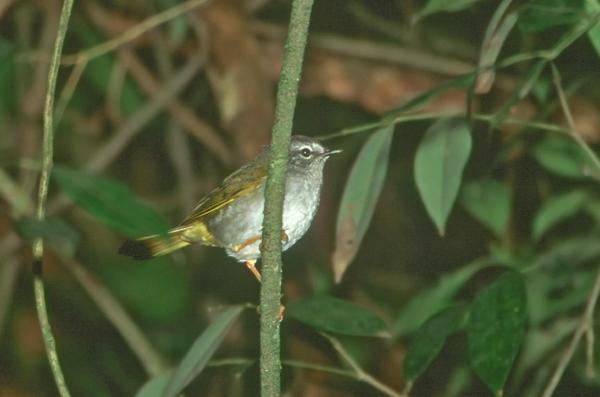
According to the Chinese proverb, a bird sings because it has a song, not because it has an answer. A team of French and Brazilian researchers, however, may have the answer as to how the song of Brazilian white-browed warbler has become so well-adapted to the acoustic properties of the rainforest environment.

Understanding the evolution of acoustic communication systems in animals is a hot topic in evolutionary biology and one of the main challenges is to understand how environmental pressures drive this evolution.

The human journey from Asia to the New World was interrupted by a 20,000-year layover in Beringia, a once-habitable region that today lies submerged under the icy waters of the Bering Strait.

Furthermore, the New World was colonized by approximately 1,000 to 5,000 people — a substantially higher number than the 100 or fewer individuals of previous estimates.

The developments, reported by University of Florida Genetics Institute scientists, help shape understanding of how the Americas came to be populated — not through a single expansion event that is put forth in most theories, but in three distinct stages separated by thousands of generations.

Night-time noise from aircraft or traffic can increase a person’s blood pressure even if it does not wake them, according to a new study published today in the European Heart Journal.

Scientists from Imperial College London and other European institutions monitored 140 sleeping volunteers in their homes near London Heathrow and three other major European airports.

The researchers measured the volunteers’ blood pressure remotely at 15-minute intervals and then analysed how this related to the noise recorded in the volunteers’ bedrooms.

Among the many benefits accruing from the Genetics of Anorexia Nervosa Collaborative Study funded by the NIH is the ability to study other issues related to AN. A recent paper on Suicide Attempts in Anorexia Nervosa published in Psychosomatic Medicine offers much-needed examination of an important topic.

A new species of dinosaur unearthed in Mexico is giving scientists fresh insights into the ancient history of western North America, according to an international research team led by scientists from the Utah Museum of Natural History at the University of Utah.

“To date, the dinosaur record from Mexico has been sparse,” said Terry Gates, a paleontologist with the Utah Museum of Natural History, Utah’s designated natural history museum.

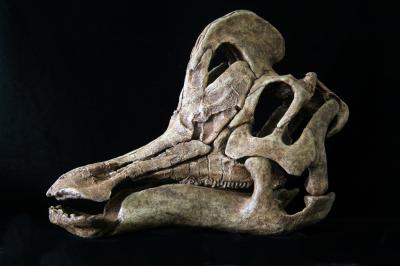
The new creature — aptly dubbed Velafrons coahuilensis — was a massive plant-eater belonging to a group of duck-billed dinosaurs, or hadrosaurs.

Johns Hopkins researchers from the Whiting School of Engineering and the School of Medicine have devised a micro-scale tool - a lab on a chip - designed to mimic the chemical complexities of the brain. The system should help scientists better understand how nerve cells in the brain work together to form the nervous system.

A report on the work appears as the cover story in the February 2008 issue of the British journal Lab on a Chip.

”The chip we’ve developed will make experiments on nerve cells more simple to conduct and to control,” says Andre Levchenko, Ph.D., associate professor of biomedical engineering at the Johns Hopkins Whiting School of Engineering and faculty affiliate of the Institute for NanoBioTechnology.

Singles’ bars, classified personals and dating websites are a reflection, not only of the common human desire to find a mate, but of the sense of scarcity that seems to surround the hunt. Many people participate in dating activities in the hopes of finding that special someone, yet feel as though it is an impossible task.

However, thanks to an international team of psychologists, the solution may be closer than we think — within ourselves, to be exact.

How can today's wired, multitasking scientists ever compete with the great scientists of the past? One feature of Darwin's work as a scientist was that it proceeded slowly, very, very slowly. He wrote massive groundbreaking books, compiled huge amounts of data on orchids, barnacles, and Galapagos animals, but all over a long period of time. Scientists in Darwin's day had hours to kill on long voyages, took long walks out in the field, and waited while their scientific correspondence leisurely wended its way across oceans or continents.

Even in the first half of the 20th century, great scientists are famous for what they accomplished on long walks, hiking trips, and train rides. Niels Bohr would walk for hours around Copenhagen and come up with groundbreaking ideas, while Werner Heisenberg spent weeks every year hiking in the mountains. Even Richard Feynman, working in our more modern (but still pre-internet) era, insisted on long blocks of time to concentrate; he likened his thought process to building a house of cards, easily toppled by distraction and difficult to put back together.

Does that mean the kind of science we do in our overscheduled, multitasking world will never be the same as it was in the past? Certainly in one sense it won't - earlier generations of scientists had one distinct advantage we don't have today: Servants.

