



Studies have shown that children do not accurately use landmarks to orient themselves until about the age of six but those studies were done in an artificial environment. A new study taking place in a natural environment disputes that finding and says even children as young as three use 'reorientation.'

Reorientation is using things around us to regain our bearings.

Dr Alastair Smith from the Department of Experimental Psychology and colleagues from his department and the Department of Computer Science at the University of Bristol have tested the ability of children aged between three and seven to orient themselves in the great outdoors.

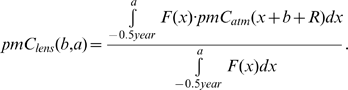
Researchers at the University of Copenhagen and Aarhus have shown they are able to use the radiocarbon dating method to study special proteins in the lens of the eye - they use a nuclear accelerator to determine the amount of Carbon-14 in as little as one milligram of lens tissue and thereby calculate the year of birth.

This will enable forensic scientists to establish the birth date of an unidentified body and could also eventually be used in cancer research.

The lens of the eye is made up of transparent proteins called crystallins. These are packed so tightly together and in such a particular way, that they behave like crystals, allowing light to pass through the lens of the eye so that we can see.

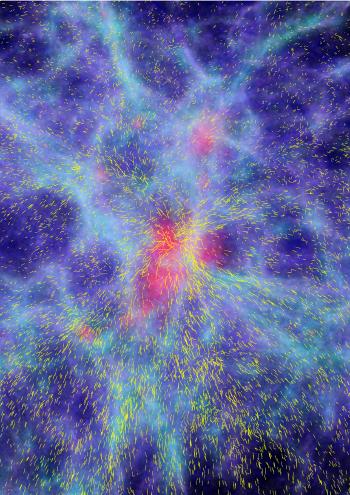
Ten years ago, astronomers made the stunning discovery that the universe is expanding at a faster pace today than it did in the past.

“Explaining why the expansion of the Universe is currently accelerating is certainly the most fascinating question in modern cosmology,” says Luigi Guzzo, lead author of a paper in this week’s issue of Nature, in which the new results are presented. “We have been able to show that large surveys that measure the positions and velocities of distant galaxies provide us with a new powerful way to solve this mystery.”

“This implies that one of two very different possibilities must hold true,” explains Enzo Branchini, member of the team.

Scientists at University College London say they have established a link between changes in the temperature of the sea’s surface and increases in North Atlantic hurricane activity.

Why do some people solve problems more creatively than others? Are people who think creatively somehow different from those who tend to think in a more methodical fashion?

These questions are part of a long-standing debate, with some researchers arguing that what we call “creative thought” and “noncreative thought” are not basically different. If this is the case, then people who are thought of as creative do not really think in a fundamentally different way from those who are thought of as noncreative. On the other side of this debate, some researchers have argued that creative thought is fundamentally different from other forms of thought. If this is true, then those who tend to think creatively really are somehow different.

Using mice as models, researchers at the Max Planck Institute for Evolutionary Anthropology traced some of the differences between humans and chimpanzees to differences in our diet.

Humans consume a distinct diet compared to other apes. Not only do we consume much more meat and fat, but we also cook our food. It has been hypothesized that adopting these dietary patterns played a key role during human evolution. However, to date, the influence of diet on the physiological and genetic differences between humans and other apes has not been widely examined.

By feeding laboratory mice different human and chimp diets over a mere two week period, researchers at the Max-Planck-Institute for Evolutionary Anthropology in Leipzig, Germany, were able to reconstruct some of the physiological and genetic differences observed between humans and chimpanzees.

Deep brain stimulation (DBS) surgery, which is used to treat Parkinson’s disease and other movement disorders, is now being studied for its potential to treat a variety of conditions. For example, DBS of the hypothalamus has been used to treat cluster headaches and aggressiveness in humans, and stimulating this area influences feeding behavior in animals.

A new study in the Annals of Neurology found that hypothalamic DBS performed in the treatment of a patient with morbid obesity unexpectedly evoked detailed autobiographical memories.

Using functional magnetic resonance imaging (fMRI), scientists have discovered that cocaine-related images trigger the emotional centers of the brains of patients addicted to drugs, even when the subjects are unaware they’ve seen anything - and the regions of the brain activated by drug images overlapped substantially with those activated by sexual ones.

A team of researchers at the University of Pennsylvania, led by Dr. Anna Rose Childress and Dr. Charles O’Brien, showed cocaine patients photos of drug-related cues like crack pipes and chunks of cocaine. The images flashed by in just 33 milliseconds - so quickly that the patients were not consciously aware of seeing them.

For most people, the name “E. coli” is synonymous with food poisoning and product recalls, but a professor in Texas A&M University’s chemical engineering department envisions the bacteria as a future source of energy, helping to power our cars, homes and more.

By genetically modifying the bacteria, Thomas Wood, a professor in the Artie McFerrin Department of Chemical Engineering, has “tweaked” a strain of E. coli so that it produces substantial amounts of hydrogen. Specifically, Wood’s strain produces 140 times more hydrogen than is created in a naturally occurring process, according to an article in “Microbial Biotechnology,” detailing his research.

After using a previous equation to pair parenting styles with a parenting method book, I thought it might be fun to use a similar format to pair political ideas with a candidate.

The following equation is as non-partisan as I could possibly make it, and does more to measure and define your personal opinion than to choose candidates in the abstract. The crux, of course, is nailing down politicians' beliefs enough to accurately chart their numbers (though letting your bias, beliefs and opinions peek through this equation is as telling as the eventual result, itself).


The Equation - Who Should You Vote For?

First, order the following traits or political issues according to how central they are to the candidate’s message, or at least how important you think they should be in their central message ; 1 through 7 with 1 being most important and 7 least.

