



Descent with modification means that all life on Earth probably came from one common ancestor – a single-celled organism – We just have to speculate and create models for what it may have looked like, how it lived and how it evolved into today's modern cell.

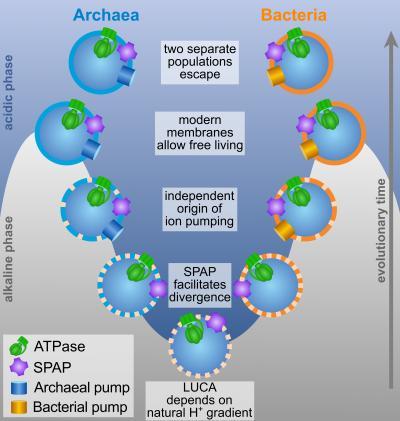
So model we do and a recent paper uses mathematical modeling to speculate that life's Last Universal Common Ancestor (LUCA) had a 'leaky' membrane, which, if would, would help scientists answer two of biology's biggest questions:

1. Why all cells use the same bizarre, complex mechanism to harvest energy

2. Why two types of single-celled organism that form the deepest branch on the tree of life – bacteria and archaea – have completely different cell membranes

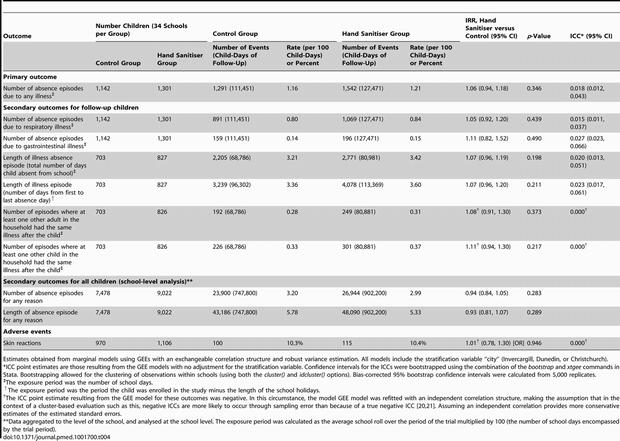
Installing hand sanitizers in  classrooms has not led to reductions in the rate of school absences in children, according to results of a cluster randomized trial that that randomly assigned 68 city primary schools in New Zealand to the intervention or control group and measured the rate of school absence in children attending the participating schools.

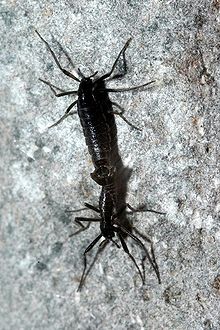
Scientists have sequenced the genome of Belgica antarctica, the Antarctic midge – the smallest in insects described to-date –  and believe it can explained by the midge's adaptation to its deep-freeze extreme living environment.

The midge is a small, wingless fly that spends most of its two-year larval stage frozen in the Antarctic ice. Upon adulthood, the insects spend seven to 10 days mating and laying eggs, and then they die. Its genome contains only 99 million base pairs of nucleotides, making it smaller than other tiny reported genomes for the body louse (105 million base pairs) and the winged parasite Strepsiptera (108 million base pairs), as well as the genomes of three other members of the midge family. 


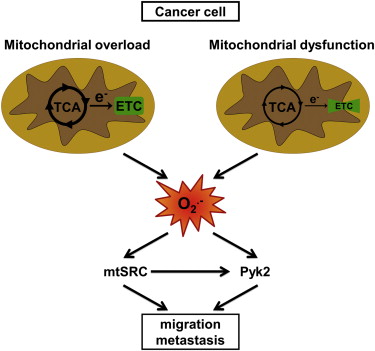
Cancer is the blanket term for over a hundred diseases where abnormal cells divide and invade tissues through blood and lymph systems. The extra cells are often detected in the form of a tumor that people notice as their first symptom, and those can be benign or malignant.

Drier conditions at the edges of forest patches slow down the decay of dead wood and significantly alter the cycling of carbon and nutrients in woodland ecosystems, according to a new study.

Forests around the world have become increasingly fragmented, and in the UK three quarters of woodland area lie within 100 meters of the forest edge. It has long been known that so-called 'edge effects' influence temperature and moisture (the 'microclimate') in woodlands, but the influence on the carbon cycle is largely unknown. 

With carbon dioxide from the American energy sector plummeting back to early 1990s levels and coal, the dirtiest energy source, back at early 1980s levels, environmentalists have tried to turn on natural gas and its primary component, methane.

Don't be fooled. Other sources, like solar, are not ready yet, wind never will be and nuclear science is reviled by Democrats so methane is the best bridge to the future (which will eventually be solar).  A new technique transforms the delightful stinky, air-polluting landfill gas into a hydrogen fuel cell, according to a presentation at National Meeting of the American Chemical Society.

Conservation wants to preserve nature as it is while wildlife management seeks to maintain responsible levels for animal populations. There is a reasonable balance. In Pennsylvania, for example, there are plenty of state and national park acres but hunting is big business and the fees pay for biologists and state nature management.

 Post-Traumatic Stress Disorder (PTSD) is triggered by a terrifying event, either witnessed or experienced, and the symptoms may include flashbacks, nightmares and severe anxiety, as well as uncontrollable thoughts about the event. 

Not everyone who experiences trauma develops PTSD but it has become a far more common psychiatric and psychological diagnosis, so the search is on for a science basis to know who has it and what it means - including a search to identify biomarkers that could better measure each person's vulnerability to the disorder. 

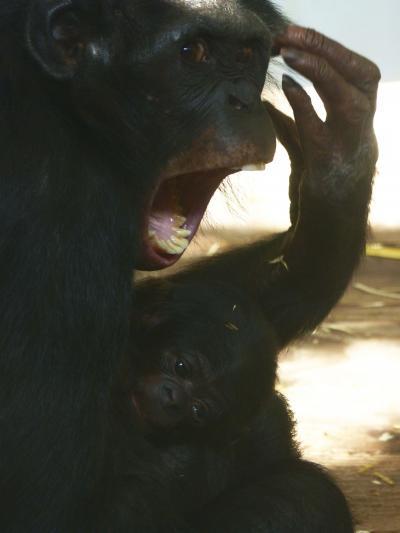
Whether or not humans are the only empathic beings is a debate for anthropologists, because there is no science answer; the ability to experience others' emotions is hard to quantify in a species so it is difficult to measure empathy in any objective way. 

The transmission of a feeling from one individual to another, called 'emotional contagion,' is the most basic form of empathy. Feelings are disclosed by facial expressions (such as sorrow, pain, happiness or tiredness), and these feelings can travel from an "emitting face" to a "receiving face." Upon receipt, the mirroring of facial expressions evokes in the receiver an emotion similar to the emotion experienced by the sender.

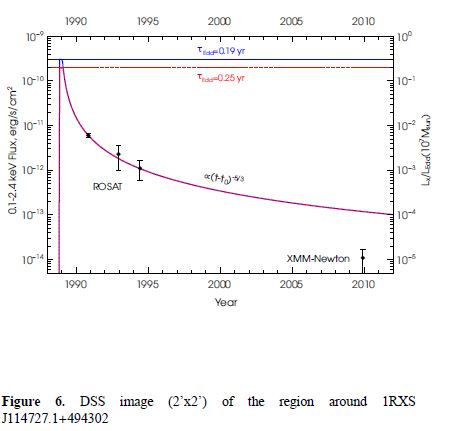
Researchers have reported registering three possible occasions of the total destruction of stars by supermassive black holes at the centers of galaxies. 

They astrophysicists used data obtained by X-ray orbiting observatories ROSAT and XMM-Newton. The former was put into orbit in 1990 and served until 1999, XMM-Newton since, and combined they gathered enough information to detect very rare events, such as the destruction of stars by supermassive black holes.

