






Testosterone, a steroid hormone, contributes to aggressive behavior in males, but the neural circuits through which testosterone exerts these effects have not been clear.

Prior studies found that the administration of a single dose of testosterone influenced brain circuit function. Surprisingly, those studies were conducted exclusively in women.

Researchers, led by Dr. Justin Carré, sought to rectify that gender gap by conducting a study of the effects of testosterone on the brain's response to threat cues in healthy men. They focused their attention on brain structures that mediate threat processing and aggressive behavior, including the amygdala, hypothalamus, and periaqueductal gray.

Asiaticoside is the main saponin constituent of Centella asiatica, a plant long used in the Ayurvedic system of medicine that has become popular for human collagen synthesis applications, like anti-wrinkle treatments.

In the central nervous system, Asiaticoside has been found by some studies to attenuate in vitro neuronal damage caused by exposure to β-amyloid. However, any potential neuroprotective properties in glutamate-induced excitotoxicity have not been fully studied. 

Today the Cornell arxiv features a paper by J. Aguilar Saavedra and F. Jouaquim, titled "A closer look at the possible CMS signal of a new gauge boson". As I read the title I initially felt somewhat lost, as being a CMS member I usually know about the possible new physics signals that my experiment produces, and the fact that we had a possible signal of a new gauge boson had entirely escaped my attention. Hence I downloaded the paper and started reading it, hoping to discover I had discovered something new.

One of the greatest and most dangerous naturalistic fallacies is that if our ancestors used something, it must be as good or even better than modern science.

In An Account of the Foxglove and Some of its Medical Uses, published in 1785, Sir William Withering cautioned readers that extracts from the plant foxglove, also called digitalis, was not a perfect drug. "Time will fix the real value upon this discovery," he wrote.  

Weather extremes have been linked to a recently discovered mechanism: the trapping of giant waves in the atmosphere.

A new data analysis now shows that such wave-trapping events are indeed on the rise.  One reason could be changes in circulation patterns in the atmosphere. By analyzing large sets of global weather data, the researchers found an intriguing connection.  


Rossby Waves: meandering airstreams

Researchers have discovered a highly virulent, multi-drug resistant form of the pathogen Pseudomonas aeruginosa, in patient samples in Ohio. Their investigation suggests that the particular genetic element involved, still rare in the United States, has been spreading unnoticed and that surveillance is urgently needed.  

The P. aeruginosa contained a gene for a drug resistant enzyme called a metallo beta-lactamase. Beta-lactamases enable broad-spectrum resistance to beta-lactam antibiotics, including carbapenems, cephalosporins, and penicillins, because they can break the four atom beta-lactam ring, a critical component of these antibiotics' structure.

It's a trick almost everyone knows: to open a locked door, slide a credit card over the latch.

Scientists at The Scripps Research Institute (TSRI) used a similar strategy when they attempted to disrupt the function of MYC, a cancer regulator thought to be "undruggable." The researchers found that a credit card-like molecule they developed somehow moves in and disrupts the critical interactions between MYC and its binding partner.

MYC is a transcriptional factor, meaning it controls gene expression. When MYC is overexpressed or amplified, the unregulated expression of genes involved in cell proliferation, a key step in cancer growth, follows. MYC is involved in a majority of cancers, including Burkitt's lymphoma, a fast-growing cancer that tends to strike children.

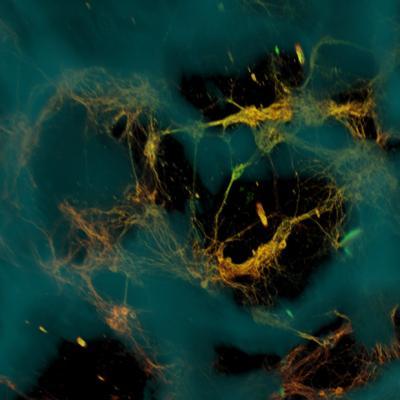
Bioengineers have created three-dimensional brain-like tissue that functions like and has structural features similar to tissue in the rat brain and that can be kept alive in the lab for more than two months.

Given the choice between a great doctor and a nice doctor, most people would choose great, but for those who prefer nice, a new tool evaluates and helps medical residents improve their communication and other soft skills to become better doctors. 

The study is the first to look at the medical residents' collaboration, communication and other soft skills, or what are known as CanMEDS competencies, in orthopedic surgical training.

