



Do women and men ride differently? If so, would a horse know in a blind human rider test?

For centuries, horses were a tool of wealthy elites during war and so riding was largely restricted to males. By contrast, today nearly 80 percent of riders are women. Modern-day equestrian sports is one of very few fields where men and women compete directly against one another at all levels, from beginners in gymkhanas to national champions in the Olympic Games.  Even chess insists women are different than men while equestrians do not.
It is said that consuming oils with high polyunsaturated fatty acid content, in particular those containing omega-3s, is beneficial for the health, but is that true, or is it just epidemiologtists finding two curves that go the same direction and declaring causation?

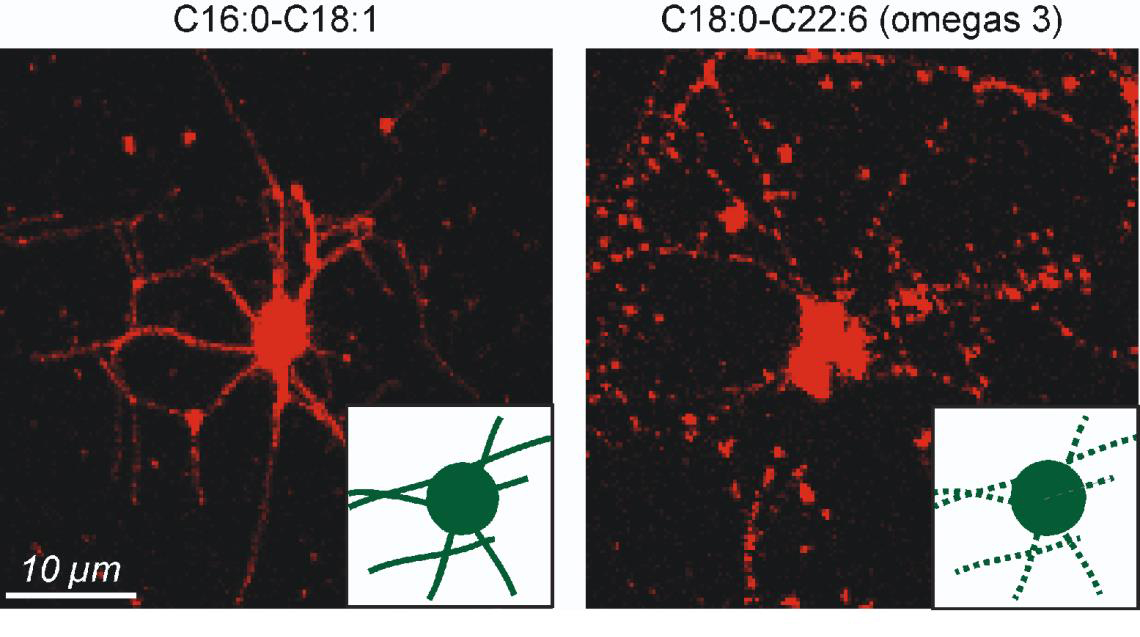
Scientifically, any mechanisms underlying this phenomenon are poorly known. Researchers recently investigated the effect of lipids bearing polyunsaturated chains when they are integrated into cell membranes. Their work shows that the presence of these lipids makes the membranes more malleable and therefore more sensitive to deformation and fission by proteins.

Diversity in the workplace has been a contentious issue for many employers and their critics. In May 2014, Google disclosed that 70% of its employees are male and the company is 61% White, 30% Asian, 3% Hispanic and 2% Black. Sacramento, California was named Time magazine's most diverse city but a basketball player, Chris Webber, claimed it was not diverse enough - he moved there from Detroit, a city that is 83% black.

America is only 5% Asian so clearly they are a minority, and America's most diverse city is not diverse to someone who moved from a city where they were the overwhelming majority. 

Much of our daily lives are taken up by habits that we've formed over our lifetime. An important characteristic of a habit is that it's automatic-- we don't always recognize habits in our own behavior. Studies show that about 40 percent of people's daily activities are performed each day in almost the same situations. Habits emerge through associative learning. "We find patterns of behavior that allow us to reach goals. We repeat what works, and when actions are repeated in a stable context, we form associations between cues and response," Wendy Wood explains in her session at the American Psychological Association's 122nd Annual Convention.

What are habits?

A stroke therapy using stem cells extracted from patients' bone marrow has shown promising results in the first trial of its kind in humans.

Five patients received the treatment in a pilot study conducted by doctors at Imperial College Healthcare NHS Trust and scientists at Imperial College London.

The therapy was found to be safe, and all the patients showed improvements in clinical measures of disability.

The findings are published in the journal Stem Cells Translational Medicine. It is the first UK human trial of a stem cell treatment for acute stroke to be published.

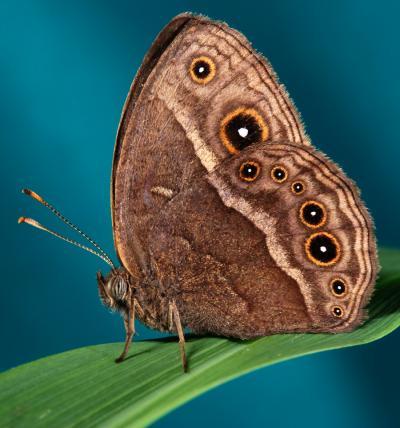
Researchers working on biomimicry have produced the first structural color change in an animal by influencing evolution: They've changed the color of the butterfly Bicyclus anynana from brown to violet - and needed only six generations of selection to do it.

Little is known about how structural colors in nature evolved, although researchers have studied such mechanisms extensively in recent years. Most attempts at biomimicry involve finding a desirable outcome in nature and simply trying to copy it in the laboratory.

The discovery published in Proceedings of the National Academy of Sciences may have implications for physicists and engineers trying to use evolutionary principles in the design of new materials and devices.

Physicists have identified a mechanism that may help explain Zipf's law – a unique pattern of behavior found in disparate systems, including complex biological ones. Their mathematical models demonstrate how Zipf's law naturally arises when a sufficient number of units react to a hidden variable in a system.

As the complex story of climate change unfolds, many of the forecasts are grim, but there are exceptions - the lowest-oxygen environments in the ocean would get now get worse, they may improve if climate change weakens the trade winds. Areas of extreme low-oxygen waters could shrink.

Warmer water contains less gas, so climate change is expected to reduce oxygen levels worldwide. Observations show this is already taking place in many places. Declines during the past 20 years in the tropical low-oxygen zones, the lowest-oxygen waters on the planet, had led to a 2008 study proposing that these zones would also get worse over time.

Oxazepam, a drug that is commonly used to treat insomnia and anxiety in humans, has been shown to reduce mortality rates in fish when it gets into natural water supplies. 

For their study, researchers retrieved two-year-old Eurasian perch from a lake in Sweden and randomly exposed them to high and low concentrations of Oxazepam, a benzodiazepine which is commonly used to treat anxiety and insomnia in humans and regularly contaminates surface waters via treated wastewater effluent. The researchers have previously found that the drug can increase the activity and boldness of Eurasian perch. 

Researchers have developed a powerful new tool to identify genetic changes in disease-causing bacteria that are responsible for antibiotic resistance. The team looked at the genome of Streptococcus pneumoniae, a bacterial species that causes 1.6 million deaths worldwide each year. In the most detailed research of its kind, scientists used a genome-wide association study (GWAS) to locate single-letter changes in the DNA code of the bacterium, which enable it to evade antibiotic treatment.

While GWAS has been used for a decade to identify gene function in humans, it was thought to be difficult to use the technique on bacterial DNA.

