




Slippery as an eel may be a popular phrase but it turns out they are a lot easier to catch when marine vessels make noise nearby.

In a Global Change Biology paper, researchers from the Universities of Exeter and Bristol found that fish exposed to playback of ship noise lose crucial responses to predator threats - European eels (anguilla anguilla)were 50% less likely to respond to an ambush from a predator, while those that did had 25% slower reaction times.

Those that were pursued by a predator were caught more than twice as quickly when exposed to the noise.  

Mutations in a gene named
CTR9 gene
that helps regulate when genes are switched on and off in cells have been found to cause rare cases of Wilms tumor, the most common kidney cancer occurring in children.


Europe is so far ahead of the US in its thinking on antibiotics and antibiotic resistance that we should all be ashamed.

For the last 15 years, Europe has led the way on the regulatory front making antibiotic development a top priority for its regulatory body the European Medicines Agency.  None of the recent US administrations going back to Bill Clinton nor the FDA itself ever made such a statement nor have they acted in a way commensurate with this thinking.


The 21st century will be the century of the 'smart home', where your home and your portable technology all interact seamlessly with one another.

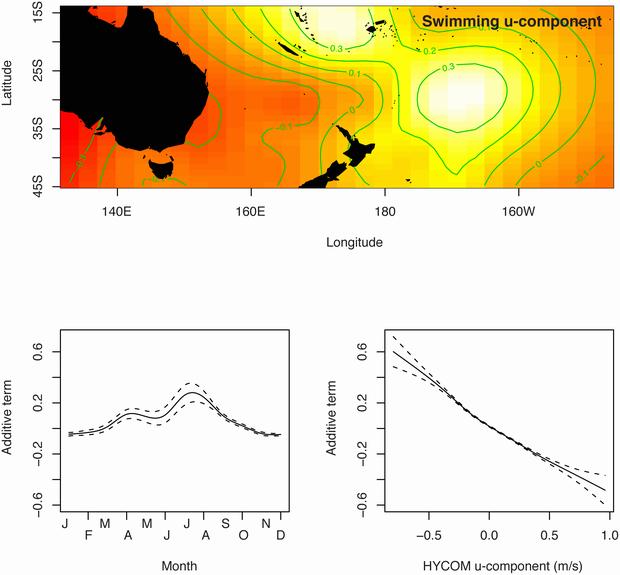
Juvenile loggerhead turtles don't just passively drift through life, they swim into oncoming ocean currents, according to a new study.

Lanternsharks produce and perceive bioluminescent light in order to communicate, find prey, and camouflage themselves against predators in the mesopelagic twilight zone.

The mesopelagic twilight zone is 200-1000 meters deep in the sea - a vast, dim habitat, where, with increasing depth, sunlight is progressively replaced by point-like bioluminescent emissions. To better understand strategies used by bioluminescent predators inhabiting this region that help optimize photon capture, the authors of a new study analyzed the eye shape, structure, and retinal cell mapping in the visual systems of five deep-sea bioluminescent sharks, including four Lanternsharks (Etmopteridae) and one kitefin shark (Dalatiidae).

Parasite is colloquially a bad word but about half of all known species are parasites and biologists have long hypothesized that the strategy of leeching off other organisms is a major driver of biodiversity. 

Perhaps being called a parasite is a negative but in the evolution of life on Earth, being one is a winner. Studying populations of Galápagos hawks (Buteo galapagoensis) and feather lice that live in their plumage (Degeeriella regalis), a group led by University of Arizona ecologists and evolutionary biologists has gathered some of the first field evidence suggesting that a phenomenon called co-divergence between parasites and hosts is indeed an important mechanism driving the evolution of biodiversity.

Brief, acute psychological stress promoted healing in mouse models of three different types of skin irritations, according to a study
the Journal of Investigative Dermatology

The scientists found that healing was brought about by the anti-inflammatory effects of glucocorticoids – steroid hormones – produced by the adrenal glands in response to stress.

Since President Richard Nixon declared a War on Cancer over 40 years ago, survival rates have improved dramatically and cancer rates have even gone down, despite claims that everything from DDT to nuclear energy to genetically modified foods would cause a cancer epidemic.

Yet not all cancer survival has improved. Pancreatic cancer still has  the lowest survival rate of the 21 most common cancers, and in 40 years just over 3 percent of pancreatic cancer patients survive for at least five years, only a fraction more than the 2 percent who survived that long in the early 1970s.

Human milk is obviously baby food, but for sick, hospitalized infants, it's also medicine, according to a series of articles in Advances in Neonatal Care devoted to best practices in providing human milk to hospitalized infants. 

"The immunological and anti-inflammatory properties of human milk are especially important for the critically ill infants in our intensive care units," said Diane L. Spatz, Ph.D., R.N.-B.C., FAAN, nurse researcher and director of the Lactation Program at The Children's Hospital of Philadelphia (CHOP), and the invited guest editor of the August 2014 issue of the journal, published by the National Association of Neonatal Nurses.

