





There are websites that encourage anorexia, there are websites that glorify stepping on animals with high heels and killing them, so it is no surprise that there are websites that glorify suicide. There are also websites that can talk people down from the ledge. In a free Internet, they can both be found rather easily.

An upcoming paper looked for information on suicides using popular search engines (Google, Bing) in Austria and the USA and found that protective information is significantly more plentiful than harmful information, about 2:1. 

Since emerging from the primordial ooze, organic life has been doing unnatural things in defiance of nature. Nothing is as unnatural as endurance running but sentient beings like to push boundaries.

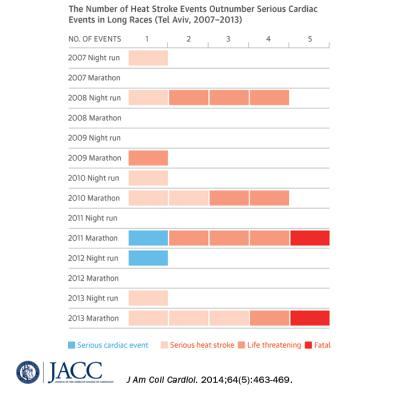
Endurance running is impressive, but it is risky. There are calls for pre-participation electrocardiogram (ECG) screenings because of an alarming number of sudden death occurrences in athletes. including undetected heart disease in a young and seemingly healthy people, but it turns out heart attack is not the greatest health risk for runners, as is commonly believed. 

When something captures your interest, like this article, unique electrical rhythms called gamma oscillations sweep through your brain.

These gamma oscillations reflect a symphony of cells—both excitatory and inhibitory—playing together in an orchestrated way. Though their role has been debated, gamma waves have been associated with higher-level brain function, and disturbances in the patterns have been tied to schizophrenia, Alzheimer's disease, autism, epilepsy and other disorders.

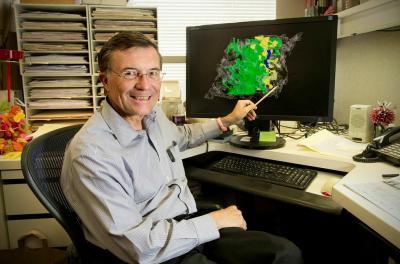
Now, new research from the Salk Institute shows that little known supportive cells in the brain known as astrocytes may in fact be major players that control these waves.


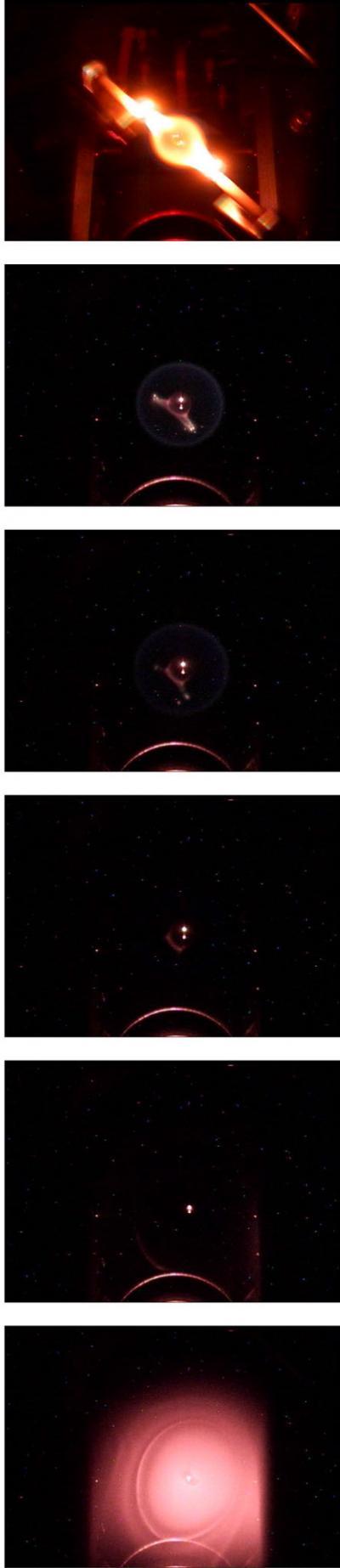
If you have watched the NASA channel recently, you might have witnessed a series of experiments regarding flames. 

On the surface, pardon the pun, it may have seemed like a minor thing, but how flames behave outside our atmosphere has led to discovery of a new type of cool burning flames.  A better understanding of the cool flames' chemistry could help improve internal combustion engines in cars, for example by developing homogenous-charge compression ignition.

In a previous article I demonstrated how to use a One Time Pad cipher using a pen, paper, and Scrabble tiles (or Boggle cubes). If used correctly, One Time Pads cannot be broken by the NSA or any intelligence service on Earth because the One Time Pad keys use a randomly generated set of letters or numbers to encrypt your message.

If most people run a race, they cheer after they cross the finish line. It is a culturally acceptable psychological reward for all of the training and preparation and execution of the plan.

But what happens when that script isn't followed? If you learn of a victory too soon, is it cheapened? Ayelet Fishbach, a professor of behavioral science and marketing at the University of Chicago Booth School of Business, and Nadav Klein, a doctoral student, find that the positive reaction one would have when succeeding is lessened if it doesn't follow the expected course.

A new strategy enables molecules to be disconnected essentially anywhere, even remote from functionality.  

The organic synthesis strategy, developed by Professor Varinder Aggarwal and Dr Ramesh Rasappan in the School of Chemistry, involves a new method for combining smaller fragments together in which there is no obvious history in the product of their genesis.

Their paper describes not only this new strategy, but also its application to the shortest known synthesis, just 14 steps, of hydroxyphthioceranic acid, a key component of the cell wall lipid of the virulent mycobacterium tuberculosis. The method is now being developed to explore the possibility of creating a tuberculosis (TB) vaccine. 

A new paper in the Journal of the National Cancer Institute addresses the risks associated with the growing popularity of endoscopic resection in the treatment of localized, early-stage esophageal cancer.

Researchers found that the more traditional surgical resection, while more invasive, provided significantly better outcomes with an 87.6 percent five-year survival rate for patients than endoscopic resection, which had a 76 percent five-year survival rate. The study reviewed the outcomes of more than 5,000 patients from 824 hospitals using the National Cancer Data Base, a program of the American College of Surgeons Commission on Cancer and the American Cancer Society.

The Venus Express spacecraft just spent a month of aerobraking that saw it surf in and out of the atmosphere of Venus at altitudes typically between 131 km and 135 km for a couple of minutes on each of its closest approaches to the planet. Why? Because after 8 years its propellant is getting low so it was time to do something new while it was still possible.

Before, normal operations involved an elliptical orbit every 24 hours that took Venus Express from 66,000 km over the south pole down to around 250 km at the north pole, just above the top of the atmosphere. The recent aerobraking campaign took the craft progressively lower into the atmosphere on its closest approaches and  directly explored previously uncharted regions of the atmosphere.

Researchers from the University of Bradford say they have devised a simple blood test that will enable doctors to rule out cancer in patients presenting with certain symptoms, saving time and preventing costly and unnecessary invasive procedures such as colonoscopies and biopsies being carried out. Alternatively, it could be a useful aid for investigating patients who are suspected of having a cancer that is currently hard to diagnose. 

Early results have shown the method gives a high degree of accuracy diagnosing cancer and pre-cancerous conditions from the blood of patients with melanoma, colon cancer and lung cancer.

