




Recent evidence has demonstrated that transplantation of mesenchymal stem cells can stimulate neurogenesis in the brain of adult rat or mouse models of Alzheimer's disease (AD) and improve tissue and function injury under the condition of cerebral ischemia. Few studies are reported on the therapeutic effect of adipose-derived stem cells (ADSCs) transplantation in mice with AD and on the effect on oxidative injury and neurogenesis in the brain of AD mice. Dr. Yufang Yan and her team, School of Life Sciences, Tsinghua University, China transplanted ADSCs into the hippocampus of APP/PS1 transgenic AD model mice.

Women would benefit from being prescribed exercise as medicine, according to a study finding that moderate to high intensity activity is essential to reducing the risk of death in older women.

Professor Debra Anderson, from Queensland University of Technology's Institute of Health and Biomedical Innovation, said that in addition to conventional treatments for physical and mental health, health professionals should be prescribing tailored exercise programs for older women.

The paper by Anderson and Queensland University of Technology's Dr Charlotte Seib pulls together five years of research looking into the impact of exercise on mental and physical health in women over the age of 50.

Researchers have evaluated the safety and reliability of the existing targeted gene correction technologies, and successfully developed a new method, TALEN-HDAdV, which could significantly increased gene-correction efficiency in human induced pluripotent stem cell (hiPSC). 

The combination of stem cells and targeted genome editing technology provides a powerful tool to model human diseases and develop potential cell replacement therapy. Although the utility of genome editing has been extensively documented, but the impact of these technologies on mutational load at the whole-genome level remains unclear.

Social animals often develop relationships with other group members to reduce aggression and gain access to scarce resources. In wild chacma baboons the strategy for grooming activities shows a certain pattern across the day - they have ulterior motives. 

Neonaticide and infanticide are horrible crimes to most people but in psychology it's all relative. 

Dr. Helen Gavin, a psychologist at the University of Huddersfield, and Dr. Theresa Porter, a clinical psychologist based at a hospital in Connecticut, think that such murderers are getting a bad rap in culture, so they wrote "Infanticide and Neonaticide: A Review of 40 Years of Research Literature on Incidence and Causes" for Trauma, Violence and Abuse to rationalize that women who kill their babies – either within 24 hours of birth (neonaticide) – or at a later stage (infanticide), are not simply simply monsters or psychotic or both. It's complex, they wrote.

Researchers have found that people with mobility impairments, such as using special ambulatory equipment and having difficulty walking one-quarter mile without equipment, under age 65 have significantly higher rates of smoking than those without mobility impairments and smokers with mobility impairments were less likely to attempt quitting .

Evidence-based advertisements about health are not working among people who already don't feel like smoking will make their quality of life worse.  

Though drones have gotten a bad rap lately due to an overzealous American government obsessed with using technology to control the message, they will soon have benefits in the private sector outside bird's eye views of fireworks.

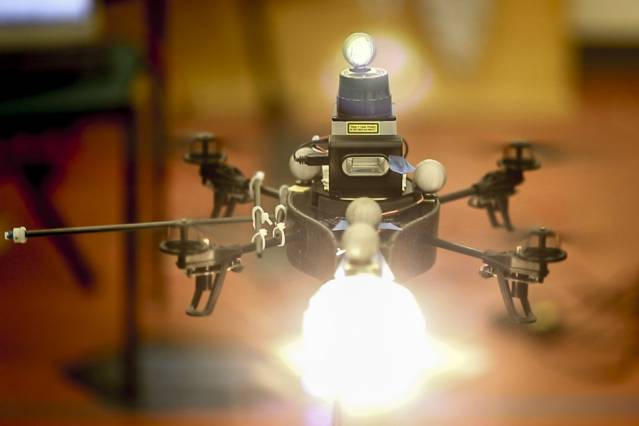
Take photography. Lighting is crucial in photographs and film-making but lights are cumbersome and time-consuming to set up, and out of doors can be prohibitively difficult to position them where, ideally, they ought to go.

Researchers at MIT and Cornell University hope to change that by providing photographers with squadrons of small, light-equipped autonomous robots that automatically assume the positions necessary to produce lighting effects specified through a simple, intuitive, camera-mounted interface.

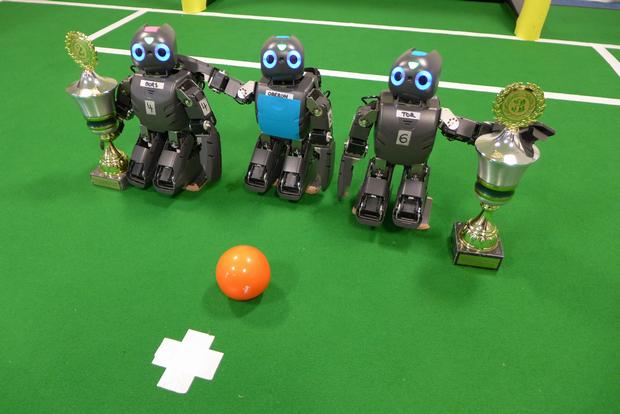
Though England football fans stopped singing "Three Lions" after the second game of the opening round at World Cup 2014, there is still hope to bring back hardware: in robotics.

The University of Hertfordshire’s robot football team, the ‘Bold Hearts’, is set to fly out to Brazil next week to compete in the 2014 RoboCup robotics world championship, taking place in João Pessoa, Brazil, 19 – 24 July 2014.

Shenzhen, July 10, 2014---A team of researchers from The Chinese University of Hong Kong, BGI and other institutes have identified a gene of wild soybean linked to salt tolerance, with implication for improving this important crop to grow in saline soil. This study published online in Nature Communications provides an effective strategy to unveil novel genomic information for crop improvement.

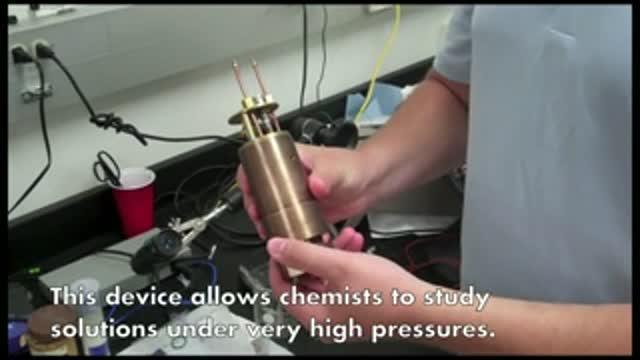
A new pressure cell makes it possible to simulate chemical reactions deep in the Earth's crust. The cell allows researchers to perform nuclear magnetic resonance (NMR) measurements on as little as 10 microliters of liquid at pressures up to 20 kiloBar.

