




Researchers at the Royal Veterinary College have identified a highly specialized ligament structure that is thought to prevent giraffes' legs from collapsing under the immense weight of these animals.

"Giraffes are heavy animals (around 1000 kg), but have unusually skinny limb bones for an animal of this size" explained lead investigator Christ Basu, a PhD student in the Structure&Motion Lab. "This means their leg bones are under high levels of mechanical stress."

Sequences of DNA called enhancers, which control a gene's output, find their targets long before they are activated during embryonic development, according to scientists at the European Molecular Biology Laboratory (EMBL) in Heidelberg, who write in Nature that the degree of complexity of enhancers' interactions in the 'simple' fruit fly Drosophila is comparable to what is seen in vertebrates.

Whales are relatively rare and so they probably don't make much of a difference in the overall ocean. 

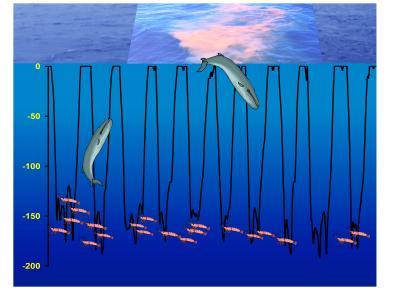
A team of biologists disagrees. They reviewed several decades of research on whales from around the world and found that whales make a huge difference and have a powerful and positive influence on the function of oceans, global carbon storage, and the health of commercial fisheries. "The decline in great whale numbers, estimated to be at least 66% and perhaps as high as 90%, has likely altered the structure and function of the oceans," claims University of Vermont conservationist Joe Roman and colleagues in Frontiers in Ecology and the Environment, "but recovery is possible and in many cases is already underway."

The first molecular characterization of the African elephant's adipose tissue, body fat, will form the basis of future studies aimed at securing the health and future survival of captive elephants.

The population of captive elephants, both Asian and African, in Europe and North America is not self-sustaining, largely due to poor fertility and fewer baby elephants being born. Captive elephants might face demographic extinction in North American zoos within the next 50 years if the reproductive issues aren't solved. 

46 years ago, an idea was introduced that the first eggs produced in a female's fetal stage tend to have better connections or "crossovers" between chromosomes and that, as the woman ages and ovulates eggs produced later, her eggs will have more faulty chromosomes, leading to miscarriages and developmental abnormalities.   

But after counting the actual chromosome crossovers in thousands of eggs, researchers found those of eggs produced early in the fetal stage were no different from those produced later.  This rules out   the "Production-Line Hypothesis" as one of the leading ideas on why older women have an increased risk of miscarriages and children with birth defects. 

Researchers have found that the loss of a protein called p62 in the cells and tissue surrounding a tumor can enhance the growth and progression of tumors. The study suggests that therapies targeting the tumor micro-envirnonment may be as important as targeting the tumor itself. 

The findings contribute to the increasing acknowledgement that the cells and tissue surrounding a tumor, the stroma, are an integral part of cancer initiation, growth, and expansion. 

Chimpanzees are copycats but sometimes it is more than copying, it becomes new traditions particular to only one specific group of these primates, according to a paper in Animal Cognition

In 2010,
Edwin van Leeuwen of the Max Planck Institute for Psycholinguistics in The Netherlands
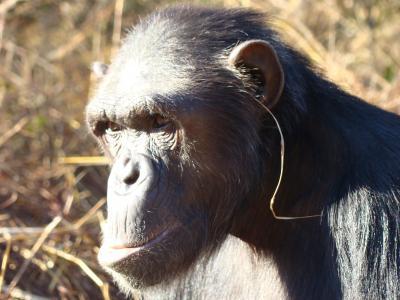
 noticed how a female chimp named Julie repeatedly put a stiff, strawlike blade of grass for no apparent reason in one or both of her ears. She left it there even when she was grooming, playing or resting in Zambia's Chimfunshi Wildlife Orphanage Trust sanctuary. On subsequent visits, van Leeuwen saw that other chimpanzees in her group had started to do the same.

Researchers from 13 institutions would worldwide believe they have made a breakthrough in understanding what causes autism -  a clear cut case of an autism specific gene. 

An analysis of 6,176 children with autism spectrum disorder, researchers found 15 had a CHD8 mutation and all these cases had similar characteristics in appearance and issues with sleep disturbance and gastrointestinal problems. How is 15 out of 6,176 a clear cut case? To find out, they went to zebra fish.

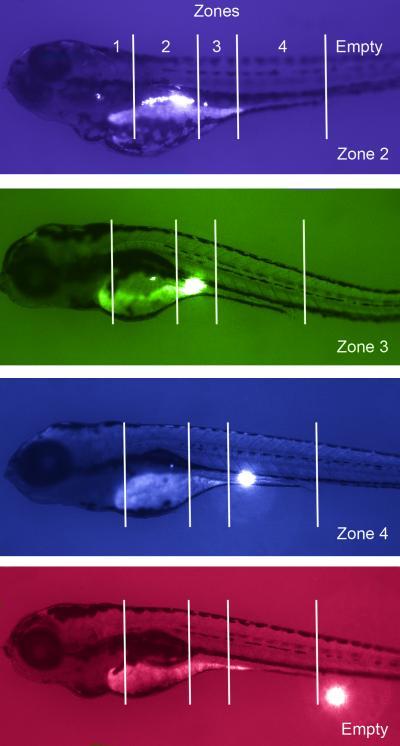
They disrupted the CHD8 gene in the fish and the fish developed large heads and wide set eyes. They then fed the fish fluorescent pellets and found that the fish had problems discarding food waste and were constipated.

Among the many more-or-less boring news from the ICHEP conference (International Conference on High Energy Physics), which is presently going on in Valencia (Spain), one bit today is sending good vibrations through the spine of many of the few phenomenologists who have chosen to remain faithful to the idea of Supersymmetry all the way to the bitter end. It is the excess of diboson events that ATLAS has just reported there.

In business, the saying goes there are good decisions, bad decisions and no decisions, and they are in that order of being problematic. This lacks common sense to some; how can doing the wrong thing be better than doing no thing? Companies who don't try and fail are not trying enough, that's why.

Most people would rather do something than nothing. Disney theme parks know this. You may may be in line for an hour but you are always moving. And then psychologists say we're just not comfortable in our own heads. Most people will do something, even the wrong thing, they write in Science.

