In April, the Centers for Medicare and Medicaid Services (CMS) released the most detailed data in its history about $77 billion worth of physician billings to Medicare.
In analysis of the data, sites like Science 2.0 and The New York Times showed that only a small percentage of healthcare providers slurp up nearly 25 percent of all federal payments - and unsurprisingly most of them are friends with the politicians who like getting more money from taxpayers and spending it. In 2012, more than $600 million went to just 100 doctors.
Can you imagine how difficult it is to juggle peer review for 10,000 published studies per year? That's 40 every single working day, without the time it took to look at the ones that got rejected.
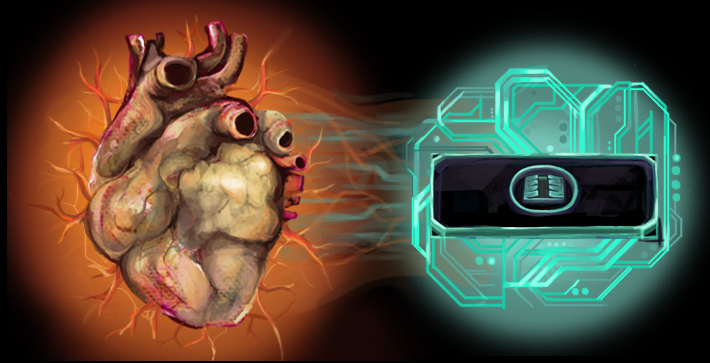
What did USC biomedical engineering assistant professor Megan McCain think when she first saw a real human heart, with all of those thin valves that have to open and close every second of our lives?
“Wow, there’s a lot of plaques of fat. I need to stop eating French fries.”
Nine years later, the “cardiac tissue engineer,” is trying to re-create the human heart on a chip.
People may associate the concept of the chastity belt with medieval Europe but other parts of the animal kingdom used them long before that.
Male dwarf spiders, for instance, have evolved a mechanical safeguard to ensure their paternity - mating plugs to block off the genital tract of the female they have just mated with. The larger and older the plug, the better the chances are that other males will not make deposits in a female's sperm storage organ, too.
Yes, dwarf spider males (Oedothorax retusus) insert mating plugs into the two copulatory ducts of the females they have mated with.
Last month, the National Climate Assessment report did what the UN Intergovernmental Panel on Climate Change has repeatedly asked science bodies and journalists not to do, no matter how well they mean and how much they want to defend science: it claimed that that the impact of climate change is already being felt in the form of isolated weather events, such as drought, wildfires and heat waves.
And that mistake is being used to make policy.
A recent study from the Center for Mind and Brain at the University of California, Davis makes a bold conjecture; that our ability to make choices — and sometimes mistakes — might arise from random fluctuations in the brain's background electrical noise.
The brain has a normal level of 'background noise', says Jesse Bengson, a postdoctoral researcher at the center and first author on the paper.
As electrical activity patterns fluctuate across the brain, decisions can be predicted based on the pattern of brain activity immediately before a decision was made.
Space looks empty but unseen to the naked eye, a wind of charged particles pummels us from the Sun, carrying a magnetic field with it. Sometimes this solar wind can break through the Earth’s magnetic field, but one of the questions about how this actually occurs is difficult to answer.
When two areas with plasma (electrically charged gas) and magnetic fields with different orientations collide, the magnetic fields can be “clipped off” and “reconnected” so that the topology of the magnetic field is changed. This magnetic reconnection can give energy to eruptions on the solar surface, it can change the energy from the solar wind so that it then creates aurora, and it is one of the obstacles to storing energy through processes in fusion reactors.
A bovine TB control strategy under consideration risks spreading the disease rather than supressing it, according to researchers who predict that culling badgers which test positive for TB could increase the movement of remaining badgers, potentially infecting more cattle with the disease.
In the past, we have seen how much it would cost to replace a housewife and how much it cost to raise a child.
What about a child with special needs? A recent literature review of U.S. and U.K. studies on patients with autism spectrum disorders and their families in 2013 came up with the economic impact.
Autism used to be rather specific but the modern range of autism spectrum disorders is really broad, so Ariane V.S. Buescher, M.Sc., of the London School of Economics and Political Science, and colleagues separate those with intellectual disabilities and those with just behavioral issues.
Is a person's race "fixed"? It seems not. Since race is a cultural construct, perceptions of race may shift as a result of changes to the perceiver's social goals and motivations, so it always seems a little silly for sociologists to do surveys or give Implicit Association tests and play with statistics and declare that X equals Y, but that is the state of the social sciences in the USA.
So psychologists have found, for example, that political ideology may influence the extent to which they see biracial individuals as being Black or White. Look for a lot more of this political ideology stuff since it is election season.