
North Carolina State University entomologists are part of a research team that has for the first time sequenced the genome of a member of the termite order, the dampwood termite (Zootermopsis nevadensis). A paper reports the findings today in Nature Communications.

The findings on the genetic blueprint of the dampwood termite, one of the world's most primitive social insects, highlight key differences and similarities with other social insects like ants, wasps and bees, and provide insight into how social insects evolved. The findings could also help researchers pinpoint specific gene functions to devise measures to control unwanted termites.

Some studies have identified mobile phones and related devices as sources of metal sensitization and potential causes of allergic contact dermatitis (ACD). The belief is that many phones on the market release levels of metals, such as nickel and chromium, which are sufficient to induce ACD, according to an article in Pediatric Allergy, Immunology, and Pulmonology.

WASHINGTON D.C. May 20, 2014 -- In a new paper in the Journal of Chemical Physics, produced by AIP Publishing, a research team in the United Kingdom and the United States describes how water molecules "caged" in fullerene spheres ("buckyballs") are providing a deeper insight into spin isomers -- varieties of a molecule that differ in their nuclear spin. The results of this work may one day help enhance the analytical and diagnostic power of nuclear magnetic resonance (NMR) and magnetic resonance imaging (MRI).

Scientists studying brain process involved in sight have found the visual cortex also uses information gleaned from the ears as well as the eyes when viewing the world.

They suggest this auditory input enables the visual system to predict incoming information and could confer a survival advantage.

Professor Lars Muckli, of the Institute of Neuroscience and Psychology at the University of Glasgow, who led the research, said: "Sounds create visual imagery, mental images, and automatic projections.

"So, for example, if you are in a street and you hear the sound of an approaching motorbike, you expect to see a motorbike coming around the corner. If it turned out to be a horse, you'd be very surprised."

A new method of generating mature nerve cells from skin cells could greatly enhance understanding of neurodegenerative diseases, and could accelerate the development of new drugs and stem cell-based regenerative medicine.

The nerve cells generated by this new method show the same functional characteristics as the mature cells found in the body, making them much better models for the study of age-related diseases such as Parkinson's and Alzheimer's, and for the testing of new drugs.

Eventually, the technique could also be used to generate mature nerve cells for transplantation into patients with a range of neurodegenerative diseases.

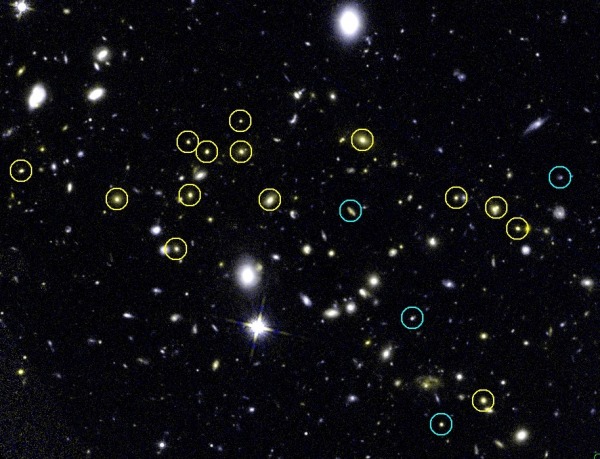
The structures and star populations of massive galaxies appear to change as they age, but much about how these galaxies formed and evolved remains mysterious. Many of the oldest and most massive galaxies reside in clusters, enormous structures where numerous galaxies are found concentrated together. Galaxy clusters in the early universe are thought to be key to understanding the lifecycles of old galaxies, but to date astronomers have located only a handful of these rare, distant structures.

New research from a team led by Carnegie's Andrew Newman has confirmed the presence of an unusually distant galaxy cluster, JKCS 041. It is published in the Astrophysical Journal

WASHINGTON, May 21, 2014—Dark alleys might not feel so dangerous someday thanks to a new ultra-thin type of lens, which could pave the way to making smaller and cheaper heat-sensing imagers. A team of French researchers has found a way to make a thermal infrared (IR) camera with a lens made of silicon, a much less expensive material than is commonly used today.

Washington, DC (May 22, 2014) — Patients with a certain form of kidney disease may have a reduced risk of cancer compared with patients with other kidney diseases, according to a study appearing in an upcoming issue of the Journal of the American Society of Nephrology (JASN).

Polycystic kidney disease (PKD) is a kidney disorder passed down through families in which many cysts form in the kidneys, causing them to become enlarged. It's thought to have cancer-like features, but cancer risk has never been compared between PKD patients and others with kidney disease. Cancer risk is also elevated in people who have received a kidney transplant, due to the immunosuppressive drugs they must take.

Scientists at the U.S. Department of Energy's Argonne National Laboratory have discovered a previously unknown phase in a class of superconductors called iron arsenides. This sheds light on a debate over the interactions between atoms and electrons that are responsible for their unusual superconductivity.

"This new magnetic phase, which has never been observed before, could have significant implications for our understanding of unconventional superconductivity," said Ray Osborn, an Argonne physicist and coauthor on the paper.

BETHESDA, MD – May 23, 2014 – A new approach to studying microbes in the wild will allow scientists to sequence the genomes of individual species from complex mixtures. It marks a big advance for understanding the enormous diversity of microbial communities —including the human microbiome. The work is described in an article published May 22 in Early Online form in the journal G3: Genes|Genomes|Genetics, published by the Genetics Society of America.

"This new method will allow us to discover many currently unknown microbial species that can't be grown in the lab, while simultaneously assembling their genome sequences," says co-author Maitreya Dunham, a biologist at the University of Washington's Department of Genome Sciences.


