




We can't identify 99 percent of the species that have gone extinct so trying to keep everything we do know about from going extinct is tilting at nature's windmill.

But if we played Noah and had a giant ark and wanted to engage in ecological Jenga (build a tower, then remove blocks without causing the tower to collapse), which species should we save first to prevent a collapse in ecological function?

Can you prevent the flu? Sure you can. Don't come into contact with someone who has the flu, or get a vaccine.

Can diet do it? A group of researchers say bacteria found in a traditional Japanese pickle can - and they have primed mainstream science media for coverage by declaring it the next superfood.

Their study found immune-boosting powers of Lactobacillus brevis from Suguki, a pickled turnip popular in Japan, in mice that were exposed to a flu virus.

Remarkable improvements in the quality of life, prevention and treatment of disease have been made possible through advancements in biomedical research, including clinical trials involving human subjects.

Which do male lizards find sexiest, the more feminine kind or the masculine?

Researchers recently tackled this question by examining the mating behavior and blue-color patterns of fence lizards in Arkansas, Alabama, and Mississippi and offer some insight into the evolution of male-female differences.

Older adults who took music lessons as children but hadn't actively played an instrument in decades have faster brain responses to sounds than those who never played an instrument, according to a study appearing in the Journal of Neuroscience

As people grow older, they often experience changes in the brain that compromise hearing. For instance, the brains of older adults show a slower response to fast-changing sounds, which is important for interpreting speech. However, previous studies show such age-related declines are not inevitable: recent studies of musicians suggest lifelong musical training may offset these and other cognitive declines.

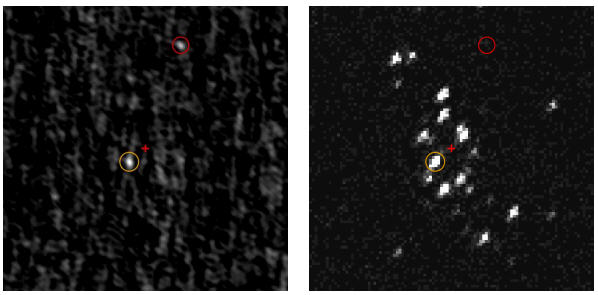
Two black holes in a collection of stars known as a globular cluster are not unique - another black hole candidate has been found in globular cluster M62.

The globular cluster M62 is located in the constellation Ophiuchus, about 22,000 light years from Earth. Black holes are stars that have died, collapsed into themselves and now have such a strong gravitational field that not even light can escape from them.

Until recently, astronomers had assumed that the black holes did not occur in globular clusters, which are some of the oldest and densest collections of stars in the universe. Stars are packed together a million times more closely than in the neighborhood of our sun.

If you have traveled, you know that in some other countries the voltage used in homes and businesses are different than where you live. But not the type of electricity; all countries use alternating current. Yet a lot of appliances and devices then convert it to DC.

In the early days of electricity, the war was on between alternating current and direct, with Westinghouse (and Tesla) advocating the former and Thomas Edison standardizing on the latter. The reason alternating current won is because people didn't want power plants in their neighborhoods and banks of batteries in their homes. And centralized power without extreme line loss meant high frequency, requiring transformers to step the current up and then back down at homes.

Researchers have linked Prevotella copri, a species of intestinal bacteria, to the onset of rheumatoid arthritis, the first demonstration in humans that the chronic inflammatory joint disease may be mediated in part by specific intestinal bacteria.

Everyone has a hypothesis about the 'birthplace of life' and a new paper adds clay to that list.

In simulated ancient seawater, clay forms a hydrogel, a mass of microscopic spaces capable of soaking up liquids like a sponge. Over billions of years, chemicals confined in those spaces could have carried out the complex reactions that formed proteins, DNA and eventually all the machinery that makes a living cell work.

Clay hydrogels could have confined and protected those chemical processes until the membrane that surrounds living cells developed, according to the computer model.

A new study correlates a series of small earthquakes near Snyder, Texas between 2006 and 2011 with the underground injection of large volumes of carbon dioxide (CO2), long before the adoption of current hydraulic fracking and a finding that is relevant to the process of capturing and storing CO2 underground.

