



The evolutionarily recent over-reliance on wheat-based products could be a reason behind the current increases in dietary problems related to gluten, according to an expert in digestive disorders. 

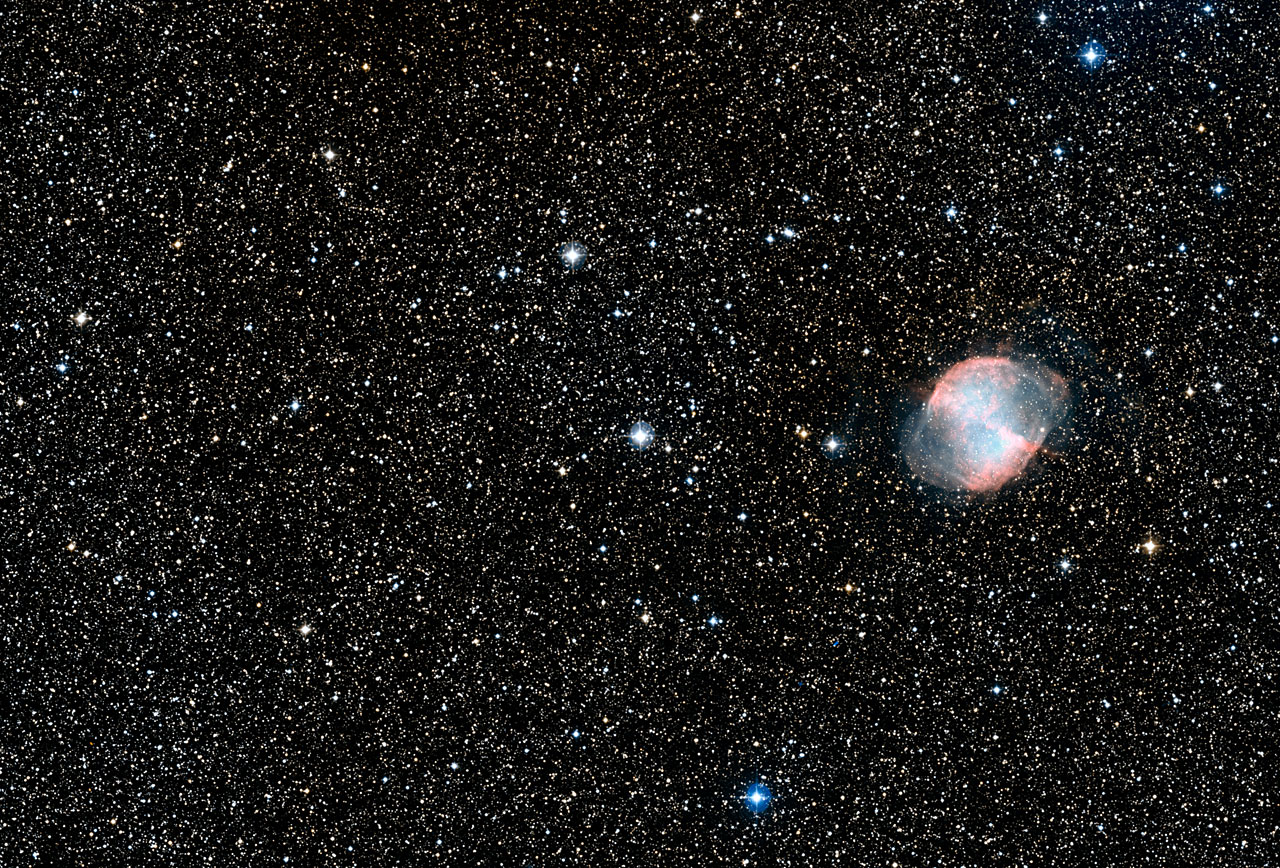
Who hasn't thought about Chasing UFOs?  

When I saw "Independence Day" in 1996 I first thought, "A Mac can bring down an entire alien civilization? Their users really are creative!" but then I wondered if some day, someone might actually get paid to find aliens.

Well, that day is here.  But I have to warn you, the language is bad in this UFO stuff.
Genetic modification of food has happened for thousands of year.  Tomatoes would still be the size of your thumb without genetic modification.

A 2012 study may mean tomatoes of the future could get that much better. They're big business, on the order of 15 million tons of the fruit for processing and fresh-market sales annually, so for decades food scientists in the tomato industry have selected varieties that are uniformly light green before they ripen, in order to produce tomatoes that can be harvested at the same time.  But this characteristic is accompanied by an unintended reduction in sugars that compromises the flavor of the fresh fruit and its desirability for processing.
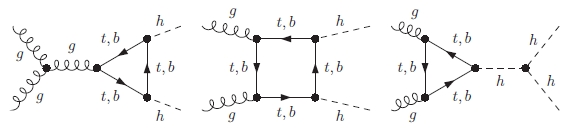
A very interesting paper appeared one week ago in the Arxiv. It is titled "Higgs Self-Coupling Measurements at the LHC", and it is authored by M.Dolan, C.Englert, and M.Spannovsky. The idea is that once and if a Higgs boson is found at the LHC, the next natural step of the research would be its characterization as a pure standard model object or a more complex, or just different, beast.

Of course, once a signal were established, the LHC experiments would certainly want to measure all its properties as precisely as possible: mass, angular distributions, cross section in all the production mechanisms, and decay modes.
The atmosphere of exoplanet HD 189733b, about 60 light-years from Earth, changed dramtically after a violent flare on its parent star bathed it in intense X-ray radiation. Result: A powerful burst of evaporation. 
Self-plagiariasm is big news these days.  A short while ago, former ACS president Ron Breslow had an article in the Journal of the American Chemical Society pulled - not because he claimed dinosaurs might be ruling other planets, but because he re-used work from other articles he wrote without crediting himself.
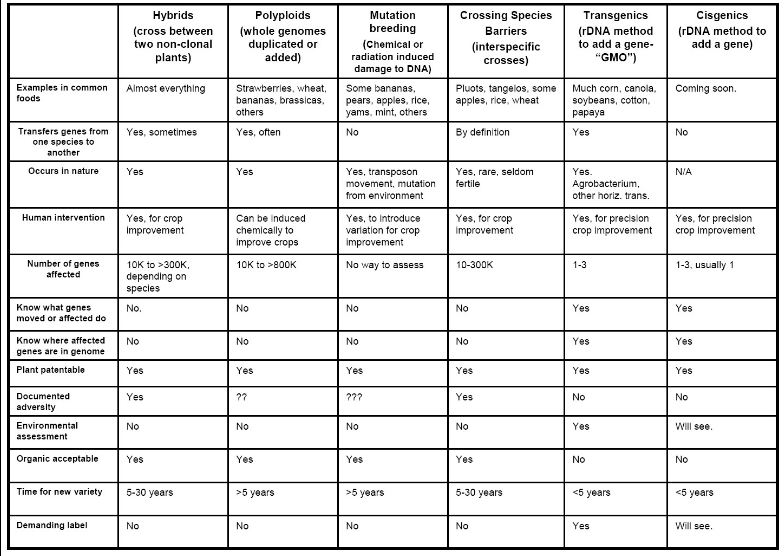
On Sunday there was considerable confusion about the alleged "GMO" grass that killed cattle.  Turns out it was not GMO grass at all, but a hybrid.  I received many inquiries about the difference between a GMO and a hybrid, as the latter sounded truly freaky and much more invasive than any frankenfood.
 Australopithecus sediba, a short, gangly hominid that lived in South Africa 2 million years ago, had a diet unlike virtually all other known human ancestors - trees and bushes.

A new study indicates that A. sediba ate harder foods than other early hominids like  Paranthropus boisei, dubbed "Nutcracker Man" because of its massive jaws and teeth, which  focused more on grasses and sedges.

I am endlessly amazed by observing, time and again, that even experienced colleagues fall in the simplest statistical traps. Mind you, I do not claim to be any better - sorry, let me rephrase: to have been any better in the early days of my career as an experimentalist. But then, I started to appreciate that to really understand physics results I needed to at least get familiar with a small set of notions in basic Statistics.
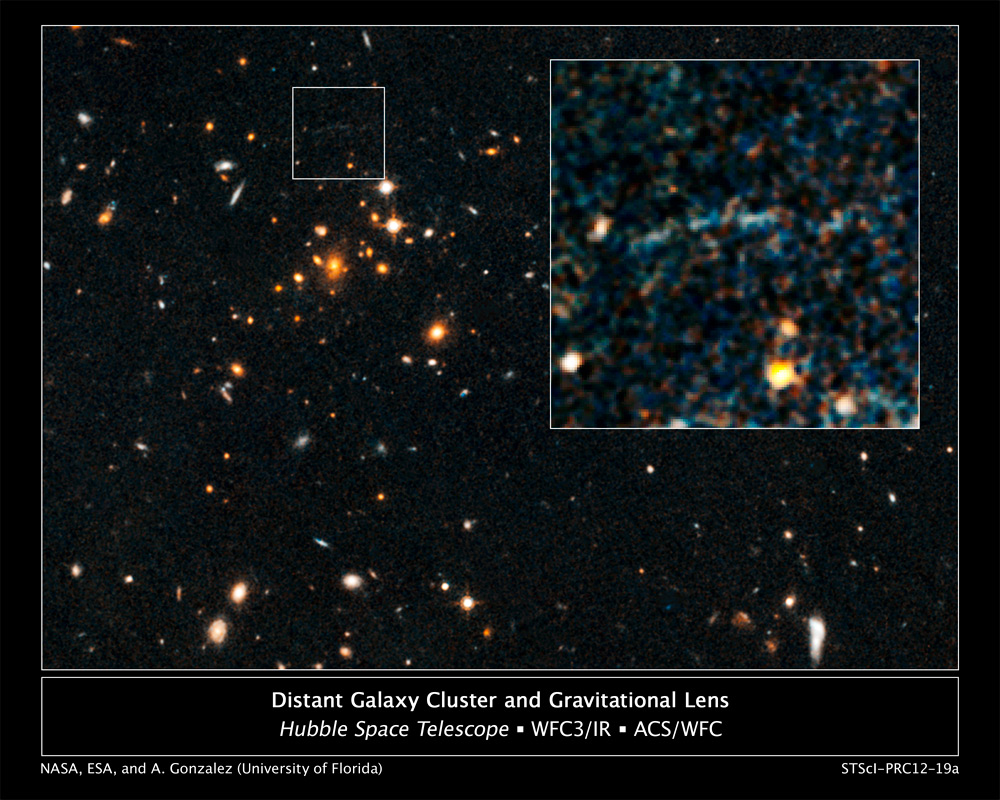
Astronomers have found a puzzling arc of light behind an extremely massive cluster of galaxies residing 10 billion light-years away. The galactic grouping was observed when the universe was roughly a quarter of its current age of 13.7 billion years and the giant arc is the stretched shape of a more distant galaxy whose light is distorted by the monster cluster's powerful gravity, the effect called gravitational lensing.

The puzzle is, the arc shouldn't exist.

