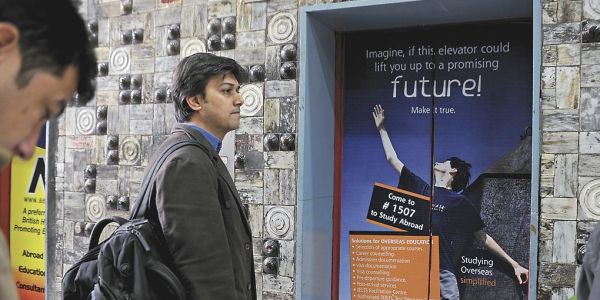
The lure of the far-off land, the thrill of crossing the seven seas, the dream of studying in a foreign university is still the most sought after by many Indian students and scientists. Indian students who pursue their academic dreams overseas need to be mentally prepared to rough it up.
Most importantly, they need to follow a legitimate path in pursuit of money, excellence, and exercise necessary precaution to avoid getting duped, lest they have their wings clipped, their beaks bent, claws tagged, ankles radio-tagged and their flight monitored by immigration authorities.
Recently, the news of the Trivalley University hit headlines and most prominently the Indian students looking up to brighter opportunities abroad felt the heat.
Many of those involved with transhumanism desire to accelerate the development of some sort of ‘higher consciousness’. Although the topic is mostly approached with the most serious input of the persons’ specific fields, for example cutting edge fascinating neuroscience, it is nevertheless too often handled philosophically naïve.
Thinking more rationally, bigger memory, adding ultraviolet light receptors for a four dimensional color space, enabling
global workspace to contain more than about 7 items, … All this are nice enhancements, but none of these seem to be what people lust after when it comes to the mystic 'higher consciousness'.
When you were younger, you may have wondered why gas had odd prices like $1.09.9 and your parents likely told you it's because $1.09.9 looks cheaper than $1.10. Stores love prices that end in $.99 for that reason.
I don't get excited about the singularity the way some on Science 2.0 do (and certainly elsewhere) though I admire the optimism. So when I got an email from a publicity person at PBS about
NewsHour Science Correspondent Miles O’Brien’s report on the upcoming match between Jeopardy masters Brad Runner, Ken Jennings and the super computer Watson I had to wonder if this would lead to more claims about an upcoming singularity and exponential leaps in artificial intelligence.
Nothing says science like Valentine's Day and we are positively littered with articles on neuroscience, chemistry and social aspects of romance. Really, we cover it all.
Not sure who to date? Garth Sundem answers it in
The Valentine's Day Man-O-Meter. Be sure to take it as gospel because he never just makes stuff up. If you need even more help than that, here is his
Ultimate Valentine's Day Toolkit.
Have you ever found yourself wondering about the species identification of the molluscan muscle in your mouth? The answer can be as slippery as the animal.
Accurate seafood labeling is a constant problem, largely due to the length of the supply chain. Customers have to trust what the restaurant or supermarket tells them, and the buyers for those businesses in turn have to trust what their suppliers say. This game of fish telephone can go around the world, as globalization shuttles seafood between distant markets.
Among seafood, cephalopod labeling is some of the least informative. Often there's no attempt to get any more specific than "squid" or "octopus", and even those terms seem dubious when you realize how often people mix them up.
An artificial big toe found attached to the foot of an ancient Egyptian mummy is the world's oldest prosthetic. At least for now. It predates the previous earliest known practical prosthesis , the Roman Capula Leg, by several hundred years.
It wasn't simply cosmetic. The two toes, a three-part wood and leather artifact housed in the Egyptian Museum in Cairo, and the Greville Chester artificial toe on display in the British Museum, also helped their toeless owners walk like Egyptians.
David Kirby, the author of
Evidence of Harm, and a major promoter of the debunked idea that thimerosal causes autism, has a
new article at Huffington Post, in which he commits a string a fallacious appeals and specious speculations concerning the persistence of the autism-vaccine myth.
Kirby closes his lengthy piece with an unjustified appeal: “The CDC estimates that there are about 760,000 Americans under 21 with an ASD. Even if just 1 percent of those cases was linked to vaccines (though I believe it is higher), that would mean 7,600 young Americans with a vaccine-associated ASD.”
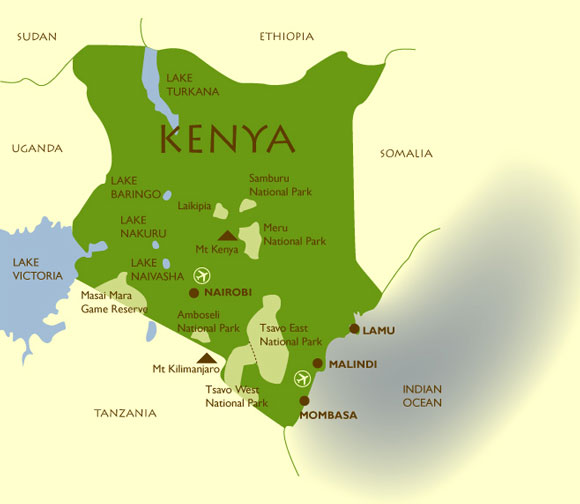
A University of Leicester ecologist has warned that Kenya is being “bled dry” by the UK’s demand for fresh flowers, a timely concern given Valentine's Day. Dr. David Harper, of the Department of Biology has been working at Lake Naivasha in Kenya as part of ongoing research and projects on the ecosystem of lakes there and has called on UK supermarkets to show more concern about the health of the natural environment that the flowers come from.
Blaming supermarkets seems a little much but academics know better than to blame individuals so telling poor women they shouldn't get flowers would have some backlash - faceless corporations are fair game.
How does something made of loose particles sometimes behave like a solid, liquid or gas? For example, dry sand acts like a solid when you stand on it but like a liquid when you try to scoop some up in your hand.
Or how Saturn's rings act like a fluid. Dr Nikolai Brilliantov from the University of Leicester Department of Mathematics is intrigued by the maths of things like that and is going to give a free lecture on February 15th in the University’s Ken Edwards Building, Lecture Theatre 1, at 5.30pm titled ‘Statistical mechanics of granular matter: simple concepts and complex phenomena’.