The pharmaceutics industry, too many science bloggers, “skeptics” - they all tell us that we should trust science and that all those who speak out for “natural” solutions are none other but religious idiots, or even monsters, criminals who do not refrain from harming your child for financial benefit. They try to bang it into our heads: Also nature is just chemistry; the often not applicable always-been-there-anyways-argument.
As I explained with help of the example of the vitamins E and D, the “tree huggers” often get it right plainly by staying “natural”.
Mark Hyman loves the case study; when
one of his posts at Huffington Post deals with an almost magical healing he's engendered, well, chances are, there's gonna be a kid involved. This time up, it's Hyman curing autism cuz he's teh man.
Let's look at his first paragraph: "Imagine being the parent of a young child who is not acting normally and being told by your doctor that your child has autism, that there is no known cause, and there is no known treatment except, perhaps, some behavioral therapy."
In preparing my series on Ancient Astronauts, I encountered a few problems I hadn’t anticipated, though maybe I should have looking back now. Mainly the problem is a lack of understanding of the terms being and ideas being used.
Things like why a myth is a myth, or why Archaeologists except certain views over others. If you’re not well versed in these reasons, it can seem a little biased and possibly lead to confusion, like in what the term “quantum” means. So, when I saw Von Daniken and his ilk using the term “Cargo Cult” to describe the Nazca lines, I realized many people may not understand what he’s saying.
The three problems of humanity were outlined in a talk by Nick Bostrom (of Oxford University, UK) at
TED in April 2009.
In this piece I will continue to examine the "big" problems identified in the TEDTalk. It is this third point that begins to illustrate what the underlying objective of all the other pieces truly is.
Problem #3: Life Isn't Usually as Wonderful as it Could Be is a BIG problem
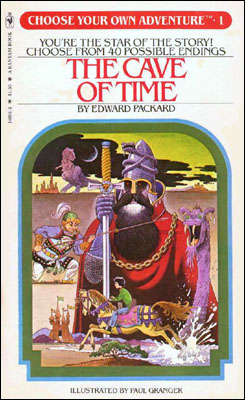
When I was a lad, a fellow named Edward Packard came up with the
Choose Your Own Adventure series, books where you read until an action point and you had to make a decision - your decision determined the plot of the book from there on out by sending you to a specific page where things continued.
Using real-time video coding procedures, a group of researchers have created a similar approach that is interactive for movie watchers, so if you're one of those annoying French nihilists and like movies that end with a crying clown or whatever, okay, it can happen, but if you're an outrageously optimistic American and like happy endings, that could be possible also.
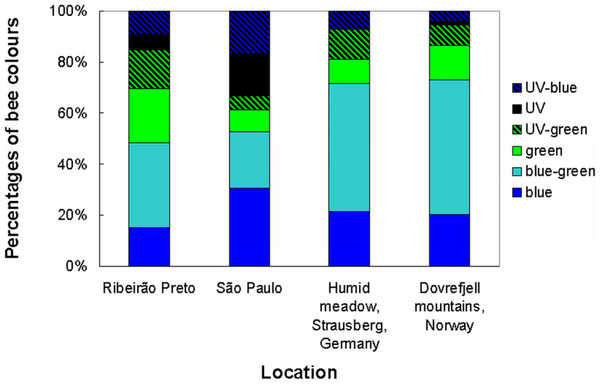
Colors are not constant, they are relative and relatively speaking, bees see much differently than we do.
Researchers at Queen Mary, University of London and Imperial College London have developed what they call FReD – the Floral Reflectance Database – that holds data on what colors flowers appear to be, to bees. Records of flower colors don't take the visual systems of pollinator insects into account and bees have evolved completely different color detection mechanisms from humans so they see colors outside our own capabilities in the ultra-violet range.
It sounds like a tough choice but a new strategy to prevent asthma may be going back to the way our parents did things - less super-hygiene and more viruses.
A new study reports that influenza virus infection in young mice protected the mice as adults against the development of allergic asthma. The same protective effect was achieved by treating young mice with compound isolated from the bacterium Helicobacter pylori (H. pylori), a bacterium that colonizes the stomach and is best known for causing ulcers and increasing the risk of gastric cancers.
While the average lifespan of those who reach adulthood has continued to rise those years spent living without health issues have not kept pace.
From 1970 to 2005, the probability of a 65-year-old surviving to age 85 doubled, from about a 20 percent chance to a 40 percent chance and the presumption was that the same changes allowing people to live longer, including medical advances, would delay the onset of disease and allow people to spend fewer years of their lives with debilitating illness.
Instead, a 20-year-old today can expect to live one less healthy year over his or her life span than a 20-year-old a decade ago.
What gives?
The Bering Sea, northward extension of the Pacific Ocean between Siberia and Alaska, was ice-free and full of life during the last major warm period, a new study has shown.
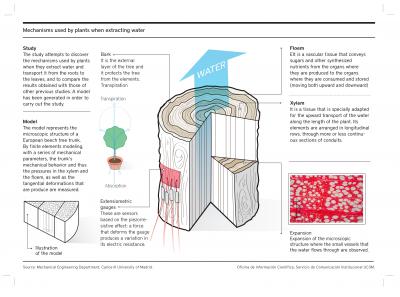
The mechanisms are used by plants when they extract water from very dry or inhospitable land could provide insight into how to do the same thing more efficiently for people.
"In the case of mangrove swamps, for example, the plants are able to extract freshwater from a saltwater environment, despite the fact that the osmotic pressure should make quite the opposite happen," says Professor José Luis Pérez Díaz, who studies this type of relatively unknown phenomenon as part of a new line of research that the Department of Mechanical Engineering at Carlos III University of Madrid has begun.