

2010 is the biggest year for life on Mars since 1898.  Or 1955 or whenever the last 'life on other planets' craze hit the public.  
 
But unlike those other times, there is good reason.  This year, over 20 different papers have invoked the chance there may once have been life on Mars in their work.    There is now all kinds of data discussing water on Mars, minerals on Mars and even that the soil might support life.  The Journal of Geophysical Research-Planets alone has 64 papers on Mars so far this year.
The ATLAS collaboration has just released an important study of the sensitivity to a standard model Higgs boson. For the first time precise predictions are made for LHC running at a centre-of-mass energy of 7 TeV (but also 8 and 9 TeV are considered, given the possibility that next year the energy is bumped up a bit), and for most of the sensitive channels together.

The public document is long and detailed, and I have no time to discuss its intricacies with you here, nor do I believe that you would actually want me to. But I do want to discuss one of the most significant figures in the note. It is shown below.
Initial Conditions as the Determinate Factor in Russia and China’s Transition Outcome

It is widely acknowledged that China has been vastly more successful than Russia in her transition from a planned socialist economy to a market-based economy.  The literature on the subject focuses on two major themes to explain the explosive growth in the Chinese economy and the precipitous fall in the economies of the Former Soviet Union (FSU). 
Researchers say that by applying electrical current to the brain they can enhance mathematical performance for up to 6 months - and there is no impact on other cognitive functions.

Aside from being a new way for kids to cheat on their SATs, the work may lead to treatments for the percentage of the population with moderate to severe numerical disabilities like dyscalculia ('math dyslexia') and for those who lose their skill with numbers as a result of stroke or degenerative disease.
Science and technology issues are just too complex, according to results a new survey from North Carolina State University - when it comes to public issues pertaining to science and technology, "talking it out" doesn't seem to work.  

The more people discuss the risks and benefits associated with scientific endeavors, the more entrenched they become in their viewpoint and the less likely they are to see the merit of other viewpoints, says Dr. Andrew Binder, an assistant professor of communication at NC State 
Depending on whether or not an invisibility cloak conjures up images of 'Harry Potter' or "Star Trek", we can tell a lot about you your age but as far back as H.G. Wells' turn-of-the-19th-century classic "The Invisible Man" people have been fascinated by the notion of invisibility.
In our many accolades of citizen science, nothing stands taller among discoveries than the strange object Hanny van Arkel found in archived images of the night sky in 2008.

After catching sight of it, courtesy of Hanny and Galaxy Zoo, astronomers were determined to learn more about Hanny's Voorwerp (Hanny's "object" in Dutch).    Now they say they have discovered that  Hanny's Voorwerp represents a 'snapshot in time' that reveals surprising clues about the life cycle of black holes.
1,400,000 70-dimension histogram vectors about gamer behavior.  What can you do with that?

Me?  Nothing, the math is too much but, if you can make sense of it, a lot of data is there in the ongoing online gaming phenomenon known as World of Warcraft(WoW).   Keeping track of all that data would seem to be solely the purview of computer programmers but sociologists are starting to take notice.   Some people are just goofing off and writing a book about their experiences but others see gold in 'game mining' - the insights of anthropology we can get by seeing what 10 million people do in a virtual, controlled setting over a period of years.
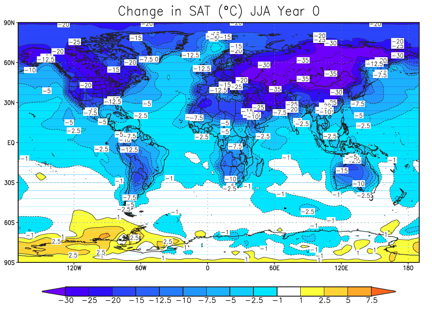
International Environmental law and Nuclear Winter

Nearly thirty years after its introduction in the 1980s, the Nuclear Winter hypothesis has gained additional quantitative confirmation, providing a robust argument for the illegality of nuclear weapons under the Law of Armed Conflict.
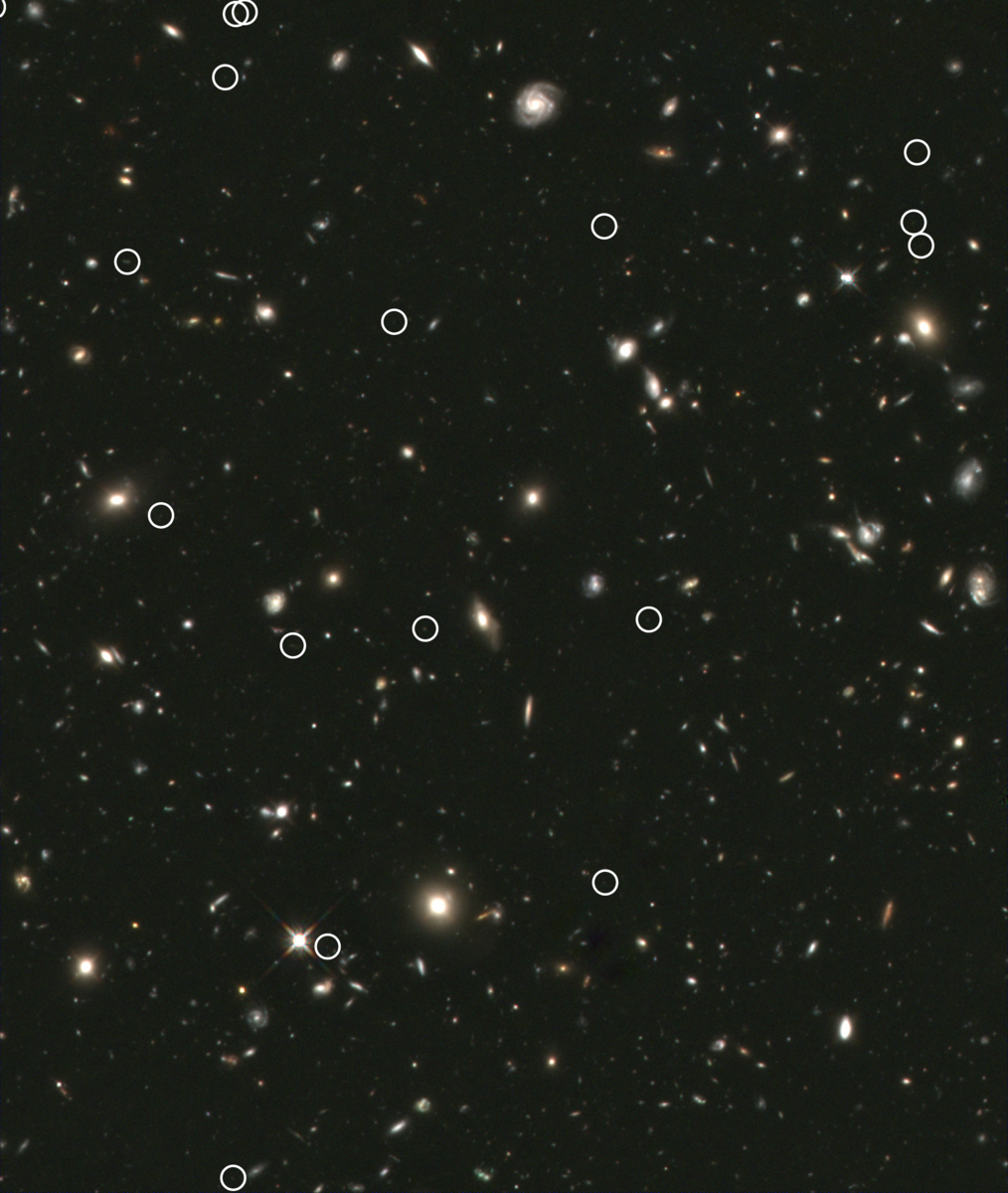
Like our own world history, the Universe had its own cycle of events.    After the initial Big Bang (though 'Bang' is a confusing word, it may have been rather dull), there were no light sources in the Universe.

