For some years now a small group of scientists have been pioneering a revolutionary idea; that the vertebrate immune system could have a role in the regulation of iron in the body.
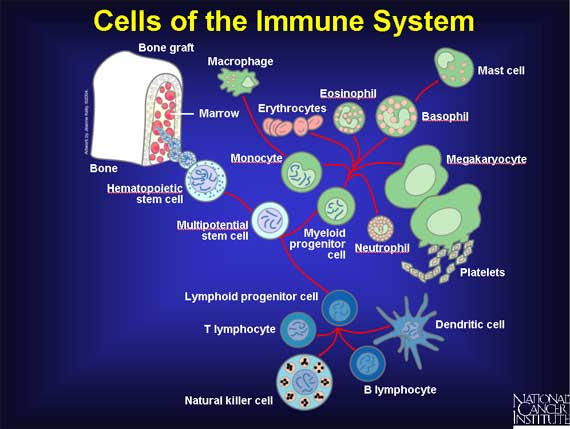
Now a study in the journal Immunology shows that human lymphocytes (white blood cells) actually produce hepcidin, the most important protein in the regulation of iron levels in the body. What was unexpected was the fact that hepcidin affected lymphocyte multiplication, which occurs for example during an infection, showing that the two systems seem to be much more interlinked than even previously imagined.
I went to the Scottish Games in Woodland, California last weekend, two young boys in tow. They weren't remotely interested in Scottish women doing traditional dances and they were vaguely intrigued by why men wore kilts.
"Papa, why is that man wearing a skirt?" Colin asked.
Being that we were east of highway 5 this was a perfectly reasonable question. "It's a kilt," I explained. "If he wore anything
underneath it would be a skirt."
Like this fellow:

But they were incredibly interested in the very large men throwing telephone poles. So I set out to explain how it works and give them some culture in the process.
Roller coasters are a lot of fun, but conditions experienced during the rides may cause damage to your ears.
Physicians at Henry Ford Hospital in Detroit say they have found a link between the force of acceleration in roller coasters and a common ear injury – ear barotrauma – that occurs when there is a relatively quick change in pressure between the external environment, the ear drum and the pressure in the middle ear space.
Results from their study will be presented today at the Triologocial Society's 113th Annual Meeting in Las Vegas.

Molecules called microRNA can silence genes that protect the genome from cancer-causing mutations, say Ohio State researchers writing in PNAS. Their study shows that microRNA-155 (miR-155) can inhibit the activity of genes that normally correct the damage when the wrong bases are paired in DNA.
The loss or silencing of these genes, which are called mismatch repair genes, causes inherited cancer-susceptibility syndromes and contributes to the progression of colorectal, uterine, ovarian and other cancers.
"Our findings suggest that miR-155 expression might be an important stratification factor in the prognosis and treatment of cancer patients," says Dr. Carlo M. Croce, from Ohio State's Human Cancer Genetics program.
Mountains that rise from the seafloor, called seamounts, represent one of the most common ecosystems on earth, say scientists from the NOAA and Texas A&M University–Corpus Christi.
Their findings reverse previous beliefs about the prevalence of seamounts, which they say are "treasure troves" of marine biodiversity. The results are published in Oceanography.
Although researchers have thoroughly explored some 200 seamounts and mapped and sampled a hundred others, this study is the first to estimate that more than 45,000 seamounts dot the ocean floor worldwide — a total of roughly 28.8 million square kilometers or an area larger than the continent of South America.
Plants are getting too much blame for global warming, according to a study by scientists at the University of Ediburgh and the National Center for Atmospheric Research.
The research, published in New Phytologist, suggests that plant leaves account for less than one per cent of the Earth's emissions of methane, considered to be about 25 times more potent than carbon dioxide. The results contrast with a previous scientific study which suggested that plants were responsible for producing large amounts of the greenhouse gas.
Despite significant declines in the cinematic depiction of smoking over the past 20 years, researchers writing in Thorax complain that tobacco imagery is still relatively common in UK films rated suitable for children and young teens.
The findings suggest that movie ratings should take depictions of smoking into account, the authors say.
Researchers analyzed the occurrence of depictions of tobacco use, including brand appearances and smoking paraphernalia, for periods of at least five minutes (tobacco intervals) in the 15 most commercially successful films screened in the UK between 1989 and 2008.
Arctic Tipping Points - #6: Are We There Yet?What might cause the Arctic sea ice to have a tipping point?
Are we about to reach, or have we already reached a tipping point?
This series is a follow-on to my 3-part series
Arctic Ice 2010.
Note: RPI put out a press release today (4/29/2010) on my work today so I am reposting this with today's date also.
The End of the World seems to roll around every decade or so. The last time it got a lot of press was the year 2000 A.D., a millennial event in the Gregorian calendar. COBOL programmers were the convenient catalyst for all that, since banks would shut down due to legacy software, but the end of the world needs vassals, the more unwitting the better, so it made sense that COBOL folks would take the fall.
Next up is 2012, this time due to one Meso-American calendar, and some speculation has been that the LHC will cause it, unleashing an army of Strangelets led by ancient Mayan overlords.