Faint Young Sun - No Paradox
The faint young sun paradox is no paradox, according to a recent paper in Nature.
The faint young sun paradox is that the earth didn't freeze over when the sun was weaker at the time when the oceans formed. Earth's climate has been fairly constant during the approx. 4.6 billion years of earth's existence, despite the fact that radiation from the Sun is believed to have increased by 25-30 percent over that time.
Professor Minik Rosing, from the Natural History Museum of Denmark, and Christian Bjerrum, from the Department of Geography and Geology at University of Copenhagen, together with American colleagues from Stanford University in California claim that there is no paradox.
We defied expectations in last week's
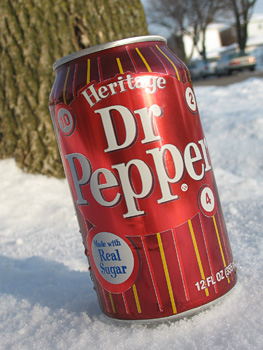
Pepsi Throwback Challenge. We found the unusual result that our bodies, against our wills, preferred high fructose corn syrup to ordinary sugar. Our comparison of Pepsi[TM] soda products, particularly their corn syrup 'regular formulation' against their all-sugar 'Throwback', defied our expectations.
Fossilized Weather
If you want to know what the weather is doing you can do as
the candlelight fisherman in the song did, and "open the pane and pop out the flame and see how the winds do blow". Or you could look at the nearest weathervane. They come in all sort of designs, shapes and sizes.
A cutting-edge UC Davis M.I.N.D. Institute research project, the Infant Sibling Study, is leading the way in seeking clues to the earliest behavioral manifestations of autism. This project studies the younger siblings of children already diagnosed with autism. For reasons that are not entirely clear, these children are among the most likely to be subsequently diagnosed with the condition. While the chance that a first child will have autism is about 1 in 100, the chance that a sibling of a child with autism will also have autism is as high as 1 in 5.
University of Birmingham scientists have discovered that the gene DAF-16 plays an important part in determining the rate of aging and average lifespan of the laboratory worm Caenorhabditis elegans (C. elegans) and its close evolutionary cousins.
DAF-16 is found in many other animals, including humans, and it is possible that this knowledge could open up new avenues for altering ageing, immunity and resistance to stresses in humans. The research was published this week in PLoS One
The authors of a new paper in Current Biology say they have found the first concrete evidence that shows how gene duplications can lead to functional diversity in organisms.
In the study, researchers examined how duplications of a gene called FLOWERING LOCUS T, or FT, could have evolved and interacted to prolong a sunflower's time to grow. A longer flower growth period means a bigger flower -- presumably an attribute of great value to the plant's first breeders.
Princeton Electrical Engineers have developed a new technique for revealing images of hidden objects. The method, a new type of stochastic resonance, relies on the ability to clarify an image using rays of light that would typically make the image unrecognizable, such as those scattered by clouds, human tissue or murky water.
The discovery may one day help pilots navigate through fog and doctors peer into the human body without surgery. The findings were reported online in Nature Photonics.
ASU Biodesign Institute researchers are using the unique conditions of spaceflight to examine how cells remain healthy or succumb to disease, particularly in the face of stress or damage. Their experiment will be launched into low earth orbit on April 5 aboard the space shuttle Discovery on mission STS-131.
The team hopes to provide fundamental new insight into the infectious disease process, and further undestanding of other progressive diseases, including immune disorders and cancer. The Results of the current study will also be used to help mitigate infectious disease risks to the crew, who are particularly vulnerable to infection, due to reduced immune function during spaceflight missions.
Although they only account for a fraction of the synapses in the visual cortex, neurons in the thalamus get their message across loud and clear by coordination -- simultaneously hitting the "send" button—according to a computer simulation developed by researchers at the Salk Institute for Biological Studies.
Their findings may hold important clues to how the brain encodes and processes information, which can be applied to a wide variety of applications, from understanding psychiatric disorders to the development of novel pharmaceuticals and new ways of handling information by computers or communication networks. The results are published in Science.
Simon Singh Wins - US Law To The Rescue!
The British Courts do not indulge themselves in bogus judgements - not even on April 1st.
This article is genuine.
A note on common law:
Both the US and the UK are common law jurisdictions. British courts will accordingly take note of US court judgements, but are not legally bound to follow them.
Occasionally, a judge will recognise that UK law is insufficient alone to secure a just result. In such circumstances the judge may be more inclined than otherwise to accept a sufficiently fair and just US ruling as providing a model and a precedent.