







Researchers have demonstrated the possibility of preventing the human malaria parasite, Plasmodium falciparum, which is responsible for more than a million malaria deaths a year, from becoming sexually mature.

The discovery could have implications for controlling the spread of drug resistance, which is a major public health problem and which hinders the control of malaria.

The life cycle of Plasmodium falciparum is complex, and it is not yet known what triggers the production of parasite gametes or sex cells. These sexual forms of the parasite do not contribute to malaria symptoms, but are essential for transmission of malaria between humans via the bite of a mosquito.

In 1928 Alexander Fleming discovered penicillin, which was subsequently developed into a medicine by Florey and Chain in the 1940s. The antibiotic was hailed as a 'miracle cure' and a golden age of drug discovery followed. However, frequent rediscovery of known natural products and technical challenges forced pharmaceutical companies to retreat and stop looking for new molecules.

Big pharmacy companies gave up on soil bacteria as a source of antibiotics too soon, according to research published in the June issue of Microbiology. Scientists have been mining microbial genomes for new natural products that may have applications in the treatment of MRSA and cancer and have made some exciting discoveries.

"Over the last eight years we have been looking for new natural products in the DNA sequence of the antibiotic-producing bacterium Streptomyces coelicolor," said Professor Gregory Challis from the University of Warwick. "In the last 15 years it became accepted that no new natural products remained to be discovered from these bacteria. Our work shows this widely-held view to be incorrect."

A major contribution to the long-term storage and access of data on mutation for genes and disease has been established with the launch of Human Genomics and Proteomics, the first database journal affiliated with a database, FINDbase: the National/Ethnic Mutation Database documenting frequencies of causative mutations leading to inherited disorders in various populations worldwide.

The first title to be launched through SAGE-Hindawi – the joint collaboration between SAGE and Hindawi Publishing Corporation, Human Genomics and Proteomics (HGP) is a peer-reviewed international open access journal that will provide a unique forum for the discussion of research on human genomics and proteomics, systems biology and various aspects of personalized medicine.

In May, Nature magazine published a draft sequence of the entire genome of the platypus, the bizarre mammal endemic of Australia that is so strange looking that the first scientists who received a description of it from Captain John Hunter in 1798 thought it was a joke.

Far from being a joke, the platypus is a strong piece of evidence for the theory of evolution (not that it really needed additional ones) and, scientifically speaking, a rich source of insight into the evolution of mammals from reptile-birds (birds are considered a group of reptiles, in particular, part of the same line of descent as dinosaurs).

Biologists already knew quite a bit about this strange creature, for instance that it produces milk (like any mammal) though it doesn’t have nipples (unlike any other mammal). This suggested that the ability to produce milk evolved before specialized anatomical structures to deliver it, or -- less likely -- that the platypus lost the nipples sometimes after its divergence from the rest of the mammalian lineage. Molecular biology now confirms that platypuses have genes that produce casein proteins, an essential element of true milk, which means that milk production evolved about 166 million years ago, after the mammal-sauropsid split (living sauropsids include snakes, lizards, crocodiles, turtles and of course birds; extinct ones comprise plesiosaurs and pterosaurs).

One copy of the human genome is more than 3 billion nucleotides in length, and weighs in at about 3.5 picograms (pg, or trillionths of a gram). Only about 1.5% of this is composed of our 20,000 or so protein-coding genes, though other data suggest that at least 5% has been conserved by natural selection, suggesting that a notable portion of the non-coding majority is also functional. On the other hand, it is now apparent that much of the genome residing in our cells is made up of sequences like transposable elements -- "parasites" of the genome that can move about wwithin and be copied independently of the "host" genome -- and especially their extinct remnants. One such element, Alu, is present in more than one million copies.

The discovery of four families in which some members only walk on all fours (quadrupedality) may help us understand how humans, unlike other primates, are able to walk for long periods on only two legs, according to professor Tayfun Ozcelik, of Bilkent University, Ankara, Turkey, who presented his study at the annual conference of the European Society of Human Genetics tomorrow.

The quadrupedal families in Turkey previously attracted attention in 2005, when they were discovered. Now the Turkish team reports that they have found the first gene implicated in quadrupedal locomotion in these families.

Ozcelik and colleagues, studied four unrelated families where some members were affected by the rare quadrupedic condition, Unertan syndrome, which is also associated with imperfect articulation of speech, mental retardation, and defects in the cerebellum, a part of the brain involved in motor control. They found that the affected individuals in two families had mutations in the gene responsible for the expression of very low density lipoprotein receptor (VLDLR), a protein which is known to be critical to the proper functioning of the cerebellum during development.

Prenatal biochemical screening tests are widely used to look for chromosomal abnormalities in the fetus which can lead to serious handicap, or even death during gestation or in the first few days after birth. But these tests are only able to detect fewer than half of the total chromosomal abnormalities in the fetus.

Dr. Francesca R. Grati, of the TOMA Laboratory, Busto Arsizio, Italy, says women should be better informed before deciding to undertake it.

The researchers studied 115,576 prenatal diagnoses carried out during the last fourteen years. 84,847 were amniocenteses, usually carried out around the 16th week of pregnancy, and 30,729 chorionic villus samplings, which can be undertaken from 12 weeks into the pregnancy. Both these tests carry an increased risk of miscarriage, so the decision on whether or not to undertake them can be difficult to weigh up.

It’s stronger than steel and nylon, and more extensible than Kevlar.

What is this super-tough material? Spider silk; and learning how to spin it is one of the materials industries’ Holy Grails.

John Gosline has been fascinated by spider silks and their remarkable toughness for most of his scientific career. He explains that if we’re to learn how to manufacture spider silk, we have to understand the relationship between the components and the spun fibre’s mechanical properties; which is why he is focusing on major ampullate silk, one of the many silks that spiders spin. According to Gosline, spiders use major ampullate silk for draglines and to build the frame and radial structures in webs, all of which have to deform and absorb enormous amounts of energy without fracturing.

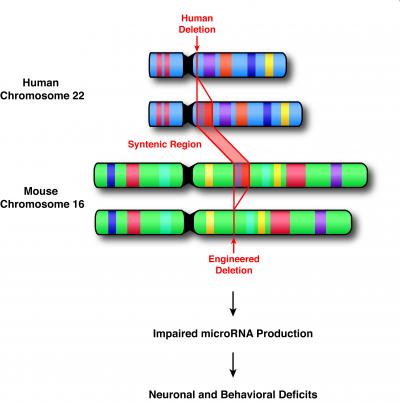
Researchers at Columbia University Medical Center have illuminated a window into how abnormalities in microRNAs, a family of molecules that regulate expression of numerous genes, may contribute to the behavioral and neuronal deficits associated with schizophrenia and possibly other brain disorders.

Maria Karayiorgou, M.D., professor of psychiatry, and Joseph A. Gogos, M.D., Ph.D., associate professor of physiology and neuroscience at Columbia University Medical Center explain how they uncovered a previously unknown alteration in the production of microRNAs of a mouse modeled to have the same chromosome 22q11.2 deletions previously identified in humans with schizophrenia.

Ecosystems are constantly exchanging materials through the movement of air in the atmosphere, the flow of water in rivers and the migration of animals across the landscape. People, however, have also established themselves as another major driver of connectivity among ecosystems.

In the June 2008 Special Issue of Frontiers in Ecology and the Environment, titled “Continental-scale ecology in an increasingly connected world,” ecologists discuss how human influences interact with natural processes to influence connectivity at the continental scale. The authors conclude that networks of large-scale experiments are needed to predict long-term ecological change.

The transport of many types of materials, including gases, minerals and even organisms, can affect natural systems. This movement results in “greenlash,” which occurs when environmental changes localized to a small geographic area have far-reaching effects in other areas. For example, a drought in the 1930’s caused small-scale farmers to abandon their farms across the U.S. Midwest. The absence of crops intensified local soil erosion, leading to powerful dust storms. Large amounts of wind-swept dust traveled across the continent, causing the infamous Dust Bowl and affecting air quality, public health and patterns of human settlement throughout the country.

