






If you read the marketing claims for probiotics and supplements, and an alarming number of papers that have made spurious claims to feed the fad, you might think gut bacteria were the magic bullet for a lot of diseases.

A new paper says they even determine whether or not your jeans fit this week. Pizza and exercise are hereby absolved. Instead, the  types of microbes that grow in our body, influenced by our genetic makeup, influences whether we are fat or thin, according to a paper in Cell.

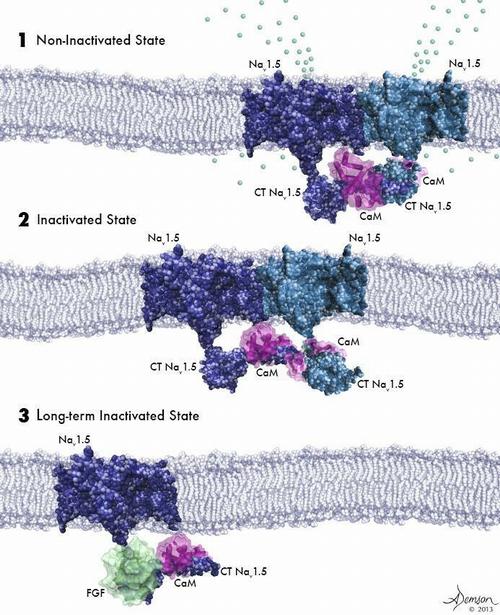
Heart attacks are often caused by conditions that affect electrical signaling in the heart. Genetic studies have linked two of these conditions, long QT syndrome and Brugada syndrome, to mutations in the sodium channels that let sodium ions into cells in response to electrical signals.  
A multidisciplinary team has been tracking the complex of proteins thought to be at fault in some cases of sudden cardiac death and now they have finally captured images of the complex. Those images reveal the connection between some genetic mutations and electrical abnormalities of the heart and provide a starting point for designing therapies.


vivaviena, CC BY-NC-SA

By Vincent F Hendricks, University of Copenhagen

Science, like any other field that attracts investment, is prone to bubbles.

Overly optimistic investments in scientific fields, research methods and technologies generate episodes comparable to those experienced by financial markets prior to crashing.

Olaparib, an experimental twice-daily oral cancer drug, produces an overall tumor response rate of 26 percent in several advanced cancers associated with BRCA1 and BRCA2 mutations, according to results of a Phase II study.

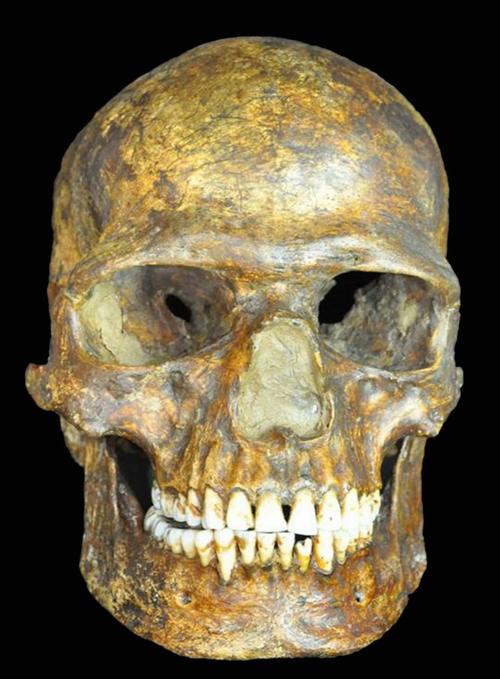
Scientists believe that Eurasians separated into at least three populations around 36,000 years ago: Europeans,Asians and a mystery third lineage, all whose descendants would develop the unique features of most non-African peoples after interbreeding with Neanderthals. 

A new study on DNA recovered from a fossil of one of the earliest known Europeans, who lived 36,000 years ago in Kostenki, western Russia, has shown that the earliest European humans' genetic ancestry survived the Last Glacial Maximum - the peak point of the last ice age. 

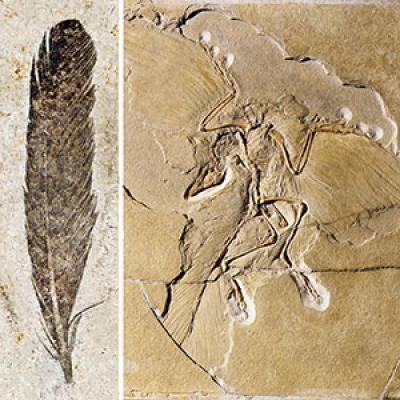
Reconstructing ancient life has long required a certain amount of inference and imagination - especially speculative is the coloration of long-extinct organisms.

New methods of investigation are being incorporated into paleontology that may shed light (and color) on fossils.

A reference genome for coffee trees has been sequenced for the first time. It improves understanding of the organization of the genome, which is academic, but it also offers new possibilities for selection or improvement of coffee tree varieties. 

The researchers chose Robusta coffee because of its average sized genome (710 million pairs of DNA bases) and its diploid nature contrary to Coffea arabica, which is tetraploid. The genetic map of the coffee tree studied was produced in the 1980s and also had the advantage of being a homozygous plant (two identical sets of eleven chromosomes), which is easier to analyze than natural heterozygotes.

Since 1999, a conjecture by Asher Peres, the 'inventor' of quantum teleportation, that the weakest form of quantum entanglement can never result in the strongest manifestation of the phenomenon, has been debated. 

Peres thought about the phenomenon of quantum entanglement and its different manifestations. When two objects (take photons, for example) are entangled, they remain correlated regardless of the distance that separates them physically: whether they are separated by a millimeter or by several kilometers, any action done to one of them will immediately affect the other. To check whether a system is entangled, scientists test for Bell's inequality.

A new study finds that the inhibition of a particular mitochondrial fission protein, GTPase dynamin-related protein-1 – Drp1, could hold the key to treating Parkinson's Disease.

A new biology paper sheds light on how chromatin (the complex of DNA and proteins) is organized in a cell and how plants regulate genetic material, so that some genes are turned on and others are turned off - and it could make it possible for a new generation of plants to better adapt to and survive environmental swings such as droughts or floods.

The research in The Plant Cell could mean major advances for the agriculture industry. 

"If you understand how plants regulate their genetic material, you can possibly manipulate that in certain circumstances so that plants can withstand environmental changes," said Daniel Vera, a Florida State University graduate student and the lead author of the paper.

