Citrus is the world's most widely cultivated fruit crop. In the U.S. alone, the citrus crop was valued at over $3.1 billion in 2013. Originally domesticated in Southeast Asia thousands of years ago before spreading throughout Asia, Europe, and the Americas via trade, citrus is now under attack from citrus greening, an insidious emerging infectious disease that is destroying entire orchards. To help defend citrus against this disease and other threats, researchers worldwide are mobilizing to apply genomic tools and approaches to understand how citrus varieties arose and how they respond to disease and other stresses.
Antidepressant drugs are common in the developed world and are among the most prescribed medications in North America. Though antidepressants are effective for some, there is a lot of variability in how individuals respond to antidepressant treatment.
A recent study found that levels of a small molecule found only in primates are lower in the brains of depressed individuals, a discovery that may hold a key to improving treatment options for those who suffer from depression.
Once the public loses confidence in the ability of journalists to be trusted guides for the public, it is hard to regain it. Scientists don't trust journalists because they get a lot of science wrong. The public doesn't trust journalists because they don't ask the awkward questions of people whose work they admire.
And then there is the framing they engage in.
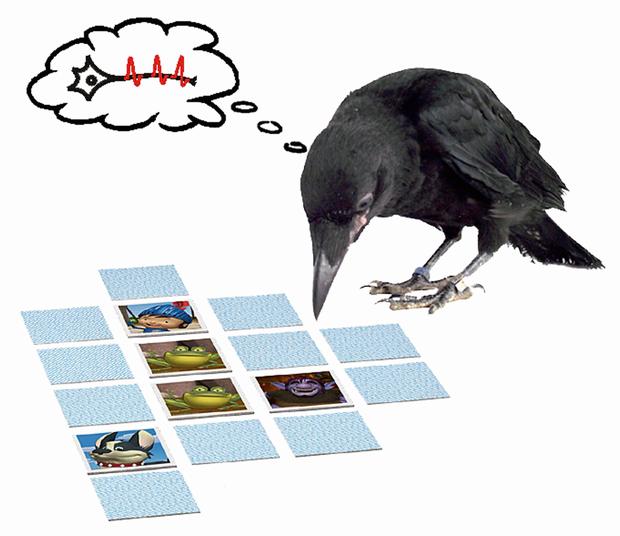
An important prerequisite for intelligence is a good short-term memory which can store and process the information needed for ongoing processes. This 'working memory' is a kind of mental notepad – without it, we could not follow a conversation, do mental arithmetic or play any simple game.
A new study has discovered neurons allowing crows to remember short-term. In the animal kingdom, the group of birds including crows and ravens, the corvids, are known for their intelligence because they have just such a working memory, but their endbrain – which is highly-developed but has a fundamentally different structure from that of mammals – has no cerebral cortex; and that is the part of the brain which in mammals produces the working memory.
700 people under the age of 25 die by suicide in the UK per year. 160 young people under the age of 20 die by suicide in England each year and there are higher rates of suicide in young people in Scotland and Northern Ireland than in England and Wales.
Why? Is it economics? Copycat culture?
The National Confidential Inquiry into Suicide and Homicide by People with Mental Illness (Inquiry), led by Professor Louis Appleby of the University of Manchester, is carrying out an investigation to examine causes and recommend prevention strategies. The investigation will look at the role of social media and Internet sites in suicides as well as suicides which appear to occur in clusters or follow a copy-cat pattern.
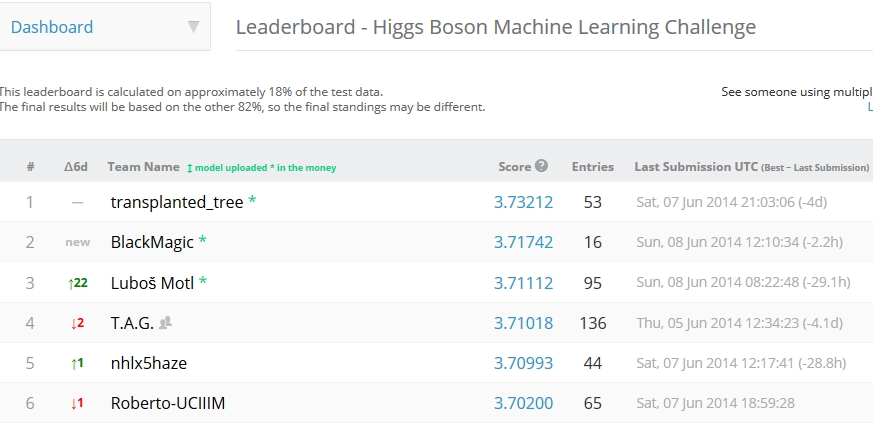
Today among the three top players -those in the money- at the Higgs challenge we see the appearance of Lubos Motl, whom I had signalled as a participant in an earlier posting. We all know that Lubos is a smart guy, but I doubted whether he would take this very seriously. However, it seems he is. As we speak he has submitted almost 100 solutions (you can submit up to 5 solutions per day, so that means having worked at this at least 20 days in a row).
In the clip below you see the top standers from the challenge site's leaderboard:
![]()
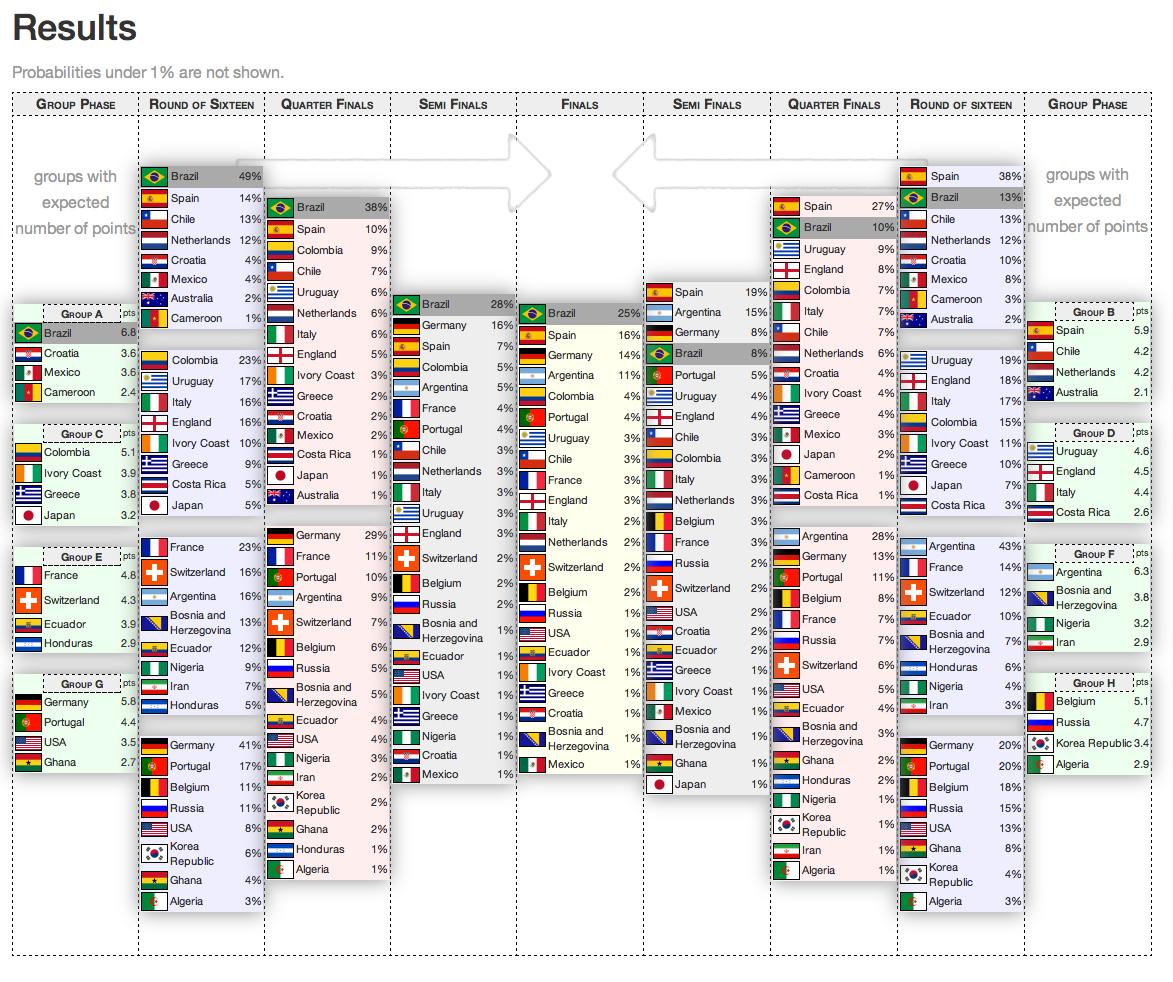
The World Cup is fast approaching and with it come no end to projections, estimations and forecasts about who is going to do what.
Using a Bayes analysis, once you reach the semifinal you have a 50 percent chance of being correct - just like flipping a coin. But can it work before then? Yes, is you do enough simulations. But before you fire up your copy of Championship Manager and try to play 100 times, there is an easier solution.
Liberal critics have always panned 1965's "The Sound of Music" as conservative and schmaltzy, a throwback to the 1950s during a decade that claimed to be about revolution and progress.
Yet the public loves it.
London academic Martin Gorsky has an explanation that critics seem to have missed: the film actually ‘helped constitute’ an understanding of society.
Gorsky explains that the film’s treatment of two contemporary issues - the importance of play and emotion in childrearing, and post-war perspectives of Fascism – were fundamental to the widespread popularity of the film.
Agricultural science has made magnificent strides in the last few decades. Where once was rampant concern about mass starvation and food riots, farmers in developed nations are now producing more food on more land than once thought possible.
But the quest to use even fewer pesticides continues. Products need to protect plants against fungal and insect attack but the goal is to do that with fewer negative effects on the environment. Researchers are working to improve plant protection and one strategy is optimizing the interaction between the plant's barrier, plant protection products and adjuvants that are added to increase the effect of plant protection.
Young children instinctively use a ‘language-like’ structure to communicate through gestures, a result which suggests that children are not just learning language from older generations, but instead their preference for communication has shaped how languages look today.
In the paper, the research team examined how four-year-olds, 12-year-olds and adults used gestures to communicate in the absence of speech. The study investigated whether their gesturing breaks down complex information into simpler concepts. This is similar to the way that language expresses complex information by breaking it down into units (such as words) to express a simpler concept, which are then strung together into a phrase or sentence.